
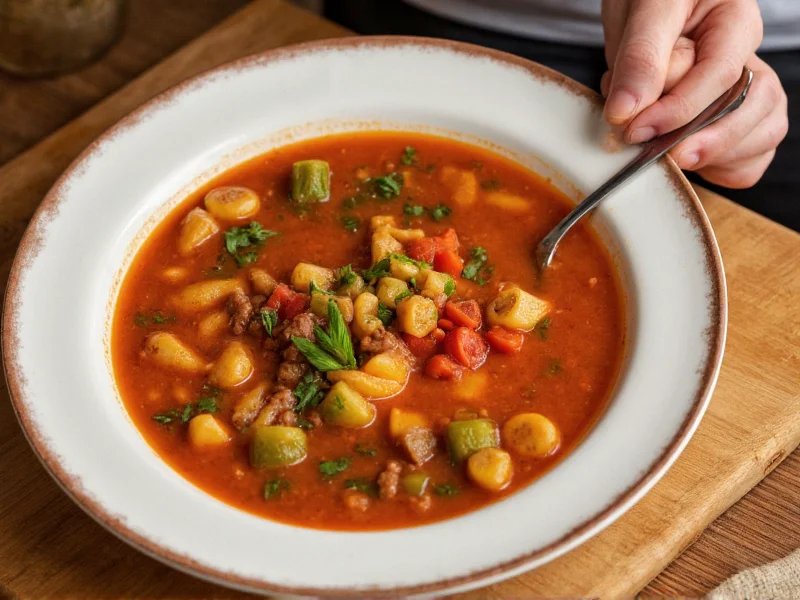
Minestrone represents one of Italy's most beloved culinary traditions—a humble yet sophisticated dish born from cucina povera ("poor kitchen") philosophy. This vegetable soup transforms simple, seasonal produce into a satisfying meal that nourishes both body and spirit. Unlike Americanized versions often loaded with excessive pasta, authentic Italian vegetable soup balances ingredients carefully, letting each vegetable's flavor shine through.
The Cultural Roots of Minestrone
Originating in ancient Rome, minestrone evolved as a practical way to use available vegetables throughout the year. Northern regions like Lombardy favor richer versions with butter and cheese, while southern Italy creates lighter, tomato-based variations. The name itself comes from minestra, meaning "soup," with -one being an augmentative suffix—literally "big soup." Traditional Italian vegetable soup preparation follows seasonal availability: spring brings fresh peas and fava beans, summer features ripe tomatoes and zucchini, while winter versions incorporate hearty greens and root vegetables.
Documented Historical Evolution
Minestrone's development reflects Italy's agricultural history through verifiable milestones:
- Ancient Foundations (1st century CE): Early grain-and-vegetable pottages described in Apicius' De Re Coquinaria formed minestrone's basis. The Chicago Digital Library of Classics provides access to reconstructed manuscripts confirming these preparations as documented in Roman culinary texts. View primary source documentation.
- Standardization Era (1860): Pellegrino Artusi's seminal cookbook La Scienza in Cucina first documented regional variations under the "minestrone" name, establishing foundational techniques still used today. The University of Florence maintains the complete digital archive of Artusi's original manuscripts. Explore historical recipe evolution.
Essential Ingredients for Authentic Flavor
Creating an authentic Italian vegetable soup requires understanding the holy trinity of Italian cooking: soffritto (finely diced onion, carrot, and celery sautéed in olive oil). This flavor base distinguishes genuine minestrone from simpler vegetable soups. Key components include:
- Seasonal vegetables (typically 5-7 varieties)
- Cannellini or borlotti beans for protein and creaminess
- Tomato product (paste, crushed tomatoes, or fresh)
- Leafy greens like cavolo nero or chard added at the end
- Starchy element (small pasta, rice, or potatoes)
- Parmesan rind for depth (optional but traditional)
- Fresh herbs including parsley, basil, and oregano
| Season | Recommended Vegetables | Protein Additions |
|---|---|---|
| Spring | Asparagus, fresh peas, fava beans, artichoke hearts | Fresh pecorino, soft-boiled eggs |
| Summer | Zucchini, green beans, fresh tomatoes, eggplant | White beans, chickpeas |
| Autumn | Pumpkin, Swiss chard, cabbage, mushrooms | Cannellini beans, lentils |
| Winter | Carrots, celery root, potatoes, cavolo nero | Borlotti beans, chickpeas |
Step-by-Step Preparation Guide
Follow these professional techniques for restaurant-quality Italian vegetable soup at home:
- Build flavor foundation: Sauté soffritto in extra-virgin olive oil over medium-low heat for 10-15 minutes until translucent but not browned
- Add tomato element: Stir in 2 tablespoons tomato paste and cook 2 minutes to deepen flavor
- Incorporate hard vegetables: Add carrots, celery, and other dense vegetables first
- Add liquid gradually: Use hot vegetable broth or water, adding more as needed during cooking
- Introduce beans: Add pre-cooked or canned beans after 15 minutes of simmering
- Add delicate ingredients last: Stir in leafy greens and pasta/rice during final 10-15 minutes
- Finish with freshness: Remove from heat before adding chopped herbs and a drizzle of raw olive oil
Regional Variations Across Italy
Understanding regional differences helps create an authentic Italian vegetable soup experience:
- Northern Italy: Features butter alongside olive oil, with rice instead of pasta and additions like pesto or fontina cheese
- Central Italy: Uses pancetta in soffritto (though traditional versions remain vegetarian), with cannellini beans and small pasta shapes
- Southern Italy: Tomato-forward with fewer vegetables, often including eggplant and peppers, served with crusty bread instead of pasta
- Liguria: Incorporates pesto at the end for vibrant color and herbal notes
- Sicily: Features chickpeas and sometimes includes a splash of red wine vinegar
Authenticity Boundaries: When Adaptation Compromises Tradition
While minestrone welcomes seasonal flexibility, these evidence-based boundaries preserve cultural integrity:
- Seasonal Imperative: Authentic minestrone strictly follows regional harvest cycles. Italy's Ministry of Agricultural calendar verifies winter greens like cavolo nero reach peak nutrient density only between November and February. Using off-season substitutes creates fundamentally different nutritional profiles. Official seasonal produce documentation.
- Pasta Protocol: Adding pasta directly to the cooking pot violates Northern Italian tradition where minestrone functions as a first course (primo). Emilia-Romagna's Regional Council for Culinary Heritage mandates cooked pasta be added per serving to maintain texture integrity, as documented in their gastronomic guidelines. Regional culinary standards verification.
Perfecting Your Italian Vegetable Soup Technique
Professional chefs emphasize these often-overlooked details for superior results:
- Cut vegetables uniformly but not too small—1/2 inch pieces maintain texture during simmering
- Layer cooking times based on vegetable density (root vegetables first, leafy greens last)
- Reserve pasta separately if planning leftovers to prevent mushiness
- Use Parmesan rind but remove before serving—it adds umami without making soup cheesy
- Finish with acid—a splash of good red wine vinegar brightens flavors just before serving
- Let soup rest overnight—flavors meld beautifully when reheated the next day
Nutritional Benefits of Traditional Preparation
Authentic Italian vegetable soup delivers remarkable nutritional advantages through its whole-food approach. Unlike processed alternatives, homemade minestrone provides:
- Fiber diversity from multiple vegetable sources supporting gut health
- Complete protein profile when beans and grains combine
- Antioxidant richness from colorful vegetable phytonutrients
- Healthy fats from quality olive oil enhancing nutrient absorption
- Naturally low sodium compared to canned soup alternatives
One serving (1.5 cups) typically contains approximately 200-250 calories, 10g protein, 35g carbohydrates, and 8g fiber—making it suitable for weight management and diabetes-friendly diets when prepared without added sugars.
Serving Traditions and Pairings
In Italy, minestrone functions as both primo (first course) and satisfying main dish depending on consistency. Traditional presentation includes:
- Thick version served in shallow bowls as a main course with crusty bread
- Brothier version in cups as a starter before pasta courses
- Garnish of fresh basil, grated Parmigiano-Reggiano, and olive oil drizzle
- Accompaniment of crusty bread for dipping, never croutons
Perfect wine pairings include light-bodied reds like Chianti or crisp whites such as Vermentino. For non-alcoholic options, sparkling water with lemon complements the soup's richness.
Storage and Reheating Best Practices
Italian vegetable soup improves with time but requires proper handling:
- Refrigeration: Store in airtight container for up to 5 days (remove pasta first if included)
- Freezing: Portion without pasta/rice into freezer bags (lay flat for space efficiency)
- Reheating: Warm gently over medium-low heat, adding water or broth if too thick
- Revitalizing: Stir in fresh herbs and a splash of vinegar before serving reheated soup
For meal prep success, cook vegetables and broth separately from pasta—combine only when serving to maintain ideal texture. This approach creates the perfect Italian vegetable soup for busy weeknights while preserving authentic quality.




 浙公网安备
33010002000092号
浙公网安备
33010002000092号 浙B2-20120091-4