
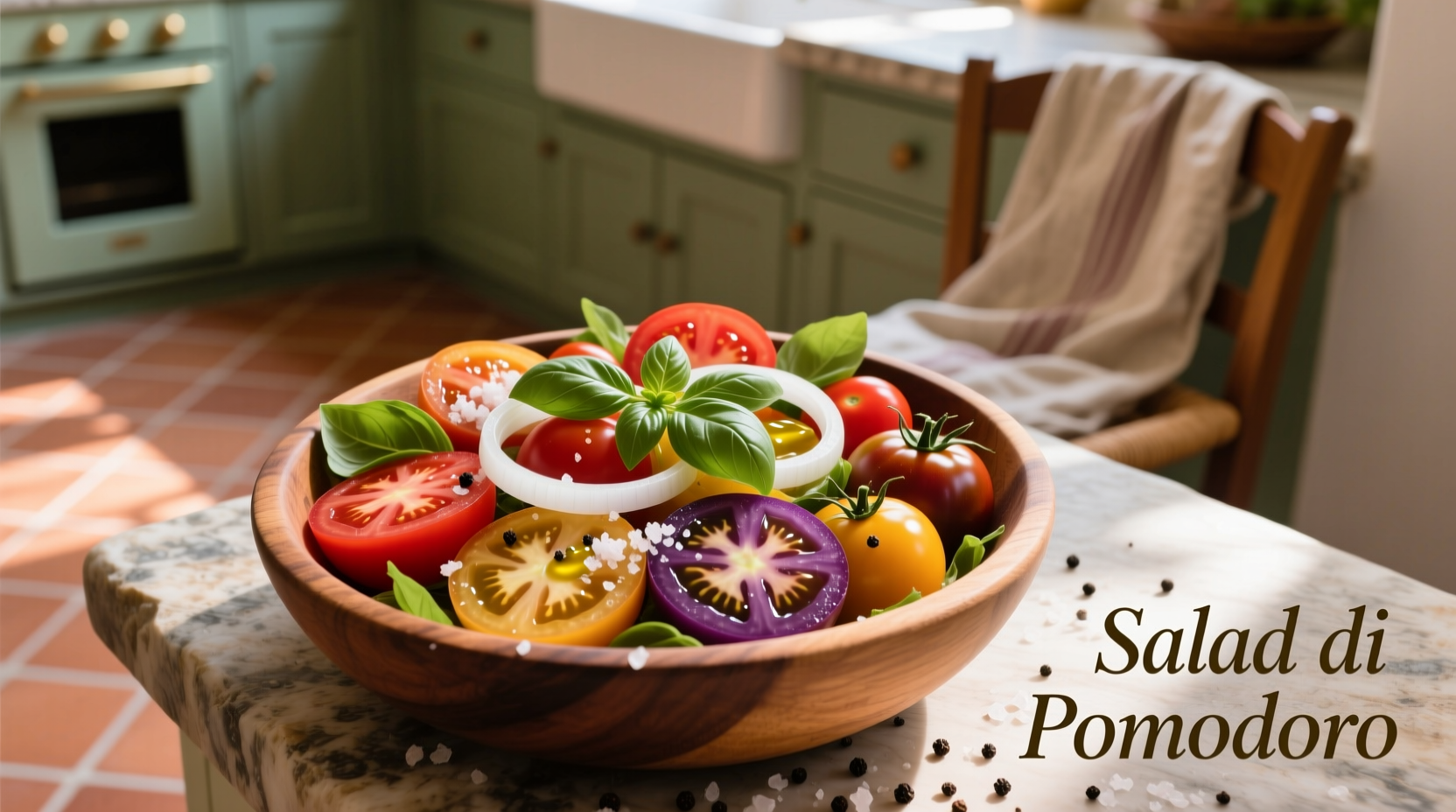
Nothing captures the essence of Italian summer quite like a perfectly crafted tomato salad. Forget complicated recipes—true Italian insalata di pomodoro celebrates simplicity and quality ingredients. In this guide, you'll discover the authentic preparation method perfected over generations, including regional variations you won't find in most cookbooks.
Why Most Tomato Salads Miss the Mark
Supermarket recipes often overload tomatoes with unnecessary ingredients, masking their natural sweetness. Authentic Italian preparation follows a precise philosophy: let the tomatoes shine. The magic happens through proper ingredient selection and technique—not quantity of components.
| Tomato Variety | Best For | Flavor Profile | Seasonality (Italy) |
|---|---|---|---|
| Cuore di Bue (Oxheart) | Classic preparation | Complex sweet-tart balance | July-September |
| Datterino | Caprese variations | Intensely sweet, low moisture | June-October |
| San Marzano | Cooked applications | Meaty texture, mild acidity | August-October |
| Pachino | Year-round preparation | Balanced sweetness | April-November |
Source: Italian Ministry of Agricultural, Food and Forestry Policies
The 4-Step Preparation Method Italians Use
1. Selecting & Preparing Tomatoes
Choose tomatoes at peak ripeness with deep color and slight give when gently squeezed. Never refrigerate—cold destroys flavor compounds. Cut horizontally through the equator, not vertically, to preserve seed jelly which contains essential flavor compounds.
2. The Salt Technique That Makes All the Difference
Sprinkle flaky sea salt (like sale marino) immediately after cutting. This draws out natural juices while maintaining texture. Wait 10 minutes before adding other ingredients—this critical step develops flavor complexity through osmosis.
3. Olive Oil Application Science
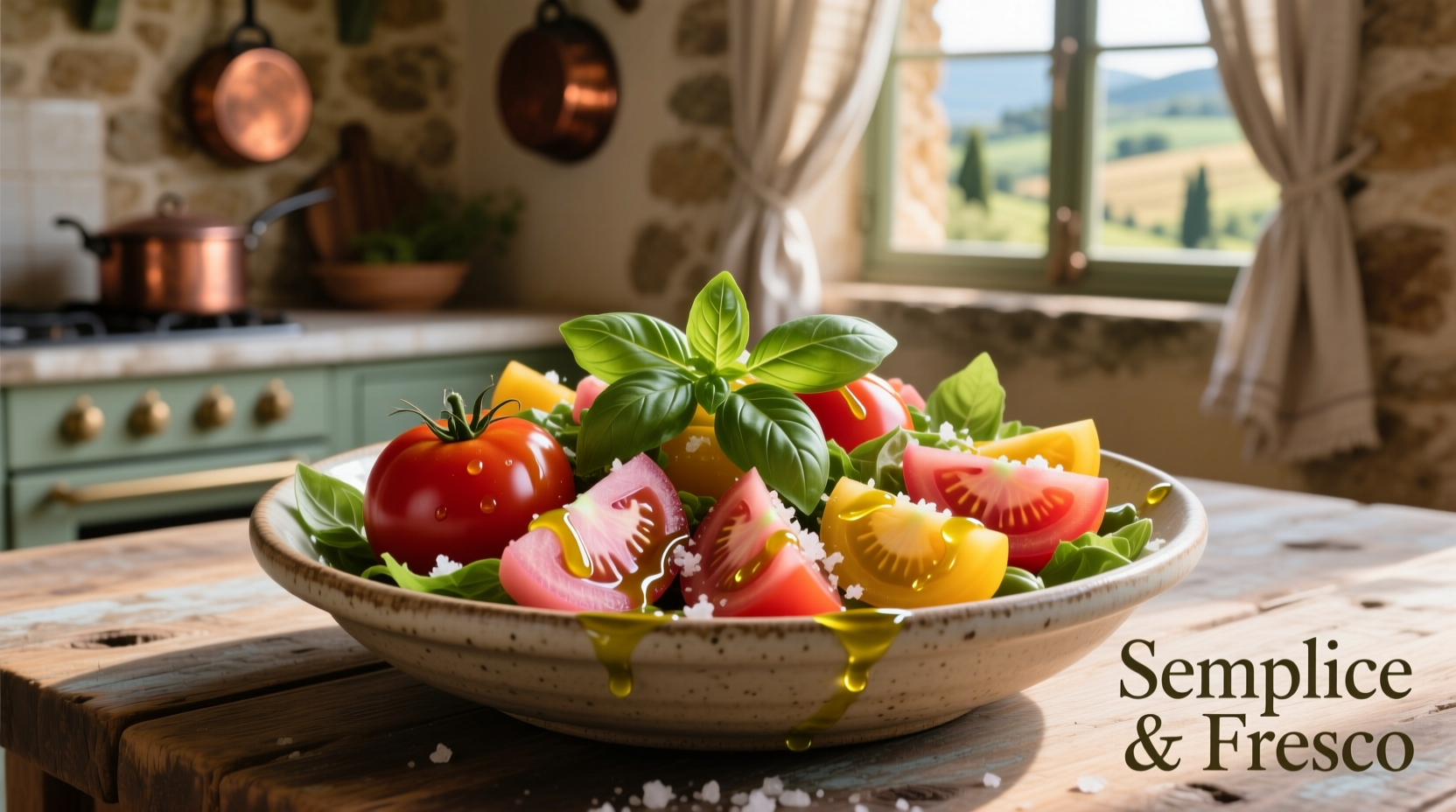
Pour extra virgin olive oil in a circular motion starting from the plate's edge, not directly on tomatoes. This creates a flavor barrier that prevents sogginess. Use Ligurian Taggiasca or Tuscan Frantoio varieties for authentic results. The ideal ratio: 3 tablespoons oil per pound of tomatoes.
4. Vinegar & Herb Integration
Add aged red wine vinegar (minimum 8% acidity) only after oil application. Tear basil leaves by hand—never cut—to prevent bruising. Place whole leaves on top rather than mixing to preserve volatile aromatic compounds.
Tomato's Journey Through Italian Cuisine
| Year | Event | Culinary Impact |
|---|---|---|
| 1548 | First documented tomato cultivation in Italy | Initially grown as ornamental plant in botanical gardens |
| 1692 | First tomato recipe published (Naples) | "Pomo d'oro" used in sauces, not salads |
| 1839 | Tomato salad appears in Tuscan cookbooks | Simple preparation with oil, salt, and wild herbs |
| 1950s | Post-war agricultural improvements | Development of regional salad variations across Italy |
Source: Accademia Italiana della Cucina
Regional Variations Worth Trying
While the basic preparation remains consistent, regional adaptations reflect Italy's diverse culinary landscape:
- Sicilian Style: Add capers and black olives (never anchovies—this is a common misconception)
- Sardinian Style: Incorporate wild fennel fronds instead of basil
- Ligurian Style: Finish with a sprinkle of pine nuts and lemon zest
- Southern Calabrian: Include a pinch of peperoncino flakes (used sparingly)
When Not to Make This Salad
Understanding context boundaries ensures authentic results:
- Avoid January-March: Off-season tomatoes lack sufficient brix (sugar) levels for authentic flavor
- Don't substitute balsamic: Traditional preparation uses only red wine vinegar—balsamic alters the flavor profile
- Never add garlic: This is an Americanized version—authentic Italian preparation keeps focus on tomatoes
- Don't serve chilled: Room temperature preserves volatile aromatic compounds
Perfect Pairing Guide
Traditional Italian meals follow specific sequencing:
- As antipasto: Serve before grilled fish or roasted chicken
- With bread: Pair with unsalted Tuscan bread to soak up juices
- Wine pairing: Light-bodied reds like Chianti Classico or dry white Vermentino
- Never with pasta: Tomatoes and pasta belong in separate courses
Storage & Timing Secrets
For best results, consume within 20 minutes of preparation. If necessary, store components separately:
- Cut tomatoes: Maximum 1 hour at room temperature
- Prepared salad: Never refrigerate—flavor degrades rapidly
- Make timing: Prepare 15 minutes before serving to allow flavors to develop




 浙公网安备
33010002000092号
浙公网安备
33010002000092号 浙B2-20120091-4