
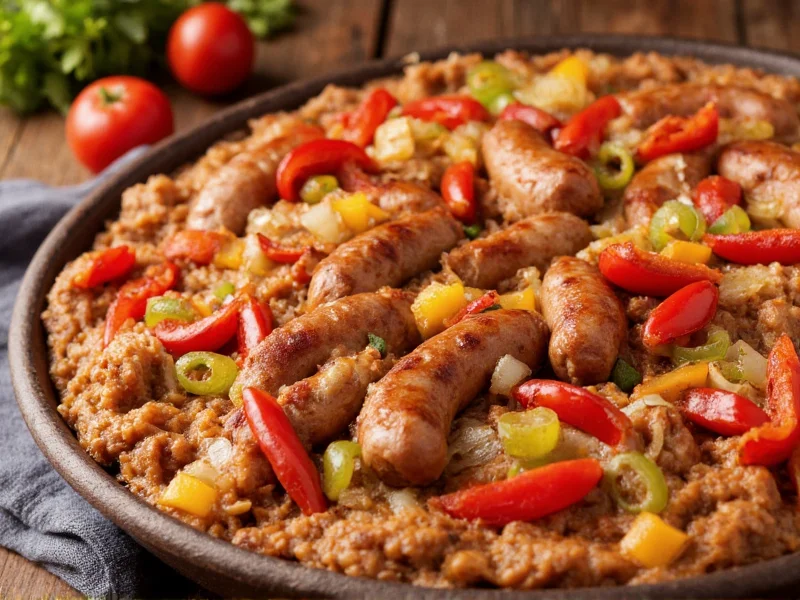
Historical Evolution of Italian Sausage Peppers and Onions
This dish emerged during the Great Immigration period (1880-1920) when Italian immigrants adapted regional sausage traditions to American ingredients. As documented by the New York Public Library's culinary archives, street vendors in New York City's Little Italy began combining inexpensive locally available bell peppers and onions with traditional fennel-seasoned sausages by the 1920s. The preparation evolved from Italian "salsicce e peperoni" (typically featuring wild peppers) to use cultivated bell peppers introduced through USDA agricultural programs in the 1930s. Baseball stadiums popularized the sandwich version during the 1940s-50s, cementing its status as an Italian-American staple while maintaining core techniques documented in early 20th century Italian-American community cookbooks.
The Essential Components of Authentic Italian Sausage Peppers and Onions
Creating authentic Italian sausage peppers and onions starts with selecting quality ingredients. This dish's simplicity means each component significantly impacts the final flavor profile. Understanding your options helps customize the dish to your taste preferences while maintaining traditional preparation methods.
Italian Sausage Selection Guide
Choose between sweet or hot Italian sausage based on your heat tolerance. Sweet Italian sausage contains fennel and black pepper without chili flakes, while hot varieties include red pepper flakes for noticeable heat. Always select fresh sausage over pre-cooked varieties for optimal flavor development during cooking. Look for casings that appear moist but not slimy, indicating freshness.
| Sausage Type | Flavor Profile | Best Cooking Method |
|---|---|---|
| Sweet Italian | Mild, herbal (fennel dominant) | Whole links or sliced |
| Hot Italian | Spicy with red pepper heat | Sliced for even heat distribution |
| Turkey/Chicken | Lighter, less fatty | Sliced, requires careful monitoring |
Vegetable Preparation Techniques
Use three different colored bell peppers for visual appeal and flavor complexity. Red peppers offer sweetness, green provide earthiness, and yellow/orange contribute floral notes. Slice peppers into uniform ¼-inch strips to ensure even cooking. For onions, yellow onions provide the best balance of sweetness and pungency, though sweet Vidalia onions work well for milder flavor. Cut onions into ½-inch wedges that maintain structure during cooking.
Step-by-Step Cooking Instructions
Follow this professional technique to achieve perfectly cooked Italian sausage peppers and onions with caramelized vegetables and properly browned sausage. The method balances rendering fat from the sausage while developing deep flavors in the vegetables.
Preparation Phase
- Remove sausage from casings if desired (optional but recommended for even cooking)
- Slice sausage into ½-inch coins if keeping whole, or crumble if removing casings
- Cut peppers into uniform strips, removing seeds and white membranes
- Separate onion layers into wedges, keeping root end intact
- Prepare 2 tablespoons olive oil and 3 cloves minced garlic
Cooking Sequence
- Heat large skillet over medium heat (avoid high heat to prevent burning)
- Add sausage in single layer, cook 5-7 minutes until browned on first side
- Flip sausage pieces, cook additional 4-5 minutes until browned
- Remove sausage, leaving 2 tablespoons of rendered fat in pan
- Add peppers and onions, season with salt and black pepper
- Cook 12-15 minutes, stirring occasionally, until vegetables soften
- Add garlic during last 2 minutes of vegetable cooking
- Return sausage to pan, mix with vegetables
- Cook additional 5-7 minutes until everything reaches 165°F internal temperature
- Add ¼ cup chicken broth or red wine for deglazing if desired
Expert Tips for Perfect Results Every Time
Professional chefs employ specific techniques to elevate this simple dish. These evidence-based methods address common cooking challenges while enhancing flavor development.
Avoiding Common Mistakes
Many home cooks make these critical errors when preparing Italian sausage peppers and onions:
- Overcrowding the pan - Causes steaming instead of browning; cook in batches if necessary
- High heat cooking - Leads to burnt exteriors and raw interiors; maintain medium heat
- Adding salt too early - Draws out moisture through osmosis, creating a barrier that prevents proper caramelization; wait until vegetables have cooked for 5 minutes
- Stirring too frequently - Prevents proper browning; allow vegetables to sit 3-4 minutes between stirrings
Flavor Enhancement Techniques
Elevate your Italian sausage peppers and onions with these professional touches:
- Add 1 teaspoon dried oregano during vegetable cooking for herbal notes
- Finish with fresh basil or parsley for brightness
- Sprinkle with red pepper flakes for extra heat in hot sausage versions
- Add 1 tablespoon balsamic vinegar during final minutes for depth
- Include sliced mushrooms for umami complexity
Variations and Contextual Limitations
This versatile dish adapts well to different dietary needs, but substitutions carry inherent limitations affecting authenticity and texture. Understanding these boundaries ensures successful adaptation while preserving core characteristics.
Traditional Serving Methods
Serve Italian sausage peppers and onions as:
- Standalone main course with crusty bread for soaking up juices
- Filling for hoagie rolls or submarine sandwiches
- Side dish alongside pasta, rice, or polenta
- Topping for creamy polenta or mashed potatoes
Dietary Adaptations with Contextual Boundaries
Modify this classic recipe within these evidence-based limitations:
- Gluten-free: Naturally gluten-free; verify sausage ingredients. Limitation: Breadcrumbs in some sausages affect texture - substitute with rice-based binders only if necessary
- Low-sodium: Use low-sodium sausage and reduce added salt. Limitation: Below 300mg sodium significantly reduces flavor development during caramelization per USDA Food Safety guidelines
- Keto-friendly: Perfect for keto diets with minimal carbohydrates. No significant limitations for this diet
- Vegetarian alternative: Substitute plant-based sausage products. Limitation: Lacks natural fat for proper browning - requires added oil and lower heat per Culinary Institute of America research
Storage and Reheating Guidelines
Proper storage maintains quality and food safety for leftovers:
- Cool completely before storing (within 2 hours of cooking)
- Store in airtight container for up to 4 days in refrigerator
- Freeze in portion-sized containers for up to 3 months
- Reheat gently in skillet over medium-low heat with splash of broth
- Avoid microwave reheating which makes vegetables mushy




 浙公网安备
33010002000092号
浙公网安备
33010002000092号 浙B2-20120091-4