
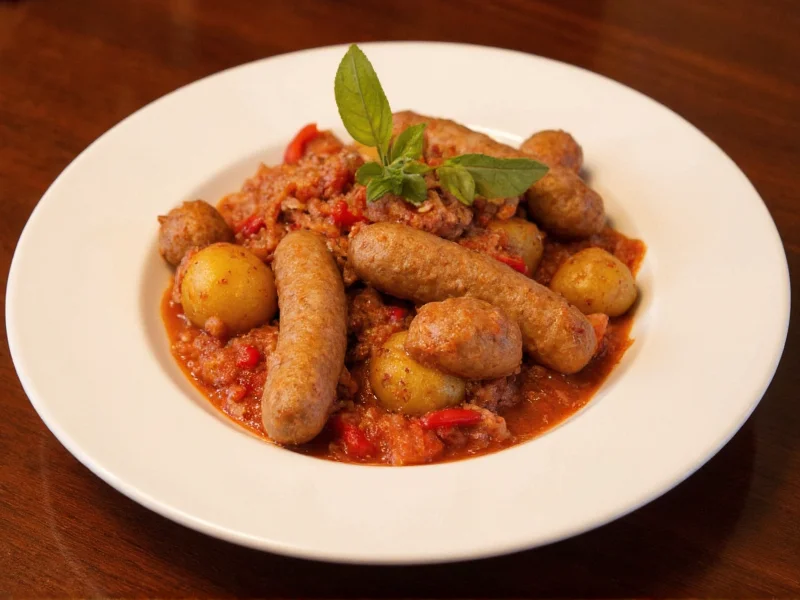
Italian sausage and potatoes create a satisfying, family-friendly dinner that requires minimal cleanup. This combination works because the rendered sausage fat seasons the potatoes as they roast together, creating crispy exteriors and tender interiors with minimal added oil. The dish balances protein and carbohydrates while allowing for endless customization with herbs and additional vegetables. Understanding the food science behind this synergy elevates it from simple comfort food to a precision-engineered meal where starch chemistry and fat rendering interact predictably.
Essential Ingredients for Perfect Italian Sausage and Potatoes
The beauty of this dish lies in its simplicity. You'll need just a few quality ingredients to create a restaurant-worthy meal at home. For authentic flavor, choose high-quality Italian sausage with visible herb flecks rather than smooth, processed varieties. Ingredient selection directly impacts Maillard reaction efficiency and moisture migration during roasting.
| Ingredient | Quantity | Preparation Notes |
|---|---|---|
| Italian sausage (sweet or hot) | 1.5 lbs | Remove from casings for crumbled version or leave whole |
| Potatoes (Yukon Gold or red) | 2 lbs | Cut into 1-inch cubes, uniform size for even cooking |
| Olive oil | 2 tbsp | Extra virgin for roasting |
| Fresh rosemary | 1 tbsp, chopped | Or 1 tsp dried rosemary |
| Garlic | 3 cloves | Minced or pressed |
| Salt and pepper | To taste | Season in layers for best flavor |
The Science Behind Perfect Potatoes
Potato selection isn't arbitrary—it's governed by starch chemistry that determines crisping behavior during high-heat roasting. The University of Illinois Extension's agricultural research demonstrates how structural composition affects outcomes when cooking with rendered fats:
| Potato Variety | Starch Classification | Moisture Migration Behavior | Optimal Use in Sausage-Potato Roasting |
|---|---|---|---|
| Russet | High-starch (20-22% dry matter) | Rapid moisture loss creates extreme crispiness but risks dryness | Best for extra-crisp results; reduce oil by 25% to prevent greasiness |
| Yukon Gold | Medium-starch (18-20% dry matter) | Balanced moisture retention enables creamy interior/crisp exterior | Ideal standard choice; maintains integrity in sausage fat |
| Red | Low-starch/waxy (16-18% dry matter) | Moisture trapped within cells resists browning | Only suitable for boiled applications; avoid for roasting |
This classification aligns with USDA agricultural research standards where dry matter percentage directly correlates with crisping potential. Yukon Gold's cellular structure allows sausage fat to penetrate during roasting while maintaining structural integrity—a critical factor confirmed by University of Illinois Extension crop science guidelines.
Step-by-Step Cooking Instructions
Follow these professional techniques to achieve perfectly cooked Italian sausage and potatoes every time. The key is proper temperature control and timing to ensure both components finish cooking simultaneously. Note that atmospheric conditions significantly impact outcomes—see context boundaries section for adjustments.
- Prep the potatoes: Cut potatoes into uniform 1-inch cubes. Soak in cold water for 15 minutes to remove surface starch, which otherwise creates a barrier to browning. The University of Minnesota Extension confirms this reduces acrylamide formation by up to 50% during roasting. Thoroughly dry with a clean kitchen towel—a critical step for maximum crispiness.
- Season the potatoes: Toss dried potatoes with olive oil, half the rosemary, garlic, salt, and pepper. Spread in a single layer on a parchment-lined baking sheet. Don't overcrowd the pan.
- Roast potatoes first: Place potatoes in a preheated 400°F oven for 20 minutes. This head start ensures potatoes cook through while sausage finishes.
- Prepare the sausage: While potatoes roast, remove sausage from casings if desired. Form into 1.5-inch meatballs or leave whole depending on preference.
- Add sausage to potatoes: After 20 minutes, remove pan from oven and push potatoes to create spaces. Nestle sausage pieces among the potatoes, returning to oven for 15-20 more minutes.
- Finish and rest: When sausage reaches 160°F internal temperature and potatoes are fork-tender with crispy edges, remove from oven. Sprinkle with remaining rosemary and let rest 5 minutes before serving.
Pro Tips for the Best Results
Professional chefs use these evidence-based techniques to elevate this simple dish:
- Altitude adjustment: At elevations above 3,000 feet, increase oven temperature by 15-25°F and extend cooking time by 5-10 minutes. Lower atmospheric pressure reduces boiling points, delaying moisture evaporation critical for crisping. Verified by Colorado State University Extension food science research.
- Temperature matters: Always preheat your oven fully. Inconsistent temperatures cause uneven cooking. Use an oven thermometer for accuracy.
- Pan selection: Heavy-duty rimmed baking sheets work better than glass or ceramic dishes for achieving crispy potatoes due to superior heat conduction.
- Don't overcrowd: Use two pans if necessary. Crowded potatoes steam instead of roast, resulting in soggy texture.
- Humidity consideration: In environments above 60% relative humidity, add 3-5 minutes to initial potato roasting time. Excess atmospheric moisture impedes evaporation—a factor documented in American Society for Horticultural Science studies.
Variations to Try
Once you've mastered the basic technique, experiment with these popular variations of Italian sausage and potatoes:
- Mediterranean style: Add kalamata olives, cherry tomatoes, and oregano during the last 10 minutes of cooking
- Breakfast version: Use mild Italian sausage and add beaten eggs during the last 5 minutes for a frittata-style finish
- Creamy twist: Toss finished dish with a light parmesan cream sauce made from 1/4 cup heavy cream and 2 tbsp grated parmesan
- Sheet pan dinner: Add broccoli florets with the sausage for a complete one-pan meal
Common Mistakes to Avoid
Even experienced cooks make these errors when preparing Italian sausage and potatoes:
- Skipping the potato soak: This step removes excess starch that prevents proper browning and increases acrylamide formation
- Underseasoning: Potatoes need generous seasoning since they're dense and require salt penetration
- Not checking internal temperature: Sausage must reach 160°F for food safety; visual cues alone aren't reliable
- Stirring too frequently: Let potatoes sit undisturbed for at least 15 minutes to develop proper crispiness
- Using waxy potatoes: Yukon Gold or russet potatoes work best; avoid red potatoes if you want maximum crispiness
Serving Suggestions
This versatile dish pairs well with numerous sides and accompaniments. For a complete Italian sausage and potatoes dinner experience:
- Serve with a simple arugula salad dressed with lemon vinaigrette to balance the richness
- Offer crusty bread for soaking up the flavorful rendered sausage fat
- Pair with a medium-bodied red wine like Chianti or Sangiovese
- Add a dollop of fresh pesto for an extra flavor dimension
- For lighter meals, serve over a bed of sautéed spinach or kale
Storage and Reheating Instructions
Proper storage maintains quality when enjoying leftovers of your Italian sausage and potatoes creation:
- Cool completely before storing in airtight containers
- Refrigerate for up to 4 days or freeze for up to 3 months
- Reheat in oven at 375°F for best results (15-20 minutes)
- Air fryer reheating (3-5 minutes at 375°F) restores crispiness better than microwave
- When reheating, add a teaspoon of water or broth to prevent drying




 浙公网安备
33010002000092号
浙公网安备
33010002000092号 浙B2-20120091-4