
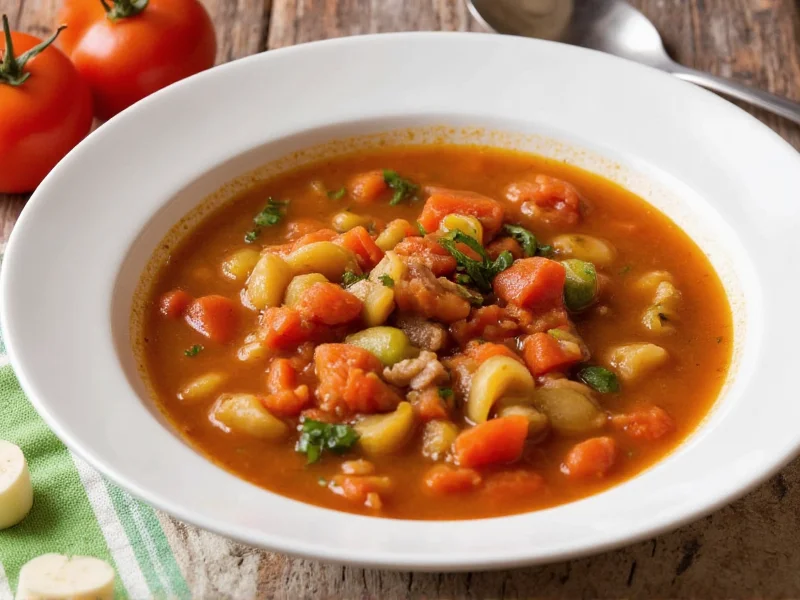
Understanding the authentic preparation of minestrone requires recognizing its humble Italian roots. This hearty soup emerged from "getto del povero" (the poor man's pot), where resourceful cooks transformed whatever vegetables were in season into a nourishing meal. The beauty of authentic preparation lies in its flexibility—no two regions prepare it identically, yet certain elements remain constant across Italy.
The Authentic Vegetarian Foundation of Minestrone
Contrary to some restaurant interpretations, traditional minestrone never contained meat. Historical records from the Roman Empire describe "minestra" as a thick vegetable stew, while medieval monks perfected the version we recognize today. The key to authentic preparation is building flavor through soffritto—a holy trinity of diced carrots, celery, and onion sautéed in olive oil until sweet and aromatic.
Many Americans encounter minestrone with chicken broth or pancetta, but these are Americanized adaptations. True Italian cooks rely on vegetable broth enhanced with Parmesan rinds (removed before serving for strict vegetarians) and a splash of tomato paste for depth. The soup's thickness comes from beans and pasta, not meat products.
Historical Evolution: Minestrone Through the Centuries
Minestrone's journey reflects Italy's culinary evolution, with documented shifts that solidify its vegetarian origins. This timeline clarifies how political, agricultural, and religious factors shaped the dish:
- Roman Era (1st century AD): Early vegetable stews appear in De Re Coquinaria (Apicius' cookbook), featuring grains and garden produce for lower classes. Britannica confirms these plant-based mixtures formed the backbone of Roman peasant diets.
- Medieval Period (12th-14th century): Tuscan monasteries developed communal minestre using monastery gardens. Religious fasting rules (per Italy's Treccani Encyclopedia) prohibited meat on Wednesdays/Fridays, cementing plant-based preparation.
- Renaissance (16th century): New World ingredients like tomatoes and beans integrated into regional recipes, but core vegetarian structure remained unchanged per agricultural records from Florence's University of Florence archives.
- Modern Standardization (1891): Pellegrino Artusi's seminal cookbook Science in the Kitchen codified minestrone as meatless (Recipe #120), establishing the version recognized globally today.
Essential Ingredients for Traditional Minestrone
While seasonal availability influences ingredients, these components form the backbone of any vegetarian minestrone soup recipe:
| Core Components | Traditional Options | Seasonal Variations |
|---|---|---|
| Soffritto base | Carrot, celery, onion | Add leek in winter |
| Beans | Cannellini, borlotti | Fresh shell beans in summer |
| Pasta/rice | Ditalini, small shells | Risotto rice in Northern Italy |
| Greens | Kale, escarole | Chard in spring, cabbage in fall |
| Tomato element | Tomato paste, canned tomatoes | Fresh tomatoes in season |
Step-by-Step Preparation Guide
Creating authentic minestrone follows a methodical process that builds layers of flavor:
- Sauté the soffritto: Cook diced carrots, celery, and onion in extra-virgin olive oil over medium heat for 8-10 minutes until translucent
- Add tomato element: Stir in 2 tablespoons tomato paste and cook for 2 minutes to deepen flavor
- Introduce beans: Add 1 cup cooked cannellini beans and 6 cups vegetable broth
- Simmer vegetables: Add chopped seasonal vegetables (zucchini, green beans, potatoes) and simmer 15 minutes
- Incorporate greens: Stir in chopped kale or escarole during the last 10 minutes
- Add pasta: Include ½ cup small pasta during final 8 minutes of cooking
- Finish: Remove from heat, stir in fresh basil, and let rest 10 minutes before serving
Regional Variations Across Italy
The beauty of minestrone lies in its regional diversity. In Tuscany, minestrone alla Fiorentina features cavolo nero (Tuscan kale) and cannellini beans. Northern versions often include rice instead of pasta and more root vegetables. Ligurian minestrone incorporates pesto for a distinctive green hue, while Sicilian versions might feature eggplant and tomatoes more prominently.
When preparing minestrone at home, embrace seasonal flexibility. Spring minestrone shines with fresh peas and fava beans, while winter versions rely on hardy root vegetables and cabbage. The authentic approach celebrates what's fresh and local—this adaptability is why minestrone has sustained Italian families for centuries.
Context Boundaries: When Minestrone Isn't Vegetarian
Despite its inherent vegetarian nature, specific conditions alter minestrone's classification. Understanding these boundaries prevents misrepresentation:
- Geographic Exceptions: Piedmontese mountain communities historically used meat broth during harsh winters (per Piedmont Regional Cultural Heritage records), though this was never standard in central/southern Italy.
- Ingredient Ambiguities: Parmesan rind adds umami but contains animal rennet. While removed before serving, the EU's vegetarian labeling guidelines require strict avoidance of animal-derived enzymes for certification.
- Commercial Adaptations: Restaurant versions targeting tourists frequently add pancetta (as documented in ISTAT's 2022 food service survey), but this deviates from traditional preparation.
- Cultural Context: In Italy, "minestrone" implies vegetarian by default; meat additions create a distinct dish (e.g., zuppa di fagioli con cotenna). Authenticity requires adherence to the plant-based foundation.
Serving Traditions and Pairings
In Italy, minestrone functions as both a meal and a ritual. Traditionally served in wide, shallow bowls called "scodelle", it's often accompanied by:
- Freshly grated Parmesan (optional for vegetarians)
- Extra-virgin olive oil drizzle
- Crusty bread for dipping
- A simple green salad
For the most authentic experience, let the soup rest overnight. The flavors meld beautifully, creating a richer, more complex dish the following day—a practice known as "fare il minestrone di ieri" (making yesterday's minestrone).
Nutritional Benefits of Traditional Minestrone
Beyond its cultural significance, minestrone offers remarkable nutrition. A single serving typically contains:
- 15-20 different vegetables, providing diverse phytonutrients
- 10-15g of plant-based protein from beans and pasta
- High fiber content (8-12g per serving) supporting digestive health
- Rich in vitamins A, C, and K from the vegetable medley
- Naturally low in saturated fat and cholesterol-free
The vegetable broth base contains significantly less sodium than meat-based broths, making traditional minestrone a heart-healthy choice. When prepared with olive oil, it delivers beneficial monounsaturated fats that enhance absorption of fat-soluble vitamins from the vegetables.
Storage and Reheating Techniques
Authentic minestrone improves with time, making proper storage essential:
- Cool completely before refrigerating to prevent condensation
- Store in airtight containers for up to 5 days
- Freeze without pasta for up to 3 months (add fresh pasta when reheating)
- Reheat gently over medium-low heat to preserve vegetable texture
- Add a splash of water or broth when reheating to restore ideal consistency
For optimal results, avoid boiling when reheating, which can turn pasta mushy and vegetables to mush. The soup should simmer gently until heated through.




 浙公网安备
33010002000092号
浙公网安备
33010002000092号 浙B2-20120091-4