
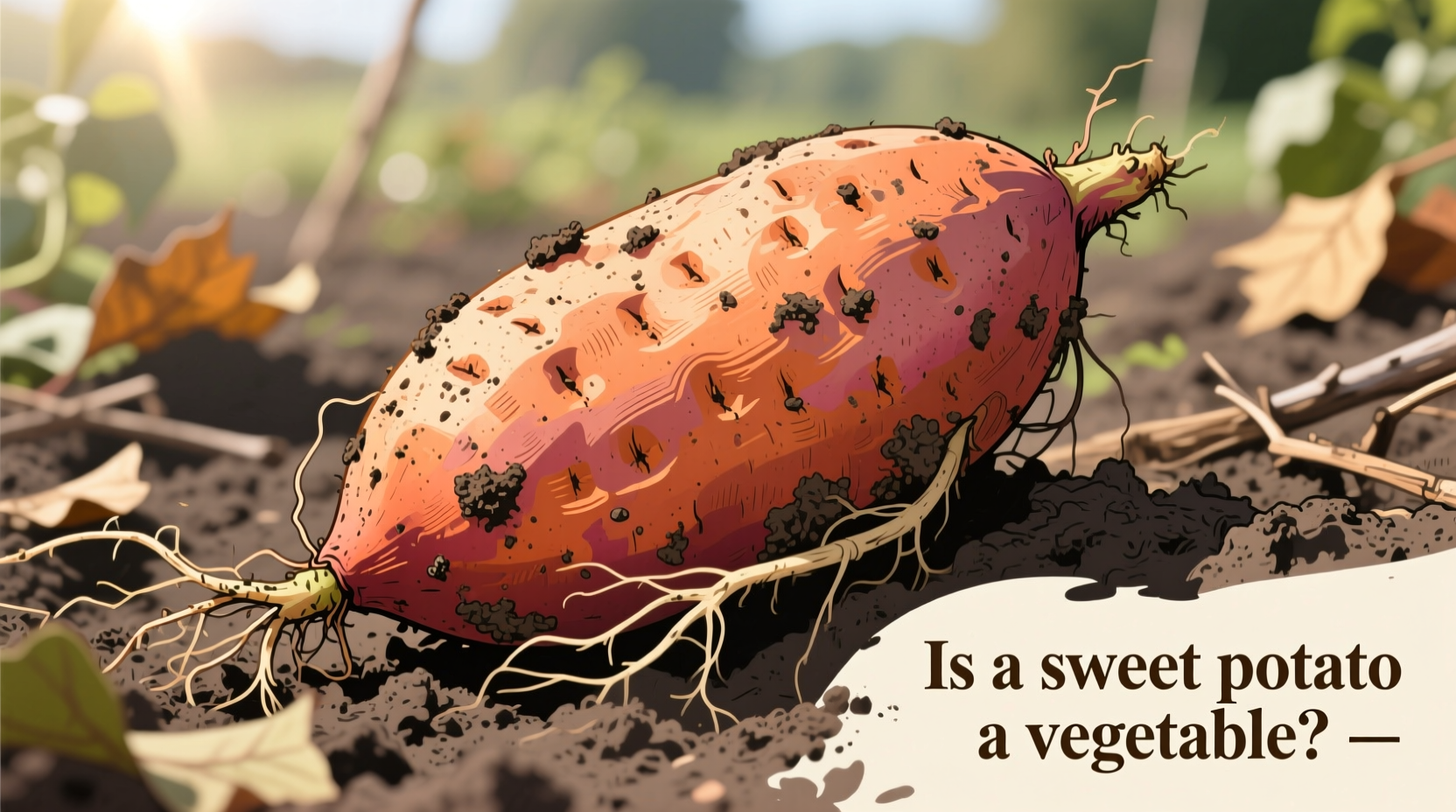
Confused about whether sweet potatoes qualify as vegetables? You're not alone. This common kitchen staple often sparks debate among home cooks, nutritionists, and botanists. Understanding the classification of sweet potatoes matters for meal planning, dietary guidelines, and even gardening decisions. Let's clarify this once and for all with science-backed information you can trust.
Botanical Reality vs. Culinary Classification
From a strict botanical perspective, sweet potatoes (Ipomoea batatas) aren't technically vegetables. They're storage roots—swollen root structures that store nutrients for the plant. Unlike true vegetables (which include leaves, stems, and flowers), sweet potatoes develop from the plant's root system.
However, culinary tradition and nutritional guidelines universally classify sweet potatoes as vegetables. The USDA's MyPlate system places them firmly in the vegetable group, specifically under "orange vegetables" due to their beta-carotene content. This practical classification reflects how we prepare and consume them in everyday cooking.
Sweet Potato vs. Regular Potato: Key Differences
| Characteristic | Sweet Potato | Regular Potato |
|---|---|---|
| Botanical Family | Morning glory (Convolvulaceae) | Nightshade (Solanaceae) |
| Plant Structure | Storage root | True tuber (modified stem) |
| Nutritional Highlight | Vitamin A (beta-carotene) | Vitamin C, Potassium |
| Culinary Classification | Vegetable | Starchy vegetable |
This distinction matters because nightshade plants (like regular potatoes) contain solanine, while sweet potatoes don't. The USDA's Agricultural Research Service confirms that despite their botanical differences, both are nutritionally categorized as vegetables in dietary planning.
Nutritional Powerhouse: Why Classification Matters for Your Health
Whether you're following dietary guidelines or managing specific health conditions, understanding sweet potatoes' vegetable classification impacts your nutrition strategy. One medium sweet potato (130g) provides:
- 438% of your daily vitamin A needs (as beta-carotene)
- 37% of vitamin C requirements
- 27% of your daily manganese
- Substantial fiber content (5g per serving)
According to research published in the Journal of Nutrition and Metabolism, sweet potatoes' high beta-carotene content converts to vitamin A in the body, supporting vision, immune function, and skin health—key reasons they're grouped with other vegetable powerhouses like carrots and pumpkin.
Culinary Applications: Using Sweet Potatoes as Vegetables
Professional chefs and home cooks consistently treat sweet potatoes as vegetables in meal planning. Maya Gonzalez, Latin American cuisine specialist, explains: "In traditional cooking across the Americas, sweet potatoes function as vegetables—roasted as side dishes, added to stews, or featured in vegetable-based mains. Their natural sweetness complements savory preparations without requiring additional sugars."
Try these vegetable-style preparations:
- Roast cubed sweet potatoes with olive oil and rosemary
- Add to vegetable stir-fries during the last 5 minutes of cooking
- Create vegetable-based soups with sweet potato as the base
- Substitute for carrots in vegetable gratins
Common Misconceptions Clarified
Misconception: "Sweet potatoes are fruits because they're sweet."
Reality: Sweetness doesn't determine fruit classification. Fruits develop from flower ovaries and contain seeds. Sweet potatoes are root vegetables regardless of sugar content.
Misconception: "Sweet potatoes and yams are the same thing."
Reality: True yams (Dioscorea species) are botanically distinct, starchier, and rarely sold in North American grocery stores. What's labeled "yam" in US supermarkets is almost always a sweet potato variety.
Misconception: "Sweet potatoes count as carbohydrates, not vegetables."
Reality: While they're higher in carbs than leafy greens, sweet potatoes still qualify as vegetables nutritionally. The Dietary Guidelines for Americans specifically categorize them under vegetables, noting their nutrient density outweighs carbohydrate content.
Practical Takeaways for Your Kitchen
Understanding sweet potatoes' vegetable classification helps you make informed dietary choices:
- Count sweet potatoes toward your daily vegetable servings (1 cup cooked = 1 serving)
- Pair with protein sources for balanced meals (e.g., sweet potato and black bean bowls)
- Choose baking or steaming over frying to preserve nutritional benefits
- Leave the skin on when possible for additional fiber and nutrients
When meal planning, remember that sweet potatoes function as vegetables in dietary patterns worldwide. The Food and Agriculture Organization of the United Nations recognizes sweet potatoes as a critical vegetable crop for food security due to their nutritional profile and adaptability to various growing conditions.
Frequently Asked Questions
Are sweet potatoes considered vegetables in dietary guidelines?
Yes, all major dietary guidelines including the USDA MyPlate, Dietary Guidelines for Americans, and World Health Organization classifications categorize sweet potatoes as vegetables, specifically within the orange vegetable subgroup due to their high beta-carotene content.
What's the difference between sweet potatoes and regular potatoes in terms of classification?
Sweet potatoes are storage roots from the morning glory family, while regular potatoes are true tubers (modified stems) from the nightshade family. Nutritionally, both are classified as vegetables, but sweet potatoes contain significantly more vitamin A and have a different carbohydrate profile.
Can I count sweet potatoes toward my daily vegetable intake?
Absolutely. One cup of cooked sweet potato counts as one full vegetable serving according to USDA guidelines. They're particularly valuable as they provide nutrients often missing in typical diets, especially vitamin A.
Why do some people think sweet potatoes aren't vegetables?
This confusion stems from botanical versus culinary classification. Botanically, sweet potatoes are storage roots, not "true" vegetables. However, in nutritional science and culinary practice, they're universally treated as vegetables due to how they're grown, harvested, prepared, and their nutritional profile.




 浙公网安备
33010002000092号
浙公网安备
33010002000092号 浙B2-20120091-4