
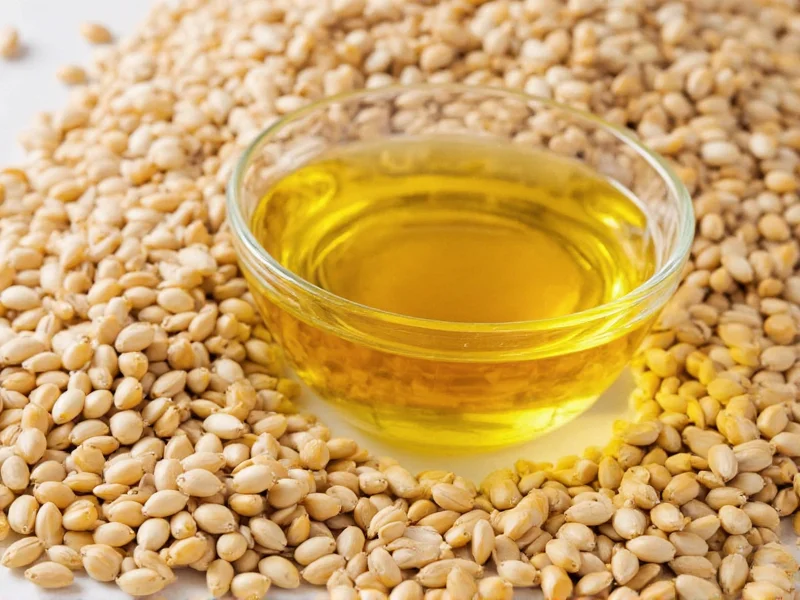
Sesame oil's classification often causes confusion due to inconsistent terminology in culinary and nutritional discussions. Understanding the botanical basis for this categorization requires examining both the source material and extraction process. Unlike olive oil (a fruit oil) or coconut oil (a fruit-derived oil), sesame oil comes from mature sesame seeds that have been separated from their protective seed pods.
Botanical Classification of Sesame Seeds
Sesame plants produce seed pods that burst open when ripe, releasing dozens of tiny seeds. These seeds contain 45-60% oil by weight, making them one of the oil-rich seeds commercially processed for culinary use. From a botanical perspective, sesame seeds qualify as true seeds because they develop from the fertilized ovule of the flower and contain an embryo surrounded by a protective seed coat.
Historical Evolution of Sesame Oil Classification
Understanding sesame oil's classification requires examining its historical context. While the botanical definition has remained consistent, its culinary and regulatory recognition has evolved:
- 3500-3050 BC: Earliest archaeological evidence of sesame cultivation in the Indus Valley, with oil extraction for culinary and ritual use [Source: USDA National Plant Germplasm System]
- 2000 BC: Babylonian records document sesame oil production techniques, distinguishing it from fruit-derived oils like olive [Source: FAO Agricultural Studies]
- 1860s: Introduction to the United States, where early agricultural reports misclassified sesame as a \"nut\" due to its hard seed pods, contributing to persistent confusion [Source: USDA National Plant Germplasm System]
- 2021: FDA officially recognized sesame as a major food allergen (distinct from tree nuts), resolving decades of labeling ambiguity [Source: U.S. Food and Drug Administration]
This timeline demonstrates how sesame oil's classification shifted from practical observation to scientific precision, resolving longstanding culinary ambiguities.
Seed Oils vs. Other Oil Classifications
The term \"seed oil\" specifically refers to oils extracted from plant seeds, distinguishing them from:
- Fruit oils (like olive or avocado oil) extracted from fleshy fruits
- Nut oils (like walnut or almond oil) derived from hard-shelled fruits containing a single seed
- Legume oils (like peanut oil) from plants in the legume family
| Oil Type | Source Material | Botanical Classification | Common Examples |
|---|---|---|---|
| Seed Oils | Mature plant seeds | True seeds | Sesame, sunflower, pumpkin, flaxseed |
| Fruit Oils | Fleshy fruit mesocarp | Simple or drupe fruits | Olive, palm, avocado |
| Nut Oils | Hard-shelled fruits | Drupe or true nuts | Walnut, macadamia, hazelnut |
| Legume Oils | Podded seeds | Fruit pods containing seeds | Peanut, soybean |
Why Sesame Oil Isn't Considered a Nut Oil
Despite common misconceptions, sesame seeds are not nuts. They belong to the Pedaliaceae family, while tree nuts come from various unrelated plant families. This distinction matters for several reasons:
- Allergen classification: Sesame is a seed allergen, not a tree nut allergen, though cross-reactivity can occur in some individuals
- Nutritional composition: Seed oils generally contain different fatty acid profiles than nut oils
- Culinary properties: Sesame oil has a higher smoke point than most nut oils
When Classification Matters: Critical Contexts
Sesame oil's seed oil classification carries practical significance only in specific scenarios. Recognizing these boundaries prevents overgeneralization:
- Allergen Management: Essential for individuals with seed allergies (sesame is a seed allergen) but generally irrelevant for tree nut allergies unless cross-reactivity occurs. Boundary condition: The FDA's 2023 labeling requirement specifically mandates sesame disclosure as a seed allergen, distinct from tree nuts [Source: FDA Food Allergen Labeling]
- Culinary Applications: Critical when selecting oils for high-heat cooking (refined sesame oil's 410°F smoke point makes it suitable) but less relevant for cold applications. Boundary condition: Unrefined sesame oil has a lower smoke point (350°F), demonstrating that processing method can override botanical classification in practice [Source: Texas A&M AgriLife Extension]
- Nutritional Guidance: Important when comparing fatty acid profiles (seed oils tend to be higher in omega-6) but secondary to overall dietary patterns. Boundary condition: Cold-pressed sesame oil contains unique lignans (sesamin, sesamol) not found in most seed oils, providing antioxidant benefits that make broad \"seed oil\" generalizations nutritionally inaccurate [Source: NIH National Center for Biotechnology Information]
Nutritional Implications of Sesame Oil Classification
As a seed oil, sesame oil shares certain nutritional characteristics with other seed-derived oils:
- Rich in polyunsaturated and monounsaturated fats
- Naturally contains sesamol and sesamin, unique lignans with antioxidant properties
- Higher in omega-6 fatty acids compared to olive oil but more balanced than many processed seed oils
- Contains vitamin E and phytosterols that support heart health
Unlike highly refined seed oils such as soybean or corn oil, traditional sesame oil production typically involves minimal processing, preserving more of the seed's natural compounds. This makes it nutritionally distinct from the industrially processed seed oils often criticized in dietary discussions.
Addressing Common Misconceptions
Several factors contribute to confusion about sesame oil's classification:
- Terminology overlap: The term \"vegetable oil\" is often incorrectly used as synonymous with \"seed oil\"
- Processing differences: Some seed oils undergo extensive refining that alters their nutritional profile
- Allergen labeling: Recent FDA requirements classifying sesame as an allergen alongside nuts has created confusion
- Culinary usage: Sesame oil's strong flavor profile differs from more neutral seed oils
It's important to recognize that not all seed oils are nutritionally equivalent. Cold-pressed sesame oil retains more beneficial compounds than highly refined seed oils extracted using chemical solvents. The health implications of consuming sesame oil differ significantly from those of processed seed oils commonly found in packaged foods.
Practical Considerations for Consumers
Understanding sesame oil's classification as a seed oil helps consumers make informed choices:
- Those with seed allergies should exercise caution with sesame oil
- Nut allergy sufferers may safely consume sesame oil unless specifically allergic to seeds
- The oil's stability makes it suitable for both high-heat cooking and finishing applications
- Organic, cold-pressed varieties preserve more of the seed's natural nutrients
When evaluating oils for dietary purposes, consider both the botanical source and processing method. Sesame oil's status as a minimally processed seed oil gives it nutritional advantages over many commercially refined seed oils while maintaining the characteristic benefits of seed-derived fats.




 浙公网安备
33010002000092号
浙公网安备
33010002000092号 浙B2-20120091-4