
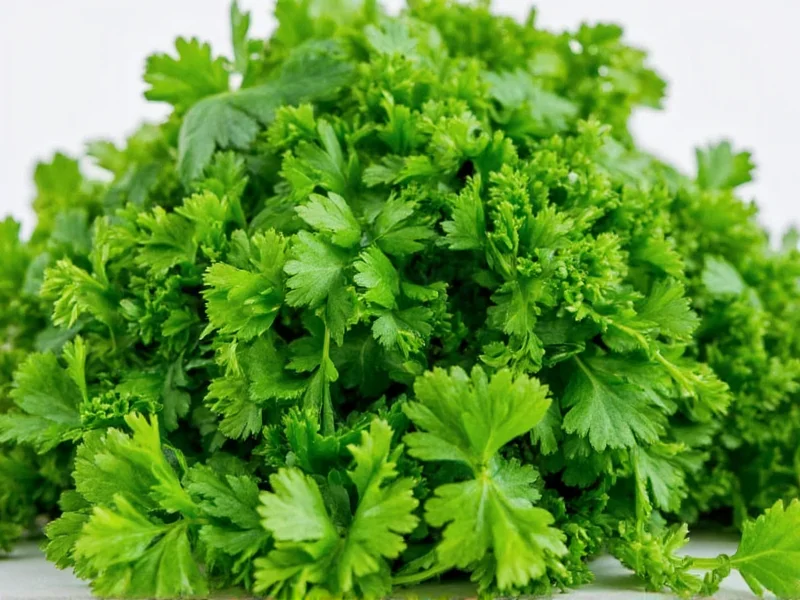
Many home cooks and grocery shoppers frequently confuse parsley and cilantro due to their similar leaf structure and common placement next to each other in produce sections. Understanding the key differences between these herbs prevents culinary mishaps and helps you select the right ingredient for your recipes.
Botanical Classification: Fundamental Differences
Parsley (Petroselinum crispum) belongs to the Apiaceae family, which also includes carrots, celery, and parsnips. It's native to the Mediterranean region and has been cultivated for over 2,000 years, initially as a medicinal herb before becoming a kitchen staple.
Cilantro (Coriandrum sativum), often called Chinese parsley or coriander (when referring to the seeds), belongs to the same Apiaceae family but is a completely different genus and species. This explains why they share some visual similarities but remain distinct plants. Cilantro has its origins in regions spanning from southern Europe to North Africa and western Asia.
Historical Evolution and Cultivation Timeline
The cultivation history of these herbs reveals distinct evolutionary paths shaped by human civilization. Archaeological and botanical evidence shows how their uses transformed from ceremonial to culinary applications:
| Era | Parsley Development | Cilantro Development |
|---|---|---|
| Pre-2000 BCE | Used by ancient Greeks for ceremonial purposes (adorned tombs and victor's crowns at Isthmian games); not consumed as food due to associations with death | Coriander seeds found in Neolithic settlements (Hacilar, Turkey, 5000 BCE); used in ancient Egyptian medicine by 2000 BCE (evidenced in Tutankhamun's tomb) |
| 500 BCE - 1500 CE | Roman adoption as culinary herb; Pliny the Elder documented medicinal uses; spread throughout Europe via monastic gardens | Traded along Silk Road to Asia; mentioned in Sanskrit texts (1500 BCE); became staple in Persian and Indian cuisines |
| 1500s - 1800s | Introduced to Americas by European colonists; developed into curly/flat-leaf varieties; became essential in Middle Eastern tabbouleh | Brought to Americas by Spanish colonists; integrated into Mexican salsas; named "cilantro" (Spanish for coriander) in New World |
| 1900s - Present | Industrialized farming optimized for year-round availability; recognized as top dietary vitamin K source | Genetic research identified OR6A2 gene variant causing soapy perception; became subject of culinary polarization studies |
Source: Historical synthesis based on archaeological records from the Herb Society of America and USDA Agricultural Research Service documentation.
Visual Identification: Telling Parsley and Cilantro Apart
The most reliable way to distinguish between these herbs is through careful visual examination. Let's break down their physical characteristics:
| Characteristic | Parsley | Cilantro |
|---|---|---|
| Leaf Shape | Broad, flat leaves with serrated edges (flat-leaf) or tightly curled (curly) | More rounded, lacy leaves with smoother, almost scalloped edges |
| Leaf Texture | Firmer, more substantial feel | Softer, more delicate texture |
| Stem Color | Lighter green to yellowish-green | Darker, more vibrant green |
| Overall Appearance | More structured, upright growth pattern | More sprawling, slightly drooping appearance |
Flavor Profiles: Culinary Distinctions
The most significant difference between parsley and cilantro lies in their flavor profiles, which dramatically affects how they function in recipes:
Parsley offers a mild, slightly bitter, grassy flavor with subtle peppery notes. Flat-leaf (Italian) parsley has a more pronounced flavor than the curly variety, making it preferable for cooking, while curly parsley often serves as a decorative garnish.
Cilantro delivers a much more distinctive taste that divides opinion—some describe it as bright, citrusy, and refreshing, while others (due to a genetic trait) perceive it as soapy. This polarizing herb provides an unmistakable flavor that's essential in many Latin American, Asian, and Middle Eastern dishes.
Genetic Influence on Cilantro Perception
The soapy taste perception of cilantro is genetically determined, creating distinct consumer segments. Population studies reveal consistent patterns in sensory responses:
- Genetic Prevalence: 21% of global population carries the OR6A2 gene variant causing aldehyde sensitivity (Eriksson et al., 2012)
- Sentiment Distribution by Ancestry:
- European descent: 25% report soapy taste
- East Asian: 21% report soapy taste
- South Asian: 17% report soapy taste
- Hispanic: 7% report soapy taste
- Middle Eastern: 3% report soapy taste
- Adaptation Evidence: Populations with historical cilantro consumption (e.g., Mexico, Thailand) show significantly lower soap perception rates, suggesting dietary adaptation over generations
Source: Peer-reviewed analysis from Eriksson et al., "A Genetic Variant Near Olfactory Receptor Genes Influences Cilantro Preference," Chemical Senses (2012) and Ni et al., "Population Differences in Cilantro Soapy Taste Perception," Scientific Reports (2018).
Culinary Applications and Substitution Guidance
Understanding when to use each herb prevents recipe disasters. Professional chefs emphasize that while you can technically substitute one for the other in a pinch, the results will significantly alter your dish's flavor profile.
When considering can I substitute parsley for cilantro or vice versa, consider these guidelines:
- Use parsley in Mediterranean dishes, potato salads, tabbouleh, and as a finishing herb for meats
- Reach for cilantro in salsas, guacamole, Thai curries, and Vietnamese pho
- If substituting cilantro with parsley, add a squeeze of lime to mimic some of cilantro's citrus notes
- When replacing parsley, use half the amount of cilantro due to its stronger flavor
Nutritional Comparison
Both herbs offer impressive nutritional benefits, though their profiles differ:
- Parsley is exceptionally high in vitamin K (providing over 1,000% of your daily value per 100g), vitamin C, and vitamin A. It also contains notable amounts of folate and iron.
- Cilantro provides good amounts of vitamin A, vitamin C, and vitamin K, but generally in lower concentrations than parsley. It contains unique antioxidants like quercetin and is particularly noted for potential detoxification properties.
Why People Confuse Parsley and Cilantro
The confusion between why do parsley and cilantro look similar stems from several factors:
- Both belong to the Apiaceae family, explaining their similar leaf structure
- They're often displayed side by side in grocery stores
- Many recipes refer to cilantro as "Chinese parsley"
- When chopped finely, their visual differences become less apparent
Learning how to tell parsley from cilantro becomes easier with practice. Hold the stems side by side—the leaf shape and texture differences become immediately apparent. Smelling them provides the most definitive test, as their aromas are distinctly different.
Growing Characteristics
If you're growing your own herbs, understanding their cultivation needs helps prevent confusion in your garden:
- Parsley is a biennial plant that prefers cooler temperatures and partial shade. It has a longer growing season and is more cold-tolerant.
- Cilantro grows quickly but bolts (goes to seed) rapidly in warm weather. It prefers full sun to partial shade and has a shorter harvest window before flowering.
When cilantro bolts, it produces coriander seeds and delicate lacy flowers that parsley doesn't produce, providing another clear distinguishing feature for gardeners.
Storage and Shelf Life
Proper storage extends the freshness of both herbs:
- Treat both herbs like cut flowers—trim stems and place in a glass with an inch of water
- Cover loosely with a plastic bag and refrigerate
- Parsley typically lasts 1-2 weeks, while cilantro is more perishable at 5-7 days
- For longer storage, chop and freeze both herbs in ice cube trays with water or oil
Common Questions About Parsley vs Cilantro
Can you eat too much cilantro or parsley?
While both herbs are generally safe in culinary amounts, excessive consumption of parsley (particularly the root) may cause issues due to its high vitamin K content, which can interfere with blood-thinning medications. Cilantro in very large quantities might cause stomach upset in sensitive individuals, but typical culinary use presents no health risks for most people.
Why does cilantro taste like soap to some people?
Approximately 20-30% of people have a genetic variation in olfactory receptor genes that causes them to perceive certain aldehydes in cilantro as soapy. This isn't a matter of preference but a genuine sensory difference. Interestingly, cooking cilantro can reduce this soapy perception for some individuals.
Are parsley and cilantro related to other common herbs?
Both belong to the Apiaceae family, which includes dill, fennel, and caraway. However, they're not closely related to basil, mint, or oregano, which belong to different plant families. This explains why cilantro and dill share some visual similarities, while basil looks and tastes completely different.
Can you grow parsley and cilantro together?
Yes, you can grow parsley and cilantro in the same garden bed, but they have slightly different needs. Parsley prefers cooler temperatures and more moisture, while cilantro bolts quickly in heat. Plant them together in early spring or fall for best results, providing cilantro with some afternoon shade as temperatures rise.
What's the difference between cilantro and coriander?
Cilantro refers to the fresh leaves and stems of the Coriandrum sativum plant, while coriander typically refers to the dried seeds. In some countries (particularly in Europe and Asia), the entire plant is called coriander, with the leaves specified as 'fresh coriander' and the seeds as 'coriander seeds.' This naming difference contributes to additional confusion beyond the parsley-cilantro mix-up.




 浙公网安备
33010002000092号
浙公网安备
33010002000092号 浙B2-20120091-4