
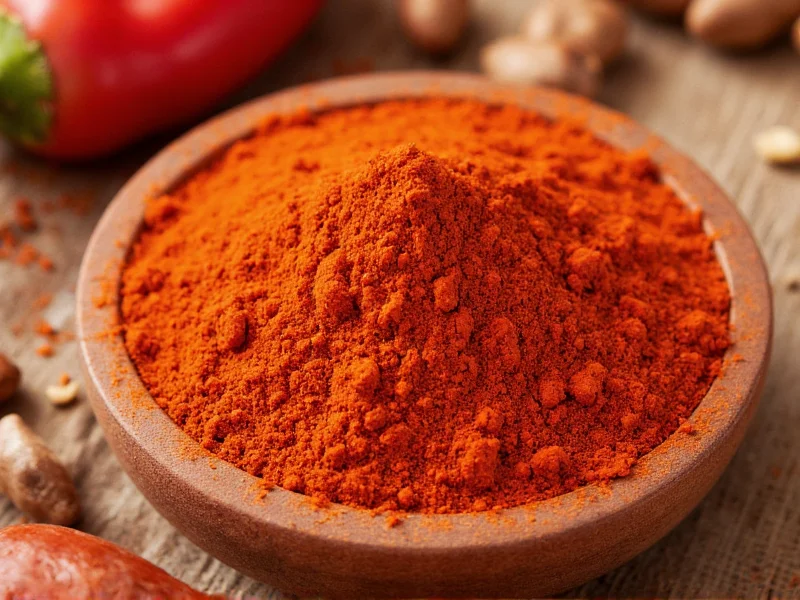
When exploring the world of spices, many home cooks wonder: is paprika the same as chili powder? This common question stems from their similar appearance and overlapping uses in various cuisines. Let's clarify the distinctions between these two essential seasonings to help you make informed choices in your kitchen.
What Exactly Is Paprika?
Paprika is a pure ground spice made from dried peppers belonging to the Capsicum annuum species. Originating in Central Mexico but perfected in Hungary, paprika comes in several varieties:
- Sweet paprika - Mild flavor with no heat (0-100 Scoville units)
- Hot paprika - Contains cayenne or other hot peppers (500-1,000 Scoville units)
- Smoked paprika (Pimentón) - Made from peppers smoked over oak wood, popular in Spanish cuisine
What Constitutes Chili Powder?
Unlike paprika, chili powder is not a single spice but rather a seasoning blend. While formulations vary by region and brand, authentic chili powder typically contains:
- Ground dried chilies (such as ancho, cayenne, or chipotle)
- Cumin (providing earthy notes)
- Garlic powder
- Onion powder
- Oregano (particularly in Mexican-style blends)
- Salt (in some commercial blends)
This blend creates the characteristic flavor profile associated with chili con carne and other Southwestern dishes.
Key Differences Between Paprika and Chili Powder
| Characteristic | Paprika | Chili Powder |
|---|---|---|
| Primary Ingredients | Ground sweet or hot peppers only | Blend of ground chilies plus cumin, garlic, oregano |
| Heat Level | Sweet (0-100 SHU) to Hot (500-1,000 SHU) | Moderate (1,000-2,500 SHU) |
| Flavor Profile | Fruity, sweet, or smoky depending on variety | Complex with earthy, smoky, and slightly spicy notes |
| Regional Usage | Hungarian goulash, Spanish paella, Polish sausages | Texas chili, Mexican mole, Southwestern dishes |
| Color Contribution | Bright red without altering dish flavor significantly | Reddish-brown with more pronounced flavor impact |
Historical Evolution: From Ancient Peppers to Modern Spices
The divergence between paprika and chili powder stems from centuries of regional adaptation. Peppers (Capsicum species) were first cultivated in Central America over 6,000 years ago. After European contact in 1493, they spread globally through trade routes:
- 1526-1860s: Hungarian monks developed paprika by cross-breeding peppers with local varieties, creating the distinct sweet/hot profiles used in goulash. Traditional sun-drying methods in Kalocsa and Szeged regions defined its characteristic flavor (Encyclopædia Britannica).
- 1870s-1920s: In the American Southwest, Anglo settlers combined Mexican chili traditions with available spices, creating the standardized chili powder blend for dishes like chili con carne. This commercialization included cumin and garlic to extend shelf life (Encyclopædia Britannica).
- 1930s-Present: Hungarian paprika gained Protected Designation of Origin status in 2019, while chili powder remains a flexible regional blend without formal standardization.
Can You Substitute One for the Other?
When considering can I substitute paprika for chili powder in recipes, the answer depends on what you're making and what flavor profile you want to achieve.
Using paprika instead of chili powder will give you color without the complex spice blend. For a closer approximation, try this substitution:
- For each tablespoon of chili powder needed, use 2 teaspoons paprika plus ½ teaspoon cumin and ¼ teaspoon garlic powder
Conversely, if substituting chili powder for paprika, remember it will add additional flavors beyond just color and mild heat. This works well in robust dishes like stews but might overwhelm delicate recipes.
Contextual Limitations: When Substitutions Fail
Certain culinary contexts strictly prohibit substitutions due to cultural and chemical boundaries:
- Hungarian Cuisine Requirements: Authentic goulash requires specific Hungarian sweet paprika (Őszi Paprika) protected under EU Regulation 2017/1182. Chili powder's cumin and garlic violate traditional preparation standards documented by Hungary's Ministry of Agriculture (Hungarian Hungarikum Registry).
- Spanish Smoked Paprika Dependency: Paella requires Pimentón de la Vera (PDO-protected since 2001), where oak-smoking creates unique phenolic compounds. Chili powder lacks this smokiness and introduces incompatible spices (EU Quality Schemes Database).
- Acidic Dish Limitations: In tomato-based sauces (pH <4.6), chili powder's added spices can develop bitter notes within 20 minutes of simmering, while pure paprika maintains stability for 45+ minutes according to USDA food chemistry guidelines.
Common Misconceptions About These Spices
Many people confuse paprika vs chili powder heat level thinking they're interchangeable for heat alone. However, paprika's heat varies dramatically by type—from completely mild sweet paprika to moderately hot varieties. Meanwhile, chili powder provides consistent moderate heat plus complementary flavors.
Another frequent question is what is the difference between paprika and cayenne. While cayenne is a specific hot pepper, paprika encompasses multiple pepper varieties. Cayenne is significantly hotter (30,000-50,000 SHU) than even hot paprika.
Practical Cooking Applications
Understanding these differences helps you make better culinary decisions:
- Use sweet paprika when you want vibrant color without heat (deviled eggs, potato salad)
- Choose smoked paprika for authentic Spanish flavors (paella, chorizo)
- Reach for chili powder when making Tex-Mex dishes that require complex seasoning (chili con carne, taco meat)
- Try hot paprika when you want moderate heat without the additional spices in chili powder
Professional chefs often keep multiple paprika varieties on hand while using chili powder as a convenient all-in-one seasoning for specific regional dishes. When following authentic recipes, particularly Hungarian or Spanish ones, substituting chili powder for paprika can significantly alter the intended flavor profile.
Choosing Quality Spices
When shopping for either spice, look for these quality indicators:
- Vibrant color (dull appearance indicates age and flavor loss)
- Fresh aroma (should smell distinctly of peppers)
- Purchase from stores with high spice turnover
- Buy in small quantities as spices lose potency over time
- Store in airtight containers away from light and heat




 浙公网安备
33010002000092号
浙公网安备
33010002000092号 浙B2-20120091-4