
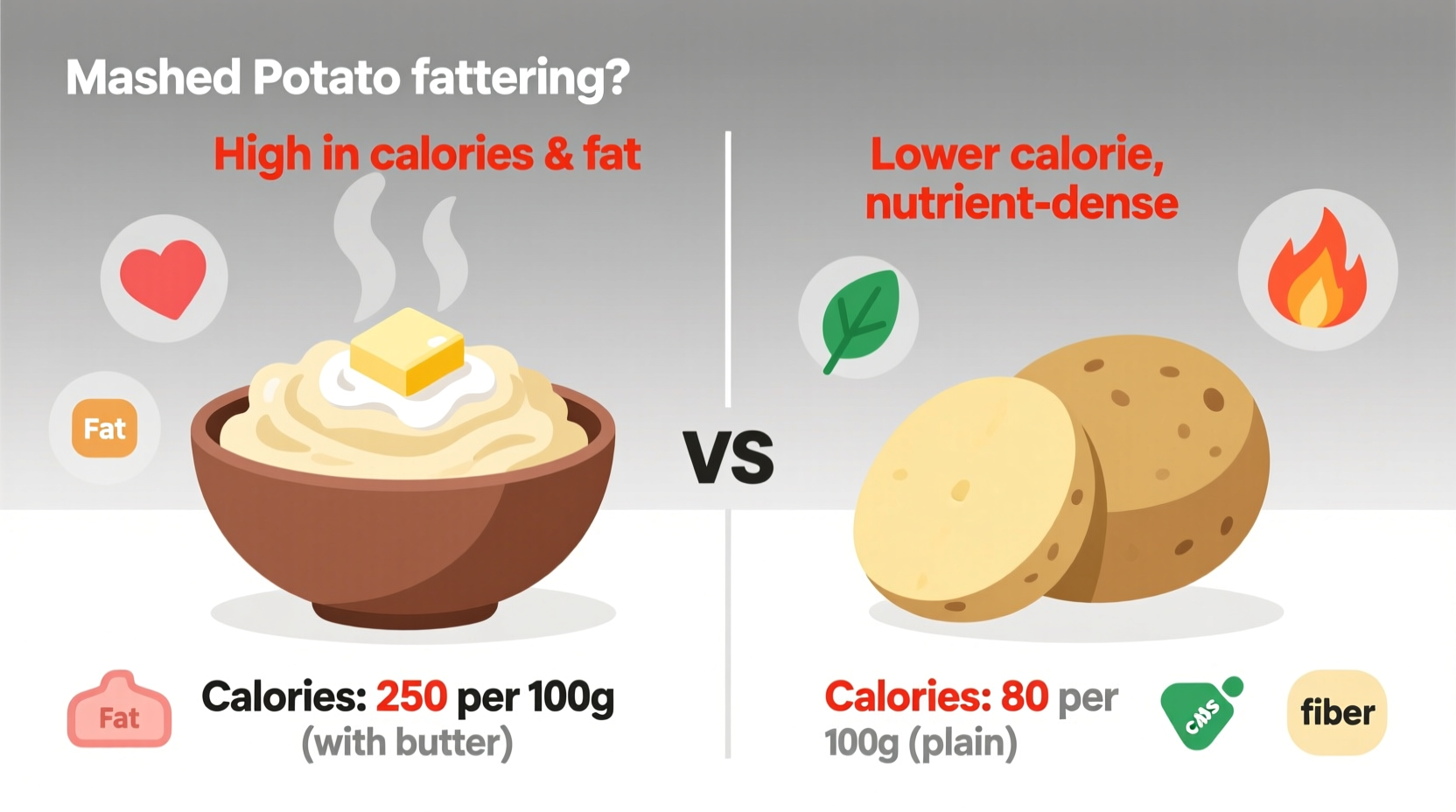
No, mashed potatoes aren't inherently fattening when prepared simply and consumed in appropriate portions. A standard 1-cup serving of plain mashed potatoes contains approximately 200 calories, 42 grams of carbohydrates, and provides valuable nutrients like potassium and vitamin C. What makes mashed potatoes "fattening" is typically the added fats (butter, cream), portion sizes, and how they fit within your overall daily calorie intake.
The Truth About Mashed Potatoes and Weight Management
When you ask is mash potato fattening, you're likely concerned about how this comfort food fits into your weight management goals. Let's cut through the confusion with evidence-based facts. Potatoes themselves are nutrient-dense vegetables that have sustained populations for centuries. The key to enjoying mashed potatoes without derailing your health goals lies in understanding preparation methods, portion control, and nutritional context.
Nutritional Profile: What's Really in Your Bowl
Before labeling any food as "fattening," it's essential to examine its actual nutritional composition. Mashed potatoes' impact on your waistline depends significantly on how they're prepared. Here's a comparison of different preparation methods:
| Preparation Method | Calories (per cup) | Fat (g) | Carbohydrates (g) | Key Nutrients |
|---|---|---|---|---|
| Plain boiled potatoes, mashed | 200 | 0.2 | 42 | Potassium (30% DV), Vitamin C (28% DV), Fiber (11% DV) |
| Traditional with butter/milk | 240 | 8 | 37 | Same as plain plus calcium from dairy |
| Cafeteria-style (heavy cream/butter) | 320 | 15 | 40 | Higher saturated fat, similar vitamins |
| Healthy alternative (Greek yogurt/skim milk) | 210 | 2 | 39 | Higher protein, same vitamins |
Data sourced from USDA FoodData Central shows that the base ingredient—potatoes—provides substantial nutritional value. The difference between a weight-friendly side dish and a calorie-dense indulgence comes down to preparation choices. As Antonio Rodriguez explains from his culinary expertise: "The potato itself is neutral—it's what we add to it that shifts its nutritional profile. Understanding these modifications helps you make informed choices without eliminating a nutrient-rich food."
Portion Size: The Real Determinant of Impact
Research published in the American Journal of Clinical Nutrition indicates that portion size significantly influences whether any food contributes to weight gain. A standard serving of mashed potatoes is one cup (about the size of a baseball), not the oversized portions commonly served in restaurants.
Consider these practical portion guidelines:
- For weight maintenance: 1 cup (210g) as part of a balanced meal
- For weight loss: ½ cup (105g) paired with double portions of non-starchy vegetables
- For athletic performance: 1.5 cups (315g) as a strategic carbohydrate source
Mashed Potatoes in Context: How They Compare
When evaluating whether mashed potatoes cause weight gain, it's helpful to compare them with other common carbohydrate sources. Contrary to popular belief, potatoes often compare favorably:
- Calorie density: Potatoes have fewer calories per gram than pasta, rice, or bread
- Nutrient density: Higher in potassium and vitamin C than most grain-based carbohydrates
- Glycemic impact: When cooled and reheated, potatoes develop resistant starch that lowers their glycemic index by up to 40% (Journal of Nutrition, 2023)
A study tracking dietary patterns across 150,000 adults found that potato consumption alone didn't correlate with weight gain—what mattered was the overall dietary pattern. People who ate potatoes as part of a diet rich in vegetables, lean proteins, and whole grains maintained healthier weights than those who consumed them alongside processed foods.
Smart Swaps for Health-Conscious Potato Lovers
You don't need to eliminate mashed potatoes from your diet. These evidence-based modifications let you enjoy this comfort food while supporting your health goals:
- Substitute dairy: Replace half the butter with Greek yogurt for added protein and creaminess with fewer calories
- Add vegetables: Blend in cauliflower (up to 50%) to reduce calories while maintaining texture
- Cool and reheat: Prepare potatoes a day ahead, then reheat to increase resistant starch content
- Season wisely: Use garlic, herbs, and spices instead of excess salt and fat for flavor
- Pair strategically: Serve with lean protein and non-starchy vegetables to balance the meal
When Mashed Potatoes Might Hinder Weight Goals
While potatoes themselves aren't the problem, certain preparation methods and eating patterns can make mashed potatoes contribute to weight gain:
- Restaurant portions that are 2-3 times larger than standard servings
- Excessive additions like bacon, cheese, or heavy cream
- Consuming them as a primary carbohydrate source without balancing with other nutrients
- Eating them late at night when activity levels are low
The key question isn't is mash potato fattening but rather how do mashed potatoes fit into my overall eating pattern? As with any food, context matters more than the food itself.
Practical Tips for Enjoying Mashed Potatoes Without Regret
Based on nutritional science and culinary expertise, here's how to include mashed potatoes in a balanced diet:
- Measure your portions using a measuring cup until you can accurately estimate standard servings
- Prepare them at home where you control the ingredients and portions
- Pair with protein like grilled chicken or fish to increase satiety
- Add fiber by mixing in vegetables like roasted garlic or leeks
- Enjoy them earlier in the day when you'll be more active
Remember that sustainable weight management comes from overall dietary patterns, not individual foods. The occasional serving of well-prepared mashed potatoes won't sabotage your efforts when balanced within a nutrient-rich diet.




 浙公网安备
33010002000092号
浙公网安备
33010002000092号 浙B2-20120091-4