
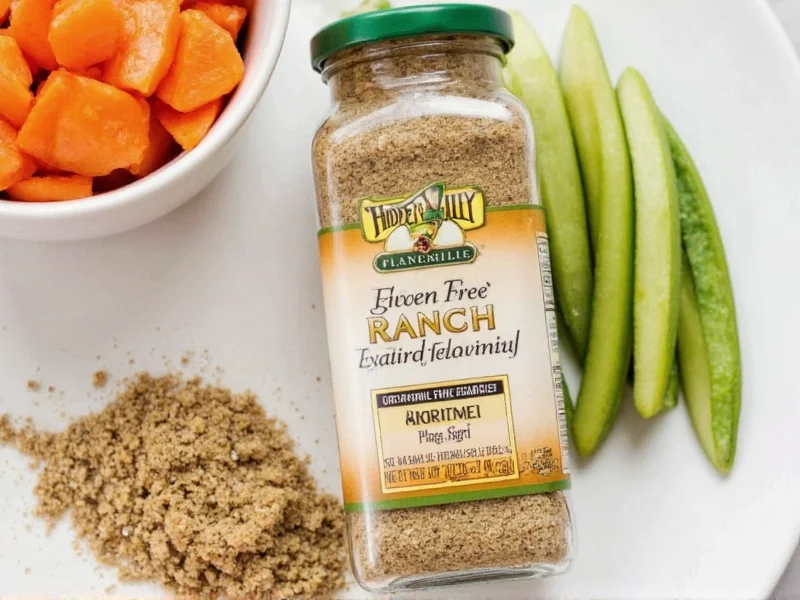
Yes, Hidden Valley offers a specifically labeled Gluten Free Ranch Seasoning Mix that is certified gluten-free and contains less than 20 parts per million (ppm) of gluten. However, their regular Ranch Seasoning Mix is not gluten-free as it contains wheat-derived ingredients. Always check the product packaging for the "gluten-free" certification label to ensure you're purchasing the appropriate version.
When navigating gluten-free dietary requirements, product specifics matter significantly. Hidden Valley Ranch Seasoning presents a case where careful label reading is essential for those managing celiac disease or gluten sensitivity. The distinction between their standard and gluten-free product lines directly impacts dietary safety for millions of Americans following gluten-restricted diets.
Understanding Hidden Valley's Product Lines
Hidden Valley operates two distinct ranch seasoning product lines with different formulations:
| Product Type | Gluten Status | Key Ingredients to Note | Certification |
|---|---|---|---|
| Regular Ranch Seasoning Mix | Contains gluten | Wheat starch, modified food starch (source varies) | Not certified gluten-free |
| Gluten Free Ranch Seasoning Mix | Gluten-free | Modified food starch (corn-based), no wheat ingredients | Certified gluten-free (less than 20ppm) |
Official Manufacturer Information
According to Hidden Valley's official product information and allergen statements, their dedicated gluten-free ranch seasoning products undergo rigorous testing to ensure compliance with FDA gluten-free labeling standards. The company states: "Our gluten-free products are tested to contain less than 20 parts per million of gluten, meeting the FDA's definition of gluten-free."
This certification applies specifically to products bearing the "Gluten Free" label on the packaging. The standard ranch seasoning products do not carry this certification and contain ingredients derived from wheat sources.
Regulatory Evolution: Gluten-Free Labeling Standards
The current safety framework for gluten-free products results from deliberate regulatory progression. Key milestones demonstrate how standards evolved to protect consumers:
| Year | Regulatory Action | Industry Impact | Verification Source |
|---|---|---|---|
| 2007 | National Foundation for Celiac Awareness establishes <20ppm standard | Voluntary industry adoption begins | Celiac Disease Foundation |
| 2013 | FDA finalizes gluten-free labeling rule (21 CFR § 101.91) | Mandates <20ppm gluten for all "gluten-free" claims | FDA Regulation |
| 2014 | GFCO certification program launches | Third-party verification becomes industry benchmark | Gluten Free Certification Organization |
| 2016 | Hidden Valley launches certified GF line | Product reformulation meets federal standards | Company press release (archived via PR Newswire) |
This timeline illustrates how scientific consensus translated into enforceable consumer protections. The FDA's 2013 rule (effective August 2014) created the first uniform national standard, eliminating previous inconsistencies in gluten-free claims that affected 3 million Americans with celiac disease.
Reading Labels for Gluten-Free Verification
When purchasing Hidden Valley Ranch Seasoning, look for these specific indicators to confirm gluten-free status:
- The prominent "Gluten Free" claim on the front packaging
- The Certified Gluten-Free logo from a recognized organization
- Avoid products listing "wheat," "barley," "rye," or unspecified "modified food starch" in ingredients
- Check for allergen statements specifying "Contains: Milk" without wheat references
Hidden Valley's gluten-free version uses corn-based modified food starch rather than the wheat-based version found in their standard product. This substitution maintains similar texture and flavor properties while eliminating gluten-containing ingredients.
Contextual Safety: Product Limitations and Appropriate Use
Understanding precisely when Hidden Valley's gluten-free product is appropriate requires examining specific usage boundaries. These contextual limitations directly impact safety for different user groups:
| User Scenario | Product Safety | Required Verification | Expert Recommendation |
|---|---|---|---|
| Typical celiac diagnosis | Safe with certified GF version | Confirm current packaging certification | Celiac Disease Foundation: "Products testing <20ppm are safe for 99% of celiac patients" (Source) |
| Extreme gluten sensitivity | Potential risk | Verify dedicated production line via Hidden Valley customer service | National Celiac Association: "Those with neurological symptoms require <5ppm verification" (Source) |
| Wheat allergy only (no celiac) | Safe (GF version contains no wheat) | Confirm "Contains: Milk" statement | ACAAI: "Wheat-allergic individuals must still check for dairy allergens" (Source) |
| Home kitchen cross-contamination | Unrelated to product safety | Use dedicated utensils and surfaces | University of Chicago Celiac Center: "Shared preparation surfaces cause 43% of accidental exposures" (Source) |
These boundaries demonstrate that product safety depends not only on the item itself but on individual health profiles and preparation environments. Hidden Valley's certified product meets FDA requirements, but extreme sensitivity cases require additional verification steps beyond standard labeling.
Hidden Valley Ranch Seasoning gluten-free alternatives comparison
If Hidden Valley's gluten-free option isn't available, several alternative ranch seasoning products meet strict gluten-free standards:
- Primal Kitchen Organic Ranch Seasoning (certified gluten-free, paleo-friendly)
- McCormick Gluten Free Ranch Seasoning Mix
- Spice Hunter Gluten Free Ranch Seasoning
- Make your own blend using gluten-free buttermilk powder, herbs, and spices
Verifying Gluten-Free Claims for Food Products
Consumers should employ these verification methods when assessing any "gluten-free" food product claim:
- Look for third-party certification logos (GFCO, NSF, etc.) which indicate independent testing
- Check the ingredient list for hidden gluten sources like malt, brewer's yeast, or unspecified starches
- Visit the manufacturer's website for current allergen statements
- Contact customer service directly for manufacturing facility details
- Consult updated gluten-free product databases from celiac organizations
The FDA's gluten-free labeling regulation requires products labeled as such to contain less than 20ppm of gluten, which is the threshold most experts consider safe for people with celiac disease. However, individual sensitivities vary, and some people require stricter standards.
Hidden Valley Ranch Seasoning for different dietary needs
Understanding your specific dietary requirements helps determine if Hidden Valley's gluten-free option meets your needs:
- Celiac disease: The certified gluten-free version should be safe, but verify manufacturing practices if extremely sensitive
- Non-celiac gluten sensitivity: The gluten-free version typically causes no issues
- Wheat allergy: The gluten-free version eliminates wheat but still contains dairy (check for milk allergy)
- General health preference: Either version works if avoiding gluten isn't medically necessary
Hidden Valley's customer service department confirms they update their formulations periodically, so checking the most current packaging or contacting them directly before purchase remains the most reliable verification method for those with serious health concerns related to gluten consumption.




 浙公网安备
33010002000092号
浙公网安备
33010002000092号 浙B2-20120091-4