
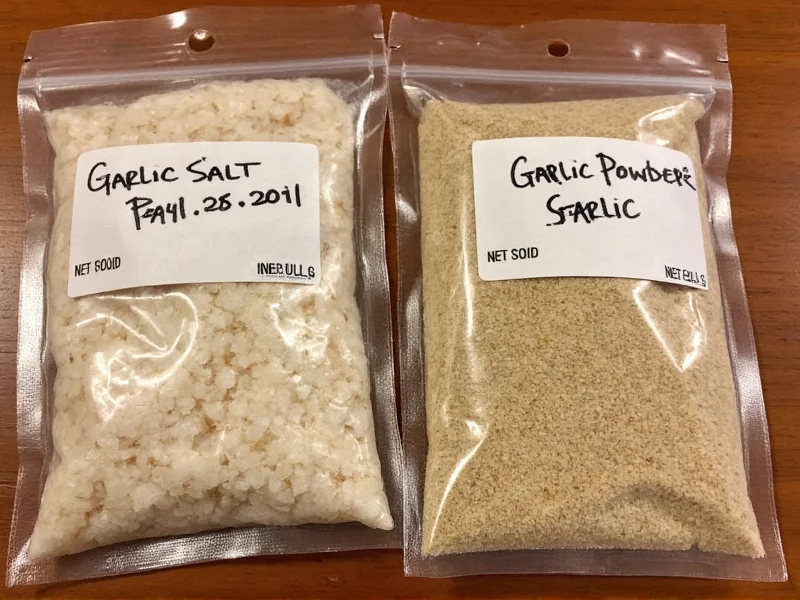
Understanding the distinction between these two common seasonings is crucial for achieving balanced flavors in your cooking. Many home chefs mistakenly use them interchangeably, which can lead to overly salty or under-seasoned dishes. Let's examine the specific differences that matter most in your kitchen.
Composition Comparison: What's Really Inside
The most critical difference lies in their ingredients. Garlic powder consists purely of dehydrated, ground garlic cloves with nothing added. In contrast, garlic salt is a pre-mixed blend where approximately 75% is garlic powder and 25% is table salt, though ratios can vary by brand.
| Seasoning Type | Primary Ingredients | Typical Ratio | Additional Ingredients |
|---|---|---|---|
| Garlic Powder | 100% dehydrated garlic | N/A | None (pure) |
| Garlic Salt | Garlic powder + salt | 3:1 (garlic:salt) | Anti-caking agents |
Flavor Profile and Intensity Differences
Garlic powder delivers concentrated garlic flavor without salt influence, making it ideal when you want pure garlic essence. Its flavor is more pronounced and direct than garlic salt. When comparing garlic powder and garlic salt strength, garlic powder provides stronger garlic flavor per teaspoon because none of its volume is "wasted" on salt.
Garlic salt offers a dual seasoning effect—garlic flavor plus saltiness—but the garlic component is diluted by the salt content. This makes it less potent for garlic flavor specifically. The anti-caking agents in many commercial garlic salts can also slightly alter the flavor profile.
Sodium Content: A Critical Health Consideration
For health-conscious cooks or those managing sodium intake, understanding the sodium difference between garlic salt and garlic powder is essential. One teaspoon of garlic salt contains approximately 1,200-1,500mg of sodium (about half the daily recommended limit), while garlic powder contains virtually no sodium.
This significant difference explains why many professional chefs prefer using garlic powder and controlling salt separately—they maintain precise control over both flavor elements. When examining garlic salt vs garlic powder sodium content, the disparity becomes a decisive factor for many dietary needs.
Practical Substitution Guide
Knowing how to substitute garlic powder for garlic salt (or vice versa) prevents recipe disasters. The standard conversion is:
- 1 teaspoon garlic salt = ¾ teaspoon garlic powder + ¼ teaspoon table salt
- 1 teaspoon garlic powder = 1⅓ teaspoons garlic salt (but be cautious of added sodium)
When converting recipes, remember that substituting garlic salt for garlic powder without adjusting additional salt will likely make your dish too salty. This common mistake when using garlic powder instead of garlic salt ruins many otherwise promising recipes.
Contextual Application Guidelines: Scenarios and Boundaries
Optimal usage depends on specific cooking contexts and dietary requirements. The FDA's nutrition labeling standards provide critical boundaries for sodium-sensitive applications:
| Cooking Scenario | Recommended Seasoning | Boundary Conditions & Limitations |
|---|---|---|
| Low-sodium diets (e.g., hypertension management) | Garlic powder | Garlic salt exceeds 50% of FDA's daily sodium value (2,300mg) per teaspoon [FDA]. Contraindicated for sodium-restricted diets. |
| Precision spice blending (e.g., commercial dry rubs) | Garlic powder + separate salt | Garlic salt's fixed ratio causes inconsistent distribution in blends. Not suitable when exact garlic-to-salt calibration is required. |
| High-humidity storage environments | Garlic powder | Garlic salt absorbs moisture rapidly due to salt's hygroscopic properties, accelerating clumping and flavor degradation even with anti-caking agents. |
| Table seasoning for finished dishes | Garlic salt | Only appropriate when total dish sodium is pre-calculated. Incompatible with high-sodium ingredients like soy sauce or cured meats. |
Historical Evolution of Garlic Seasonings
The development of these seasonings reflects technological and dietary shifts:
- 1940s-1950s: Dehydration technology advanced during WWII for military rations. The U.S. National Bureau of Standards established commercial garlic powder production standards in Circular 472 (1953), documenting optimal drying parameters to preserve allicin content [NIST].
- 1960s: Garlic salt emerged as a convenience product amid America's processed food boom, combining pre-measured seasonings for simplified home cooking.
- 1980s-Present: The first Dietary Guidelines for Americans (1980) highlighted sodium reduction, driving consumer differentiation between these products. Modern formulations now include reduced-sodium variants responding to FDA health initiatives [USDA/HHS].
Storage and Shelf Life Considerations
Both seasonings maintain quality for 2-3 years when stored properly in airtight containers away from heat and light. However, garlic salt may clump more readily due to its salt content absorbing moisture. The anti-caking agents in commercial garlic salt help prevent this, but homemade versions (simply mixed garlic powder and salt) may require more careful storage.
Garlic powder generally retains its potency slightly longer than garlic salt. As both age, they lose aromatic compounds, resulting in diminished flavor. Proper storage in dark glass containers can extend their useful life by several months.
Common Misconceptions Clarified
Misconception: "Garlic powder is just garlic salt without the salt."
Reality: They're fundamentally different products with distinct manufacturing processes.
Misconception: "They can be used interchangeably without adjustments."
Reality: Substituting one for the other without accounting for the salt difference will alter your dish's flavor balance significantly.
Misconception: "Garlic salt provides better garlic flavor because it's seasoned."
Reality: Garlic powder delivers more intense garlic flavor per volume since none is diluted by salt.
Practical Recipe Examples
Homemade Salad Dressing: Use garlic powder to control both garlic intensity and sodium separately for balanced flavor.
Roasted Chicken: Garlic salt works well for quick seasoning before roasting, but monitor total sodium if using other salted ingredients.
Marinara Sauce: Garlic powder integrates better, allowing precise salt adjustment after tasting the finished sauce.
Popcorn Seasoning: Garlic salt provides convenient dual seasoning, but garlic powder with separately added salt gives more control over sodium levels.
Creating Your Own Custom Blends
For maximum control, make your own garlic salt by combining 3 parts garlic powder with 1 part fine sea salt and a pinch of cornstarch as an anti-caking agent. This approach lets you adjust the ratio to your preference and avoid commercial additives.
When comparing homemade garlic salt vs store-bought, the homemade version typically has fresher flavor and no unnecessary additives. You can also experiment with different salt types (like pink Himalayan or smoked salt) to create unique flavor profiles while maintaining the proper garlic-to-salt ratio.




 浙公网安备
33010002000092号
浙公网安备
33010002000092号 浙B2-20120091-4