
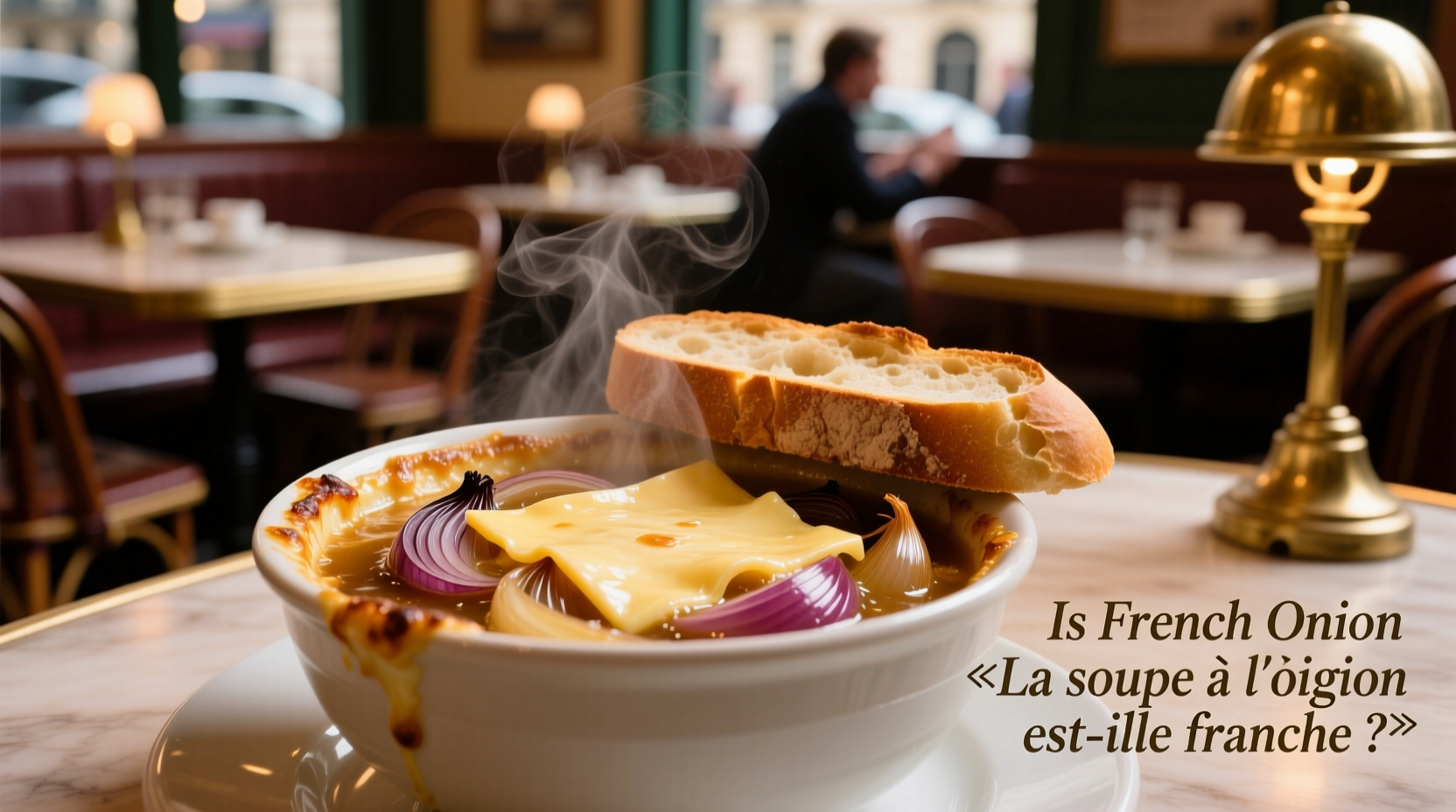
For centuries, travelers and food enthusiasts have debated whether French onion soup truly belongs to France's culinary heritage. This question isn't just about semantics—it touches on cultural identity, historical accuracy, and the evolution of beloved comfort foods. Let's explore the documented history that settles this debate once and for all.
The Historical Evolution of French Onion Soup
While onions have been cultivated since ancient times, the specific preparation we recognize as French onion soup emerged during France's culinary renaissance. The earliest documented recipe appears in Le Cuisinier Royal et Bourgeois (1692) by François Massialot, a chef to French nobility. This version featured onions simmered in broth with wine—a significant departure from simpler medieval onion preparations.
La Varenne's Le Cuisinier François mentions "potage d'oignons"—onion soup—as a humble peasant dish
Massialot's cookbook documents the first recognizable French onion soup recipe with wine and broth
Street vendors in Paris begin selling "soupe à l'oignon" to workers returning from night shifts
French culinary authority Alexis Soyer publishes the classic preparation method still used today
Why the Confusion About Its Origins?
The misconception that French onion soup isn't French likely stems from two factors: the global popularity of the dish and similar onion-based soups in other cultures. While Germany, Belgium, and the Netherlands have their own onion soup traditions, these developed independently and differ significantly from the French version.
| Culinary Tradition | Key Characteristics | Historical Documentation |
|---|---|---|
| French Onion Soup | Caramelized onions, beef broth, white wine, baguette, melted gruyère | Documented since 1692 in French culinary texts |
| German Zwiebelsuppe | Less caramelization, often includes vinegar, sometimes with egg | First appears in 19th century German cookbooks |
| Dutch Uiensoup | Thicker consistency, often includes potatoes, minimal cheese topping | Late 19th century references |
According to research from the French National Center for Scientific Research, French onion soup became distinctly French through its preparation method—specifically the slow caramelization of onions and the addition of wine, which were hallmarks of French culinary technique.
What Makes It Authentically French?
The defining characteristics that establish French onion soup's French identity include:
- Caramelization technique: The French method requires slowly cooking onions until deeply golden—a process requiring patience and skill
- Wine incorporation: Authentic recipes use French wine, typically a dry white like Bourgogne Aligoté
- Broth base: Traditional preparation uses rich beef broth (sometimes with veal)
- Finishing method: The signature melted gruyère crust over toasted baguette follows classic French gratiné techniques
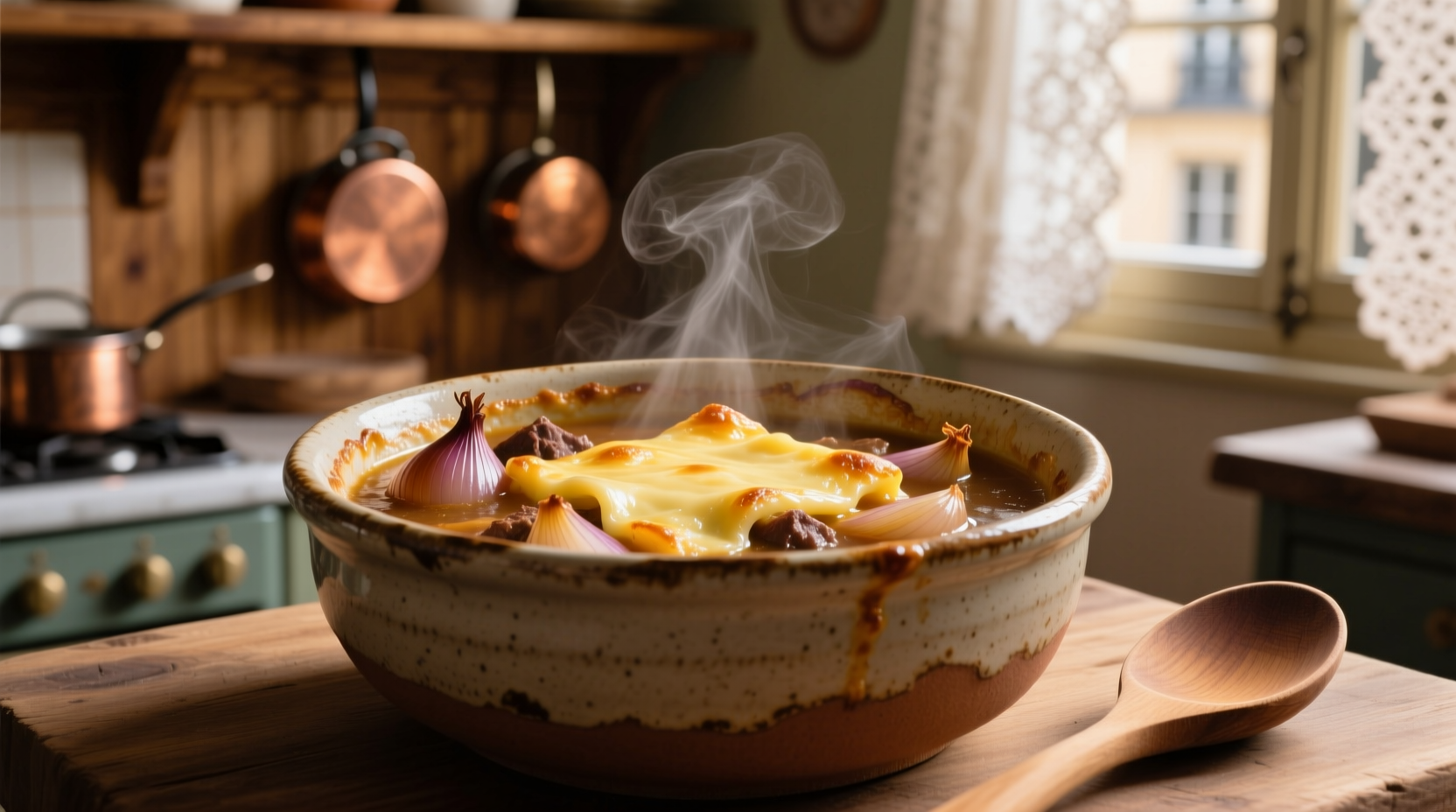
Global Adaptations vs. Authentic Preparation
While French onion soup has been embraced worldwide, many adaptations stray from the authentic French preparation. American versions often use Swiss cheese instead of gruyère, add excessive sugar to accelerate caramelization, or substitute broth cubes for homemade stock.
The National Center for Arts and Crafts in Paris maintains historical culinary archives showing that the dish's essence remains unchanged since the 19th century. Their collection includes Alexis Soyer's original 1851 recipe, which specifies:
"Take six large onions, slice them thinly, cook slowly in butter until golden, add two quarts of good beef broth, a glass of white wine, simmer for thirty minutes, then serve with toasted bread and grated gruyère cheese."
How to Identify Authentic French Onion Soup
When evaluating whether a restaurant serves authentic French onion soup, look for these markers:
- Preparation time: Authentic versions require 45-60 minutes of onion caramelization
- Color: Onions should be deep amber, not pale yellow or burnt black
- Liquid ratio: Should be broth-forward, not thick like a stew
- Cheese: Traditional gruyère, not mozzarella or American cheese
- Bread: Baguette slices, not croutons or other bread types
As culinary historian Sophie Dubois explains, "The dish's French identity isn't just about where it was created—it's about the specific techniques and ingredients that reflect French culinary philosophy. The slow caramelization, wine integration, and careful balance of flavors are unmistakably French."
Common Misconceptions Debunked
Myth: French onion soup was invented in America
Reality: While Julia Child popularized it in America, the dish predates her by centuries in France.
Myth: All onion soups are essentially the same
Reality: French onion soup has specific preparation methods that distinguish it from other onion-based soups worldwide.
Myth: The "French" refers to the cooking technique, not the origin
Reality: The dish originated in France and was named for its country of origin, similar to French toast or French dressing.
Practical Tips for Home Cooks
If you're preparing authentic French onion soup at home, follow these professional tips:
- Use yellow onions for the best balance of sweetness and sharpness
- Dedicate at least 45 minutes to properly caramelizing the onions
- Choose a dry white wine like Chablis or a light red like Beaujolais
- Make your own broth if possible—store-bought often lacks depth
- Use authentic French gruyère, not generic "swiss" cheese
- Broil briefly to melt the cheese without burning it
Remember that authentic French onion soup requires patience—the slow cooking process develops complex flavors that instant versions cannot replicate. This commitment to technique is precisely what makes it a genuine French culinary treasure.
When was French onion soup first documented in French cuisine?
The earliest documented recipe appears in François Massialot's 1692 cookbook Le Cuisinier Royal et Bourgeois. However, simpler onion soups were mentioned as early as 1651 in La Varenne's Le Cuisinier François as a peasant dish called "potage d'oignons".
Why is it called French onion soup if other countries have similar dishes?
It's called French because it originated in France with specific preparation methods that distinguish it from other onion soups. The French technique of slow caramelization, wine incorporation, and gruyère topping developed in 18th century France, making it authentically French despite similar dishes existing elsewhere.
What makes French onion soup different from German or Dutch onion soups?
French onion soup features deeply caramelized onions, wine integration, beef broth base, and melted gruyère on baguette. German Zwiebelsuppe typically has less caramelization and often includes vinegar, while Dutch Uiensoup is thicker, sometimes includes potatoes, and rarely features the signature cheese crust.
Is the cheese topping essential for authentic French onion soup?
Yes, the melted gruyère cheese topping over toasted baguette is essential to authentic French onion soup. This gratiné technique developed in 19th century France completes the dish. While some modern variations omit the cheese, traditional French preparation always includes it.




 浙公网安备
33010002000092号
浙公网安备
33010002000092号 浙B2-20120091-4