
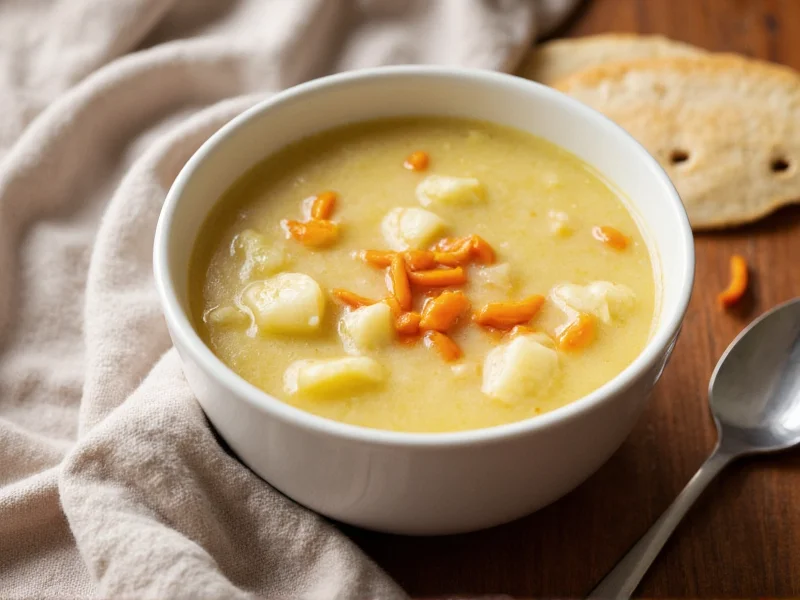
Egg drop soup, a staple in Chinese-American cuisine, offers a surprisingly balanced nutritional profile when prepared thoughtfully. This light broth-based soup with delicate egg ribbons delivers valuable protein while remaining low in calories, making it an excellent option for those seeking satisfying yet health-conscious meals. Understanding the specific nutritional components helps determine whether this popular comfort food aligns with your dietary goals.
Nutritional Breakdown of Traditional Egg Drop Soup
A standard 1-cup serving of restaurant-style egg drop soup typically contains:
| Nutrient | Amount per Serving | % Daily Value |
|---|---|---|
| Calories | 65-100 | 3-5% |
| Protein | 5-7g | 10-14% |
| Total Fat | 2-3g | 3-4% |
| Carbohydrates | 5-8g | 2-3% |
| Sodium | 800-1200mg | 35-50% |
The primary nutritional benefits come from the eggs, which provide complete protein containing all nine essential amino acids. The broth base contributes hydration and trace minerals, while cornstarch (used as a thickener) adds minimal carbohydrates. The most significant concern in traditional preparations is the high sodium content, which often exceeds recommended single-meal limits. According to the Centers for Disease Control and Prevention, excessive sodium intake is directly linked to hypertension—a condition affecting nearly half of U.S. adults—and increases cardiovascular disease risk.
Health Benefits of Key Ingredients
Eggs form the foundation of this soup and deliver several nutritional advantages. Each large egg contains approximately 6 grams of high-quality protein and essential nutrients including:
- Vitamin D - Supports bone health and immune function
- Choline - Critical for brain health and metabolism
- Lutein and zeaxanthin - Antioxidants that protect eye health
- B vitamins - Support energy metabolism and nervous system function
Chicken or vegetable broth provides hydration and contains minerals like potassium and magnesium. While store-bought broths often contain high sodium levels, homemade versions can be prepared with controlled salt content and additional vegetables for enhanced nutrition.
Historical Evolution and Nutritional Adaptation
Egg drop soup's transformation from traditional Chinese preparation to modern health-conscious versions reflects evolving dietary science. This timeline illustrates key shifts in ingredients and nutritional understanding:
| Era | Preparation Characteristics | Nutritional Awareness |
|---|---|---|
| Pre-1900s (China) | Simple broth with beaten eggs, no thickeners, minimal seasoning | Valued for digestibility; naturally low sodium (150-300mg/serving) |
| 1920s-1960s (US Adaptation) | Cornstarch added for texture; commercial broths introduced | Sodium increased (600-900mg); cholesterol concerns absent |
| 1980s-2000s | Standardized restaurant recipes; soy sauce commonly added | High sodium recognized as cardiovascular risk; egg cholesterol fears peaked |
| 2010s-Present | Vegetable-enhanced versions; low-sodium broths; reduced thickeners | Eggs' nutritional benefits reaffirmed; sodium control prioritized |
This evolution aligns with culinary historians' analysis of Chinese-American food adaptation. As documented by Harvard University's research, "The egg drop soup that Americans eat is not the same as the egg drop soup in China. In China, it's a very simple soup, made with just eggs and broth... In America, it's thickened with cornstarch," reflecting cultural integration and responsive health modifications.
Source: Lee, J. (2015). The Real History of Chinese Food in America. Harvard Magazine. https://www.harvardmagazine.com/2015/07/chinese-food-in-america
Contextual Application Boundaries
Egg drop soup's health impact varies significantly across dietary contexts. These evidence-based boundaries clarify optimal use cases and critical limitations:
| Dietary Context | Recommended Application | Key Limitations |
|---|---|---|
| Weight Management | Ideal low-calorie starter (65-100 kcal) to increase meal volume | Requires vegetable/protein additions for balanced nutrition; insufficient as sole meal |
| Illness Recovery | Excellent for hydration and gentle protein during gastrointestinal recovery | Not suitable during acute nausea/vomiting; avoid if broth intolerance exists |
| Hypertension Management | Appropriate only with verified low-sodium preparation (≤400mg/serving) | Restaurant versions typically exceed AHA's single-meal limit (500mg) |
| Gluten-Free Diets | Suitable base when using certified gluten-free broth | Requires verification of broth ingredients; cross-contamination risk in restaurants |
These boundaries align with clinical guidelines from the American Heart Association and Academy of Nutrition and Dietetics. The AHA specifies that single meals should contain no more than 500mg sodium for hypertension management, while AND emphasizes that soups must complement—not replace—complete meals for nutritional adequacy.
References: AHA Sodium Guidelines, AND Meal Planning Standards
Addressing Common Health Concerns
Many people question egg drop soup's role in specific health scenarios. Let's examine these with evidence-based analysis.
Sodium Content Considerations
The most significant nutritional drawback of traditional egg drop soup is its high sodium content. Restaurant versions often contain 800-1200mg of sodium per serving, which represents 35-50% of the recommended daily limit. The CDC identifies sodium reduction as critical for cardiovascular health, noting that 90% of Americans exceed recommended limits.
For those monitoring sodium intake, consider these evidence-based modifications:
- Use low-sodium or no-sodium broth as the base
- Prepare at home to control salt content
- Add flavor with herbs, ginger, or garlic instead of salt
- Request reduced-sodium versions at restaurants
Egg Cholesterol Questions
Current research indicates dietary cholesterol has less impact on blood cholesterol than previously believed. The American Heart Association's 2019 science advisory states that "evidence is not conclusive" regarding dietary cholesterol's role in cardiovascular disease, emphasizing saturated and trans fats as greater concerns. For healthy individuals, the egg content in a standard serving (typically 1-2 eggs per 4 servings) represents a reasonable amount.
Source: Sacks, F.M., et al. (2019). Dietary Fats and Cardiovascular Disease. Circulation
Maximizing the Health Benefits: Simple Modifications
You can transform traditional egg drop soup into an even more nutritious meal with these evidence-based adjustments:
- Add vegetables - Incorporate spinach, bok choy, or mushrooms for additional fiber and nutrients
- Use homemade broth - Control sodium content and avoid preservatives
- Include lean protein - Add shredded chicken or tofu for increased satiety
- Reduce thickener - Use less cornstarch or substitute with arrowroot powder
- Add ginger - Enhances flavor while providing anti-inflammatory benefits
These modifications address nutritional optimization while preserving its comforting qualities. A vegetable-enhanced version transforms it from a simple starter into a complete, balanced meal.
Comparing Egg Drop Soup to Other Soup Options
When evaluating nutritional profiles across common soup varieties:
| Soup Type | Calories (per cup) | Protein (g) | Sodium (mg) | Notable Benefits |
|---|---|---|---|---|
| Egg Drop | 65-100 | 5-7 | 800-1200 | High-quality protein, low calorie |
| Miso | 35-50 | 2-3 | 600-900 | Probiotics, fermented benefits |
| Minestrone | 120-180 | 4-6 | 700-1000 | High fiber, vegetable variety |
| Cream of Chicken | 200-250 | 6-8 | 900-1300 | Higher fat content, less protein quality |
Egg drop soup stands out for its favorable protein-to-calorie ratio and relatively simple ingredient profile. While miso soup offers probiotic benefits and minestrone provides more fiber, egg drop soup delivers quality protein with minimal calories—a valuable combination for weight management and muscle maintenance.
When Egg Drop Soup Shines Nutritionally
Certain situations highlight egg drop soup's health advantages:
- Recovery from illness - The warm broth provides hydration while the protein supports immune function
- Pre- or post-workout - Offers easily digestible protein for muscle repair
- Weight management - Low-calorie yet satisfying, helping control overall calorie intake
- Digestive issues - Gentle on the stomach while providing essential nutrients
- Gluten-free diets - Naturally gluten-free when prepared without soy sauce or wheat-based ingredients
For those specifically seeking nourishment during illness, the answer is generally yes. The warm liquid soothes sore throats, provides hydration, and delivers protein to support immune function during recovery—making it a nutritionally sound choice when feeling under the weather.
Creating the Healthiest Egg Drop Soup at Home
Preparing egg drop soup at home gives you complete control over ingredients. Follow these steps for a nutritionally optimized version:
- Start with 4 cups of low-sodium chicken or vegetable broth
- Add 1 tablespoon grated ginger and 1 minced garlic clove for flavor and health benefits
- Whisk 2 eggs with 1 tablespoon water
- Bring broth to a gentle simmer (not boiling)
- Slowly drizzle egg mixture into broth while stirring gently
- Add 2 cups fresh spinach or bok choy during the last minute of cooking
- Season with minimal salt, white pepper, and a dash of rice vinegar
- Thicken with 1 teaspoon cornstarch mixed with 2 tablespoons cold water if desired
This homemade version reduces sodium by 40-60% compared to restaurant versions while increasing vegetable content and preserving the soup's comforting qualities. The nutritional profile shifts significantly toward dietary guidelines when prepared with these evidence-based modifications.
Conclusion: Strategic Integration into Balanced Diets
Egg drop soup's health profile depends on preparation methods and individual dietary contexts. When made with attention to sodium content and enhanced with additional vegetables, it becomes a nutritionally sound option that delivers quality protein, hydration, and essential nutrients with minimal calories. For most people, it represents a flexible choice that aligns with evidence-based dietary patterns when contextual boundaries are respected.
Whether considering it for weight management, illness recovery, or general nutrition, the answer is positive with appropriate preparation. By understanding its historical evolution, contextual applications, and evidence-based modifications, you can enjoy this comforting classic while supporting specific health goals.




 浙公网安备
33010002000092号
浙公网安备
33010002000092号 浙B2-20120091-4