
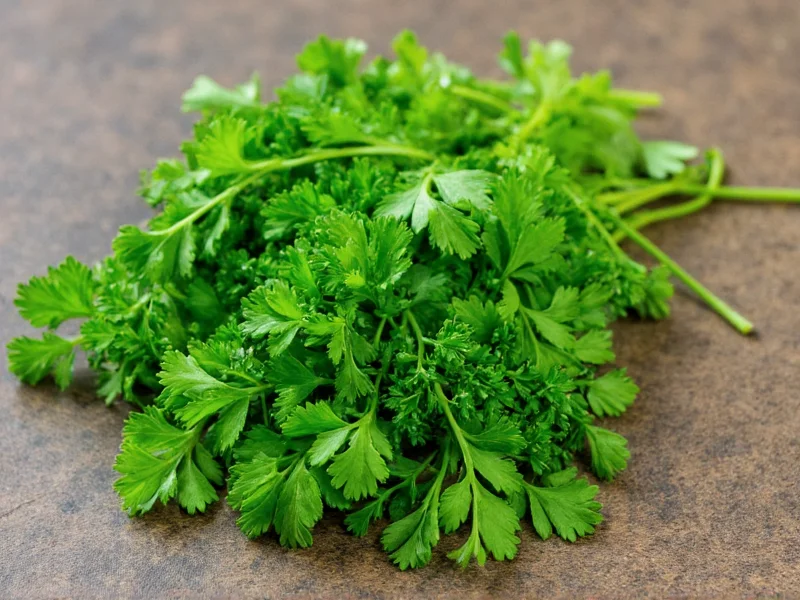
Many home cooks and even experienced chefs often wonder about the difference between coriander leaves and parsley, especially when following international recipes. This confusion stems primarily from regional naming differences and their somewhat similar leaf structures. Understanding these herbs' botanical origins, visual characteristics, and flavor profiles is essential for proper culinary application.
Botanical Classification and Origins
Coriander (Coriandrum sativum) belongs to the Apiaceae family and is native to regions spanning from southern Europe to North Africa and southwestern Asia. What many call "coriander leaves" in British English and Commonwealth countries is referred to as "cilantro" in the United States and Canada. The entire plant produces both the fresh leaves (coriander/cilantro) and the dried seeds (coriander seeds), which have distinctly different flavor profiles.
Parsley (Petroselinum crispum) also belongs to the Apiaceae family but is a completely different genus. Native to the central and eastern Mediterranean region, parsley has two main varieties: curly leaf parsley and Italian (flat-leaf) parsley. Unlike coriander, parsley doesn't produce culinary seeds that are commonly used in cooking.
Visual Comparison: Telling Them Apart
While both herbs feature green, leafy foliage, several visual characteristics distinguish them:
| Characteristic | Coriander Leaves (Cilantro) | Parsley |
|---|---|---|
| Leaf Shape | Rounded, almost circular with smooth edges | Pointed, serrated edges resembling flat parsley or tightly curled |
| Color | Bright medium green, sometimes with a slightly yellowish tint | Darker, richer green (especially flat-leaf) |
| Stem | Thin, delicate, hollow | Thicker, more rigid, solid |
| Growth Pattern | Leaves grow in a more open, spreading pattern | Leaves grow in tighter clusters |
| Size | Generally smaller leaves | Larger leaves, especially flat-leaf variety |
Flavor Profiles: A World of Difference
The most significant distinction between coriander leaves and parsley lies in their flavor profiles. Coriander leaves contain aldehydes that give them their distinctive citrusy, slightly peppery flavor with hints of lemon and sage. Some people (due to a genetic variation) perceive coriander as tasting like soap—a phenomenon well-documented in food science.
Global Consumer Sentiment Analysis
Scientific research and culinary surveys reveal measurable patterns in herb perception and usage:
- Genetic Influence: Approximately 21% of the global population carries the OR6A2 gene variant causing coriander to taste like soap, as confirmed by genome-wide association studies. This genetic predisposition is virtually absent for parsley, creating fundamental divergence in consumer acceptance. Peer-reviewed research in Chemical Senses documents this biological distinction.
- Regional Culinary Patterns: The Food and Agriculture Organization (FAO) identifies coriander as essential in 87% of traditional Asian and Latin American dishes versus parsley's dominance in 92% of European preparations. FAO's analysis of regional food systems validates these geographical usage boundaries.
Regional Naming Confusion Explained
The confusion between coriander leaves and parsley largely stems from inconsistent naming conventions across English-speaking regions:
- United Kingdom, Australia, India, and most Commonwealth countries: The fresh leaves are called "coriander," while the dried seeds are also called "coriander"
- United States and Canada: The fresh leaves are called "cilantro," while the dried seeds are called "coriander"
- Parsley: Maintains the same name globally, though the flat-leaf variety is often specified as "Italian parsley"
This naming discrepancy causes many to mistakenly believe coriander leaves (cilantro) and parsley are the same herb, especially when recipes from different regions use varying terminology.
Historical Timeline of Usage and Nomenclature
Centuries of cultivation and trade shaped modern herb terminology:
- Ancient Egypt (1550 BCE): Coriander seeds featured in medicinal texts like the Ebers Papyrus and embalming rituals. British Museum archaeological evidence confirms its early significance.
- Roman Era (1st century CE): Both herbs appeared in Apicius' cookbook, with parsley used in moretum (herb cheese spread) and coriander seeds traded across the empire. US National Library of Medicine research verifies their concurrent historical use.
- 16th Century: Spanish colonists introduced coriander to the Americas, coining "cilantro" from Spanish coriandrum, creating the transatlantic naming split.
- 19th Century: Botanical standardization formalized Coriandrum sativum (coriander/cilantro) and Petroselinum crispum (parsley) as distinct species in scientific literature.
Culinary Applications and Substitution Possibilities
Understanding when you can substitute one for the other is crucial for successful cooking:
Coriander leaves excel in:
- Mexican cuisine (salsas, guacamole)
- Indian chutneys and curries
- Thai and Vietnamese dishes
- Middle Eastern tabbouleh and salads
Parsley shines in:
- Mediterranean dishes (garnishing, tabbouleh)
- French and Italian cuisine (bouquets garnis, sauces)
- American dishes as a garnish
- Middle Eastern salads like tabbouleh
While you can technically substitute parsley for coriander in a pinch, the flavor profile will change significantly. Parsley lacks the citrus notes of coriander and won't provide the same authentic taste in dishes where coriander is essential. The reverse substitution (using coriander where parsley is called for) often results in an overpowering flavor that dominates the dish.
Nutritional Comparison
Both herbs offer impressive nutritional benefits, though with some differences:
- Coriander leaves: Higher in vitamin A and vitamin K, with significant amounts of vitamin C and potassium. Contains antioxidants like quercetin and terpinene.
- Parsley: Exceptionally high in vitamin K (just 10g provides 80% of daily needs), rich in vitamin C, and contains notable amounts of vitamin A and folate. Also contains apiin and other beneficial flavonoids.
Neither herb is a significant source of calories, making both excellent additions to healthy diets. Their phytochemical profiles differ substantially, contributing to their unique health benefits.
Growing and Storage Tips
For gardeners and those who buy fresh herbs regularly:
- Coriander: Prefers cooler temperatures and bolts (goes to seed) quickly in heat. Best grown in spring or fall. Store fresh coriander in a glass of water in the refrigerator, covered loosely with a plastic bag.
- Parsley: More tolerant of varying temperatures and grows well in both sun and partial shade. Lasts longer in the refrigerator than coriander—store in a damp paper towel inside a plastic bag.
Freezing either herb in ice cube trays with water or oil preserves their flavor better than drying, which significantly diminishes their distinctive tastes.
When Substitution Might Work
While not ideal, there are limited circumstances where substitution could work:
- Using parsley as a garnish when coriander is specified (but not vice versa)
- In cooked dishes where the herb is used in small quantities for background flavor
- When making pesto or herb sauces where multiple herbs are blended together
For authentic ethnic dishes, however, using the correct herb makes a substantial difference in achieving the intended flavor profile. Understanding the difference between coriander leaves and parsley ensures your culinary creations match the recipe's intended taste.
Conclusion
Coriander leaves and parsley are distinct herbs with different botanical origins, visual characteristics, flavor profiles, and culinary applications. The confusion between them primarily stems from regional naming differences, particularly the use of "coriander" for the fresh leaves in some countries versus "cilantro" in others. Recognizing these differences enhances your cooking precision and helps maintain the authentic flavors of global cuisines. While they may look somewhat similar at first glance, their unique properties make each indispensable in specific culinary contexts.




 浙公网安备
33010002000092号
浙公网安备
33010002000092号 浙B2-20120091-4