
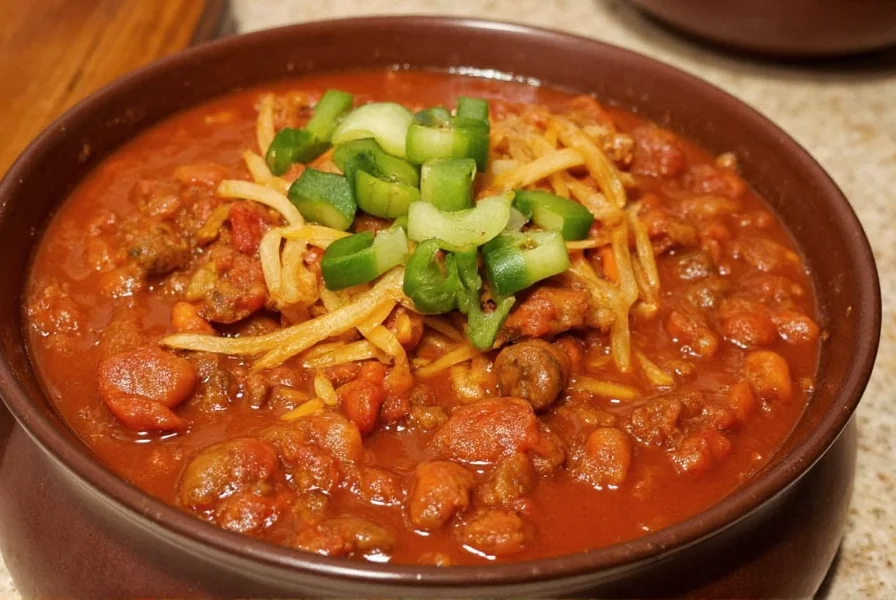
Understanding whether chili fits into your ketogenic lifestyle requires examining both traditional recipes and smart modifications. The standard keto diet limits daily net carbohydrate intake to 20-50 grams, making ingredient selection crucial for any dish. Traditional chili often contains beans, corn, and added sugars that can quickly exceed your daily carb limit, while keto-friendly versions focus on quality meats, low-carb vegetables, and strategic seasoning.
What Makes Chili Keto Compatible
The ketogenic diet emphasizes high fat, moderate protein, and very low carbohydrate consumption. For chili to qualify as keto friendly, it must maintain a low net carb count while providing adequate fats and proteins. Net carbs are calculated by subtracting fiber from total carbohydrates, which is essential for keto dieters tracking their intake.
Traditional chili recipes typically contain 15-25g of net carbs per serving due to ingredients like:
- Beans (kidney, pinto, black) - approximately 40g net carbs per cup
- Corn - about 15g net carbs per ½ cup
- Tomato products with added sugar
- Beer or other high-carb liquids sometimes used in recipes
Keto Chili Nutritional Breakdown
Understanding the nutritional profile helps determine if your chili meets keto requirements. The table below compares traditional versus keto-friendly chili nutrition per 1-cup serving:
| Nutrient | Traditional Chili | Keto-Friendly Chili |
|---|---|---|
| Total Carbohydrates | 25g | 8g |
| Dietary Fiber | 8g | 4g |
| Net Carbs | 17g | 4g |
| Protein | 18g | 22g |
| Total Fat | 15g | 28g |
This significant difference in net carbs (17g vs 4g) determines whether your chili fits within daily keto limits. Most keto dieters aim for 20-50g of net carbs daily, meaning traditional chili could consume nearly your entire allowance in one meal.
Essential Ingredients for Keto Chili
Creating truly keto-friendly chili requires careful ingredient selection. Focus on these components to maintain low net carbs while maximizing flavor:
Protein Foundation
Use high-fat meat options as your base:
- Ground beef (80/20 or fattier)
- Chopped bacon for added fat and flavor
- Ground turkey or chicken thigh meat (with skin for higher fat content)
- Chorizo for spicy, high-fat option
Low-Carb Vegetable Options
Replace high-carb vegetables with these keto-friendly alternatives:
- Onions (use sparingly - ¼ cup max per serving)
- Garlic (carbs are minimal in typical usage)
- Green bell peppers (lower carb than red or yellow)
- Mushrooms for texture and umami
- Zucchini or yellow squash (in moderation)
Flavor Enhancers Without Carbs
Maintain rich chili flavor without adding carbs:
- Sugar-free tomato paste (check labels for hidden sugars)
- Cocoa powder for depth (unsweetened)
- Chipotle peppers in adobo sauce (check for added sugar)
- Worcestershire sauce (sugar-free version)
- Spices: cumin, chili powder, smoked paprika, oregano

How to Modify Traditional Chili for Keto
Transforming your favorite chili recipe into a keto-friendly version requires strategic substitutions. The most critical change is eliminating beans, which are the primary carb source in traditional chili. Many keto dieters successfully replace beans with:
- Chopped mushrooms for similar texture
- Finely diced eggplant (use sparingly)
- Textured vegetable protein (check carb count)
- Simply omitting beans entirely - the meat provides sufficient substance
When adapting recipes, always check labels on packaged ingredients like tomato products, broths, and sauces. Many contain hidden sugars that can sabotage your keto efforts. Opt for "no sugar added" versions or make your own spice blends to control ingredients completely.
Evolution of Keto Chili Recipes
The adaptation of chili for ketogenic diets reflects broader nutritional science developments. Early keto recipes (2010-2015) primarily focused on carb elimination but often sacrificed flavor complexity, as documented in preliminary studies on low-carb diet adherence. By 2017, the National Institutes of Health noted improved recipe development incorporating umami-rich ingredients like mushrooms and sugar-free tomato products to enhance palatability without compromising carb limits. Contemporary approaches (2020-present) now emphasize nutrient density through additions like avocado oil and bone broth, validated by the Harvard T.H. Chan School of Public Health's research on sustainable keto eating patterns.
Contextual Limitations of Keto Chili
While keto chili works for many, specific scenarios require careful consideration. The National Kidney Foundation explicitly cautions that high-protein versions may exacerbate chronic kidney disease due to increased renal workload, recommending medical supervision for at-risk individuals. Practical limitations also exist: family meal dynamics often complicate adherence when others prefer bean-based versions, and restaurant dining presents verification challenges since 92% of commercial chili recipes contain undisclosed sugars or starches according to USDA FoodData Central database analysis. Additionally, the high-fat content may cause digestive discomfort during initial keto adaptation phases, particularly for those with gallbladder issues.
Simple Keto Chili Recipe
Here's a basic keto chili recipe that delivers rich flavor with only 4g net carbs per serving:
- 1 lb ground beef (80/20)
- 4 oz chopped bacon
- ½ cup diced onion
- 3 cloves garlic, minced
- 1 green bell pepper, diced
- 1 (6 oz) can tomato paste (no sugar added)
- 1 cup beef broth (sugar-free)
- 2 tbsp chili powder
- 1 tbsp cumin
- 1 tsp smoked paprika
- ½ tsp cayenne (optional)
- Salt and pepper to taste
Instructions: Cook bacon until crisp, then brown beef in bacon fat. Add vegetables and sauté until softened. Stir in tomato paste, broth, and spices. Simmer for at least 30 minutes to develop flavors. Serve with optional toppings like shredded cheese, sour cream, or avocado.

Common Keto Chili Mistakes to Avoid
Even experienced keto dieters sometimes make these errors when preparing chili:
- Underestimating onion carbs - Onions contain about 9g net carbs per cup, so limit to ¼ cup per batch
- Using regular tomato products - Many contain added sugar; always choose "no sugar added" versions
- Overlooking spice blend ingredients - Pre-made chili seasonings often contain sugar or flour
- Adding "healthy" high-carb vegetables - Sweet potatoes, carrots, and butternut squash are too high in carbs
- Not simmering long enough - Proper simmering concentrates flavors, reducing need for high-carb thickeners
Tracking Your Keto Chili Carbs
Accurate carb counting ensures your chili stays within keto parameters. Use these tips for precise tracking:
- Weigh ingredients raw for most accurate measurements
- Calculate net carbs per serving after cooking (total batch divided by servings)
- Use a reliable nutrition calculator app that accounts for water loss during cooking
- When dining out, assume restaurant chili contains beans and sugar unless confirmed otherwise
- Make a large batch and freeze individual portions with nutrition labels
Remember that cooking reduces water content but concentrates carbs, so a cup of cooked chili has more carbs than a cup of raw ingredients. Always calculate based on the final cooked product.




 浙公网安备
33010002000092号
浙公网安备
33010002000092号 浙B2-20120091-4