
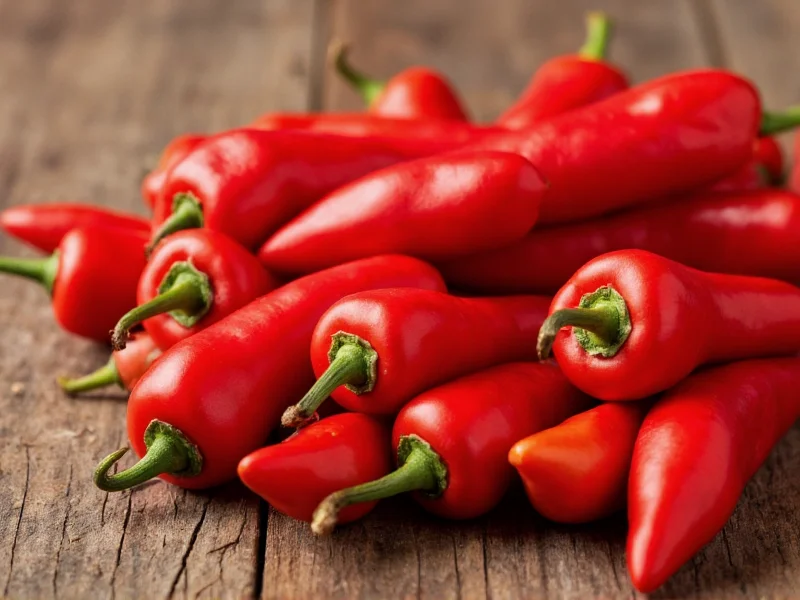
When exploring the question is cayenne a chili, many people encounter confusion between culinary terminology and botanical classification. The straightforward answer is yes—cayenne pepper is unquestionably a type of chili pepper. However, understanding the nuances requires examining both botanical facts and common usage in cooking.
Botanical Classification of Cayenne Peppers
Cayenne peppers (Capsicum annuum var. grossum) belong to the Solanaceae family, the same botanical family as tomatoes, eggplants, and bell peppers. Within the Capsicum genus, cayenne falls under the annuum species, which includes many common pepper varieties.
What distinguishes cayenne from milder chili varieties is its capsaicin content—the compound responsible for heat in peppers. Cayenne typically measures between 30,000 and 50,000 Scoville Heat Units (SHU), placing it firmly in the hot chili category rather than mild or sweet pepper classifications.
Historical Evolution of Cayenne Peppers
The journey of cayenne peppers from indigenous cultivation to global pantry staple spans millennia. Archaeological and botanical evidence reveals a clear evolutionary trajectory:
| Era | Key Development | Geographic Spread |
|---|---|---|
| 6000 BCE | Initial domestication by Mesoamerican civilizations | Mexico and Central America |
| 1493 CE | Columbus introduces Capsicum to Europe after Caribbean voyages | Spain and Portugal |
| 1500-1600s | Portuguese traders disseminate cayenne through African and Asian trade routes | India, Africa, Southeast Asia |
| 18th Century | Naming after Cayenne, French Guiana; formal botanical classification | Global scientific recognition |
| Modern Era | Genetic refinement for consistent heat profiles in commercial agriculture | Worldwide cultivation |
This timeline reflects documented research from the New Mexico State University Chile Pepper Institute, the world's only academic institution dedicated to Capsicum studies. Their archaeological analysis of ancient seed deposits confirms cayenne's domestication timeline across pre-Columbian civilizations.
Common Misconceptions About Cayenne
One frequent point of confusion when determining is cayenne a chili pepper stems from culinary terminology. In some contexts, "chili" refers specifically to dried, powdered peppers used in cooking, while "cayenne" refers to a specific type of hot pepper. This linguistic overlap creates unnecessary confusion.
Another misconception is that "cayenne" and "red pepper" are different substances. In reality, cayenne pepper is often sold as "red pepper" in grocery stores, particularly in the United States. This labeling practice contributes to the question is cayenne a type of chili pepper among consumers.
Cayenne vs. Other Chili Varieties
Understanding where cayenne fits within the chili pepper family requires examining how it compares to other varieties. The table below shows key differences:
| Pepper Type | Scoville Heat Units | Botanical Classification | Common Culinary Uses |
|---|---|---|---|
| Cayenne | 30,000-50,000 SHU | Capsicum annuum var. grossum | Spice blends, hot sauces, seasoning |
| Jalapeño | 2,500-8,000 SHU | Capsicum annuum | Salsas, nachos, pickled peppers |
| Habanero | 100,000-350,000 SHU | Capsicum chinense | Hot sauces, Caribbean cuisine |
| Poblano | 1,000-2,000 SHU | Capsicum annuum | Mole sauce, stuffed peppers |
Contextual Limitations and Safety Boundaries
While cayenne offers culinary and potential health benefits, specific constraints require careful consideration. These context boundaries ensure safe and effective usage:
- Health Contraindications: Individuals with active peptic ulcers or gastroesophageal reflux disease (GERD) should avoid cayenne due to capsaicin's mucosal irritation potential. The National Institutes of Health confirms capsaicin may exacerbate symptoms in these conditions.
- Medication Interactions: Cayenne may potentiate blood-thinning medications like warfarin. The FDA's adverse event reporting system documents cases of increased bleeding risk when consumed concurrently with anticoagulants.
- Culinary Inappropriateness: In dishes requiring subtle flavor profiles (e.g., delicate seafood bisques or dessert applications), cayenne's dominant heat overwhelms complementary notes. Milder varieties like paprika are preferable here.
- Dosage Thresholds: Therapeutic benefits plateau at 30-120mg capsaicin daily according to Mayo Clinic research. Exceeding this may cause gastrointestinal distress without additional benefits.
Understanding these boundaries prevents misuse while maximizing cayenne's legitimate applications within appropriate contexts.
The Culinary Reality of Cayenne as a Chili
When addressing the question is cayenne a chili, culinary professionals universally recognize cayenne as a specific variety of hot chili pepper. Fresh cayenne peppers are long, slender, and typically red when mature (though they can be found in yellow and orange varieties). They're commonly dried and ground into the cayenne powder familiar to most home cooks.
The confusion often arises because "chili" can refer to:
- The plant species (Capsicum)
- Dried, powdered peppers (chili powder)
- Specific pepper varieties (chili peppers)
- Mexican-American stew (chili con carne)
Within this context, cayenne is definitively a chili pepper variety, though it's more specific than the general term "chili." Understanding this distinction helps clarify why the question is cayenne a type of chili pepper persists among cooking enthusiasts.
Practical Uses of Cayenne in Cooking
Knowing that cayenne is indeed a chili pepper, how does this information translate to practical kitchen applications? Cayenne's consistent heat level and clean, sharp flavor make it valuable for:
- Adding controlled heat to dishes without overwhelming other flavors
- Creating balanced spice blends where predictable heat is essential
- Enhancing the flavor profile of meats, sauces, and vegetable dishes
- Providing the signature heat in many Cajun and Creole dishes
Unlike some chili varieties that offer complex flavor notes alongside heat, cayenne primarily delivers straightforward spiciness, making it ideal when heat is the primary goal rather than nuanced flavor.
Health Benefits of Cayenne as a Chili Pepper
As a member of the chili pepper family, cayenne shares many of the health benefits associated with capsaicin-containing peppers. Research suggests that regular consumption of cayenne may:
- Support metabolism and weight management
- Promote cardiovascular health
- Provide anti-inflammatory effects
- Enhance digestion
- Offer pain relief through topical applications
These benefits further underscore why understanding is cayenne a chili matters—not just for culinary accuracy but for recognizing its potential health contributions as part of a balanced diet.
Conclusion: Clarifying the Cayenne-Chili Relationship
The question is cayenne a chili ultimately stems from terminology confusion rather than botanical uncertainty. Botanically, cayenne is unquestionably a chili pepper variety within the Capsicum annuum species. Culinary professionals and pepper enthusiasts recognize it as a specific, hot chili variety distinct from milder peppers but related to other hot varieties like jalapeños and serranos.
When shopping or cooking, recognizing that cayenne is a specific type of chili pepper helps make more informed choices about heat levels and flavor profiles. Whether you're exploring what kind of chili is cayenne or determining difference between cayenne and chili peppers, the key takeaway remains consistent: cayenne is absolutely a chili pepper—just a particularly hot and distinctive variety of one.




 浙公网安备
33010002000092号
浙公网安备
33010002000092号 浙B2-20120091-4