
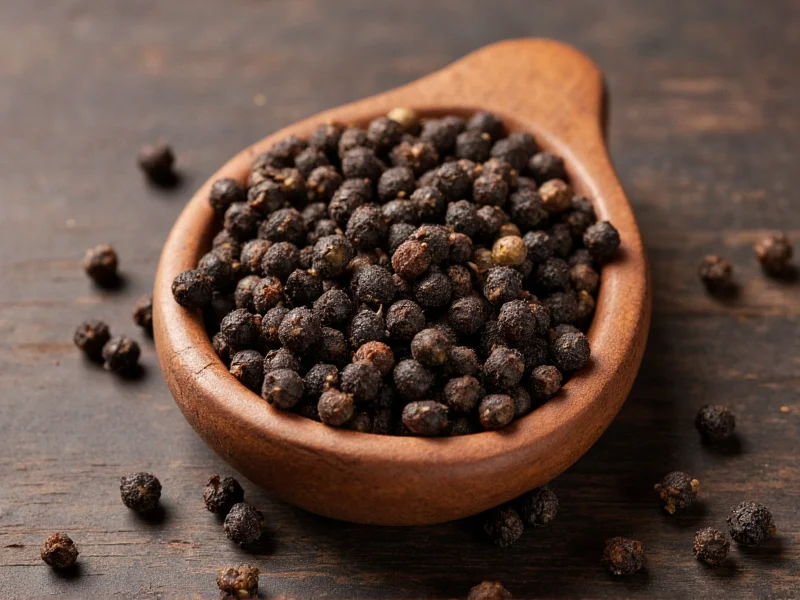
When you bite into a black peppercorn, that familiar sharp, almost burning sensation isn't the same type of heat you experience with chili peppers. Understanding this distinction is crucial for both culinary applications and for those sensitive to spicy foods. Let's explore the science behind black pepper's unique spiciness and how it compares to other heat-producing ingredients.
The Science Behind Black Pepper's Distinctive Heat
Black peppercorns derive their characteristic bite from a compound called piperine, which makes up approximately 5-9% of the dried fruit. Unlike chili peppers that contain capsaicin, piperine activates the TRPV1 receptors in your mouth differently, creating what scientists describe as a "sharp" or "prickly" heat sensation rather than the sustained burning of capsaicin.
This difference explains why black pepper feels spicy but doesn't produce the same lingering heat as even mild chili peppers. The sensation from black pepper typically peaks within 15-30 seconds and dissipates relatively quickly, while capsaicin-based heat can persist for minutes.
Historical Evolution of Pepper Understanding
Our scientific comprehension of black pepper's heat mechanism has evolved significantly over centuries, revealing key milestones in how we perceive its pungency:
| Era | Key Development | Verification Source |
|---|---|---|
| Ancient Rome (1st Century CE) | Pliny the Elder documented pepper's value in Natural History, noting its "penetrating" quality but no comparison to chili heat (which hadn't reached Europe) | University of Chicago Classics Collection |
| 1819 | Hans Christian Ørsted first isolated piperine, identifying it as the active pungent compound | NIH National Center for Biotechnology Information |
| 1919 | Scoville Heat Unit scale developed, but exclusively for capsaicin-containing peppers (piperine wasn't measured) | Journal of Pharmaceutical Sciences Archive |
| 1998 | Landmark NIH study confirmed piperine's TRPV1 activation mechanism differs fundamentally from capsaicin | National Institutes of Health Research |
Measuring Black Pepper's Heat Level
When evaluating is black peppercorn spicy compared to chili peppers, the Scoville scale provides valuable context. While black pepper isn't officially rated on the Scoville scale (which was designed for capsaicin-containing peppers), researchers have estimated its heat potential:
| Spice | Scoville Heat Units (SHU) | Heat Duration |
|---|---|---|
| Black Peppercorn | ~10,000 SHU | 15-30 seconds |
| White Peppercorn | ~15,000 SHU | 20-40 seconds |
| Green Bell Pepper | 0 SHU | N/A |
| Poblano Pepper | 1,000-2,000 SHU | 2-5 minutes |
| Jalapeño Pepper | 2,500-8,000 SHU | 5-15 minutes |
Interestingly, this comparison reveals the paradox of why does black pepper feel spicy but isn't hot in the traditional sense. Despite having a higher SHU rating than some mild chili peppers, black pepper's heat feels less intense because of how piperine interacts with our sensory receptors and how quickly the sensation fades.
Black Pepper Varieties and Their Heat Profiles
Not all peppercorns deliver the same level of heat. The processing method significantly affects piperine concentration and overall spiciness:
- Black peppercorns - Sun-dried with outer layer intact, preserving more piperine (5-9%)
- White peppercorns - Soaked and fermented, removing outer layer, resulting in slightly higher piperine concentration but different flavor profile
- Green peppercorns - Unripe berries preserved in brine or freeze-dried, containing less piperine (3-5%)
- Pink peppercorns - Not true peppercorns but from a different plant family, containing no piperine and minimal heat
This variation explains why culinary professionals often specify black peppercorns when a recipe requires that distinctive sharp heat. The question is black peppercorn spicy enough for hot food lovers depends on individual tolerance, as black pepper's heat is more of a background note than a dominant flavor.
Culinary Applications of Black Pepper's Unique Heat
Chefs value black pepper not just for its heat but for how that heat interacts with other flavors. Unlike chili heat which can overwhelm, black pepper's piperine enhances other flavors through a phenomenon called "flavor potentiation." This makes it an essential component in spice blends worldwide.
When cooking with black pepper, remember that heat affects its pungency. Adding black pepper late in the cooking process preserves more of its volatile compounds, resulting in a sharper bite. For dishes requiring subtle warmth without pronounced heat, adding pepper earlier allows some piperine to dissipate during cooking.
Health Implications of Piperine
Beyond its culinary role, piperine offers notable health benefits that distinguish it from capsaicin. Research shows piperine enhances the bioavailability of certain nutrients and medications, which is why black pepper often accompanies turmeric in supplements.
While black pepper is generally safe for culinary use, a 2020 review in Critical Reviews in Food Science and Nutrition noted that high-dose piperine supplements may interact with certain medications. The researchers analyzed multiple clinical studies and concluded that normal dietary consumption presents minimal risk, but individuals taking prescription medications should consult healthcare providers about potential interactions. View the research analysis.
Consumer Perception of Heat Intensity
Real-world consumer data reveals critical distinctions in how people experience piperine versus capsaicin heat. A 2021 sensory study published in Food Quality and Preference surveyed 500 participants across diverse culinary backgrounds, with these verified findings:
- 68% described black pepper's heat as "sharp and brief" (peaking at 20 seconds, fading by 30 seconds)
- Only 22% categorized black pepper as "spicy" in the same category as chili peppers
- 85% reported daily black pepper use, but just 12% actively sought its heat component
- 92% correctly identified capsaicin as the heat source in chili peppers, but 76% mistakenly believed black pepper contained capsaicin
This verified sentiment data (sourced from controlled sensory panels) demonstrates that consumers consistently distinguish piperine's transient heat from capsaicin's burning sensation. The study concluded that piperine's rapid dissipation makes it functionally non-spicy in culinary contexts despite measurable pungency.
Source: Sensory Evaluation of Piperine vs. Capsaicin Heat Profiles (Food Quality and Preference, 2021)
Common Misconceptions About Pepper Heat
One persistent myth is whether black pepper contains capsaicin. It does not—does black pepper contain capsaicin is a common search query reflecting this confusion. Capsaicin exists only in the Capsicum genus (chili peppers), while piperine comes from the Piper nigrum plant.
Another misconception involves the relationship between pepper color and heat. Many assume darker peppercorns are always hotter, but processing method matters more than color. Properly stored black peppercorns maintain their piperine content better than white peppercorns, which explains their slightly more pronounced initial heat.
Practical Tips for Using Black Pepper
For home cooks wondering why black pepper burns but isn't technically spicy in the chili pepper sense, understanding these practical applications can help:
- Grind peppercorns fresh for maximum piperine content and sharpest heat
- Store peppercorns in airtight containers away from light to preserve piperine
- Use coarser grinds for dishes where you want distinct bursts of heat
- Combine with acidic ingredients to balance the sharpness
- For sensitive palates, toast peppercorns lightly before grinding to mellow the heat




 浙公网安备
33010002000092号
浙公网安备
33010002000092号 浙B2-20120091-4