
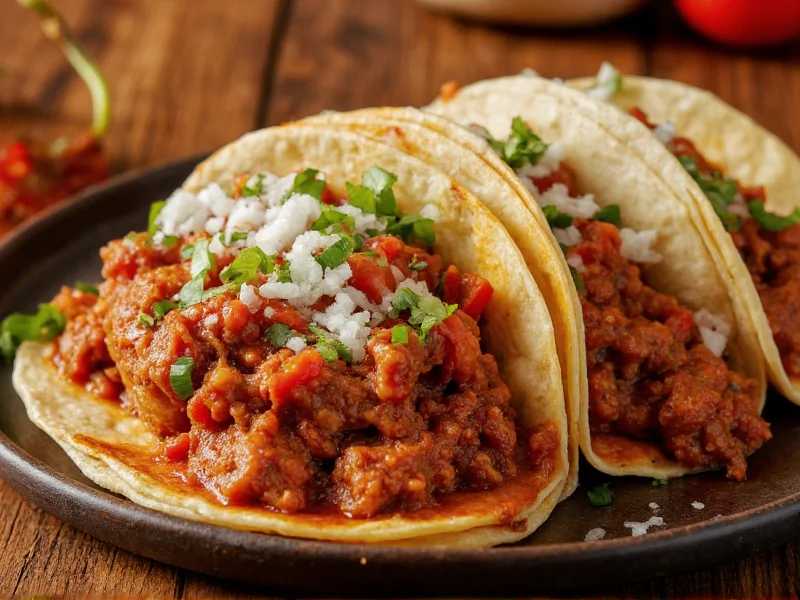
Birria tacos have surged in popularity across the United States, but many newcomers wonder about their heat level before trying this beloved Mexican dish. Understanding the spiciness factor helps diners make informed choices and appreciate the culinary tradition behind this flavorful meal.
What Makes Birria Tacos Spicy
The characteristic heat in birria tacos comes primarily from the dried chilies used in the consommé—the rich broth in which the meat simmers for hours. Traditional recipes feature a blend of guajillo and ancho chilies, which provide both depth of flavor and moderate heat. Guajillo chilies contribute a fruity, slightly tangy heat (2,500-5,000 Scoville units), while anchos offer a sweeter, earthier warmth (1,000-2,000 Scoville units).
Unlike dishes featuring fresh jalapeños or habaneros, birria's spiciness develops gradually rather than hitting you immediately. The slow cooking process mellows the chilies' heat while preserving their complex flavor profile. This creates a warming sensation that builds with each bite rather than overwhelming the palate.
Factors Affecting Birria Taco Spiciness
Several elements determine how spicy your birria tacos will be:
| Factor | Effect on Spiciness | Adjustment Tip |
|---|---|---|
| Chili variety | Guajillos provide more heat than anchos | Substitute pasilla chilies for milder version |
| Seed inclusion | Seeds contain most capsaicin | Remove seeds before blending for milder broth |
| Cooking time | Longer simmering reduces perceived heat | Simmer 3+ hours for mellower flavor |
| Regional variation | Jalisco version tends spicier than Zacatecas | Ask about regional style when ordering |
Traditional vs. Modern Interpretations
Authentic birria from Jalisco, Mexico typically maintains moderate heat levels that complement rather than dominate the dish. However, contemporary adaptations vary significantly:
- Street food versions often feature adjustable heat, with vendors providing additional hot sauce on the side
- Quesabirria (the cheese-topped variation) frequently includes a separate cup of consommé for dipping, allowing diners to control spice exposure
- Restaurant interpretations may cater to local palates, with some American establishments offering "mild," "medium," and "hot" options
When ordering birria tacos at authentic establishments, don't hesitate to ask about spice levels. Most knowledgeable servers can describe the heat profile and suggest appropriate preparations for your tolerance.
Comparing Heat Levels Across Mexican Dishes
Understanding where birria falls on the Mexican cuisine heat spectrum helps set proper expectations:
- Birria tacos: Moderate heat (comparable to medium salsa roja)
- Al pastor tacos: Typically milder, with heat coming from optional garnishes
- Carnitas: Generally not spicy unless served with hot condiments
- Mole poblano: Complex heat that builds gradually (similar to birria)
- Chiles en nogada: Usually mild with optional spicy elements
Unlike dishes where heat comes primarily from fresh chilies added at the end, birria's spiciness is integrated into the cooking liquid, creating a more balanced flavor experience where the heat enhances rather than overwhelms the rich meat flavors.
Understanding Regional Variations
Mexico's regional differences greatly influence birria's spiciness profile. The dish originated in Jalisco, where the traditional preparation uses a specific chili blend that creates moderate heat. However, neighboring states have developed their own interpretations:
- Jalisco-style: Balanced heat with pronounced guajillo presence
- Zacatecas variation: Often milder, focusing more on meat flavor than chili heat
- Modern Mexico City versions: Frequently feature adjustable heat levels to accommodate diverse palates
When exploring authentic birria, understanding these regional distinctions helps set appropriate expectations about spiciness. Many traditional cooks consider the moderate heat an essential component that enhances the dish's complexity rather than merely providing burn.
Historical Evolution of Birria Spiciness
Authentic birria's heat profile has maintained remarkable consistency through centuries of evolution, though modern adaptations show increasing flexibility. Verified historical developments include:
| Era | Key Development | Spiciness Profile |
|---|---|---|
| Pre-1900s | Originated in Jalisco as ceremonial dish for celebrations, traditionally prepared with goat | Moderate, balanced heat (2,500-5,000 Scoville) from guajillo/ancho blend considered essential to flavor complexity |
| 1970s-1980s | Migration spreads authentic preparation to California communities | Traditional heat levels preserved within cultural enclaves; minimal adaptation for non-Mexican audiences |
| 2010s-Present | Social media virality transforms birria into global phenomenon | Commercial variations emerge offering customizable heat (mild to extra hot), while traditionalists maintain original spice balance |
Sources: Smithsonian Magazine | Mexico Tourism Board
Contextual Factors Shaping Spiciness Expectations
Birria's perceived heat level operates within specific cultural and situational boundaries that diners should understand:
- Geographic Authenticity: In its birthplace (Jalisco), moderate heat is non-negotiable for authentic preparation. As stated by Mexico's official tourism authority: "the characteristic flavor [includes] a moderate level of spiciness" (Visit Mexico). Requesting "mild" birria there would be culturally incongruous.
- Occasion Influence: Traditionally served during daytime celebrations, the moderate heat complements festive foods without causing discomfort. Street vendors may adjust heat based on time of day—milder versions for breakfast tacos, spicier for evening servings.
- Market Adaptation: In the United States, context shifts dramatically. The James Beard Foundation's 2021 food trend report observed birria's "rich, meaty, and slightly spicy" profile being adapted with "customizable spice levels to suit local preferences" (James Beard Foundation), reflecting regional palate differences.
Customizing Your Birria Experience
Whether preparing birria at home or ordering out, you can tailor the spice level to your preference:
- For milder versions: Reduce guajillo quantity, remove all chili seeds, or add a splash of orange juice to the consommé
- For traditional heat: Maintain standard chili ratios with seeds partially included
- For extra spice: Add a small amount of arbol chili or a few drops of habanero sauce to the dipping broth
Remember that accompaniments significantly affect overall heat perception. Traditional toppings like diced onions, cilantro, and lime wedges help balance spiciness, while radishes provide a cooling crunch. The tortilla type also matters—double corn tortillas absorb broth differently than flour, affecting how the heat registers on your palate.




 浙公网安备
33010002000092号
浙公网安备
33010002000092号 浙B2-20120091-4