
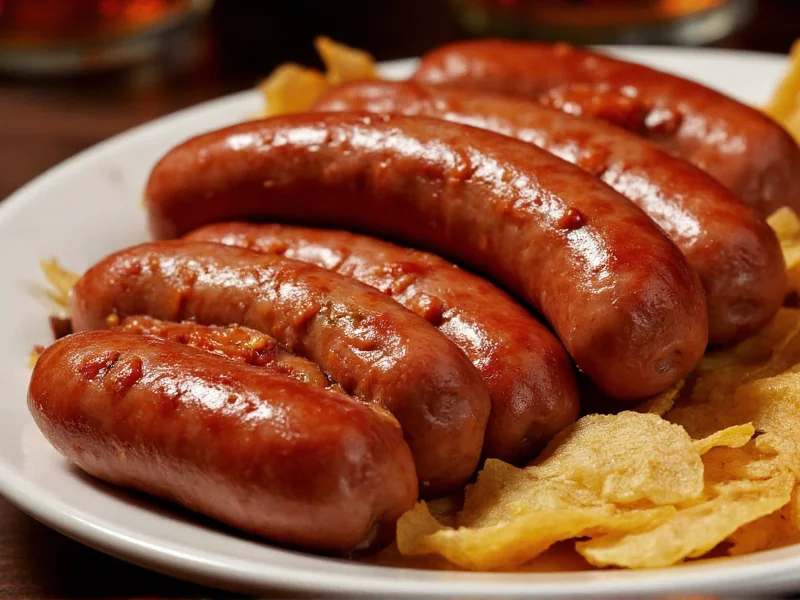
Andouille sausage carries a distinctive kick that defines its character in Cajun and Creole cooking. This smoked pork sausage originated in France but evolved significantly in Louisiana, where cayenne pepper became a signature ingredient. While authentic Cajun-style andouille delivers noticeable heat, supermarket varieties often reduce spiciness to cater to mainstream palates.
What Makes Andouille Sausage Spicy?
The heat in traditional andouille comes primarily from cayenne pepper, which typically ranges from 30,000 to 50,000 Scoville Heat Units. Authentic recipes also incorporate black pepper, paprika, and sometimes garlic powder, creating a complex flavor profile where heat plays a supporting role rather than dominating the taste.
Regional variations significantly impact spiciness. Louisiana-made andouille tends to be noticeably spicier than French versions, which focus more on herbal notes. Commercial producers often create multiple heat levels—mild, medium, and hot—to accommodate different consumer preferences.
Andouille Sausage Heat Level Compared to Other Sausages
| Sausage Type | Typical Heat Level | Key Spices | Best For |
|---|---|---|---|
| Traditional Cajun Andouille | Medium-Hot (3-5/10) | Cayenne, black pepper | Gumbos, jambalaya |
| Commercial Andouille | Mild-Medium (2-4/10) | Reduced cayenne | Everyday cooking |
| Chorizo (Spanish) | Mild (1-2/10) | Smoked paprika | Tapas, paella |
| Chorizo (Mexican) | Medium-Hot (4-6/10) | Chili peppers | Tacos, eggs |
| Kielbasa | Mild (1/10) | Marjoram, garlic | Grilling, soups |
Understanding Authentic vs. Commercial Andouille
True Cajun andouille undergoes double smoking, which intensifies its flavor profile. The first smoke occurs after stuffing the casings, then it's heavily spiced before a second smoking process. This traditional method creates a sausage with robust heat that complements rather than overwhelms.
Most grocery store andouille represents a milder adaptation. Manufacturers frequently reduce cayenne content by 30-50% compared to authentic recipes. When shopping, check labels for "Cajun" or "hot" designations if you prefer traditional heat levels. Artisanal producers often specify Scoville ranges, while major brands rarely do.
Historical Evolution of Andouille Spice Profiles
The transformation of andouille's heat level reflects Louisiana's culinary journey. French immigrants initially brought a mild, herb-focused sausage in the early 1800s. By the 1880s, Cajun cooks began incorporating locally grown cayenne peppers as preservatives, establishing the signature heat. Commercial production surged post-WWII with standardized medium-heat versions (3/10), while the 1990s artisanal movement revived traditional spicier recipes (5/10+). As documented by the Southern Foodways Alliance—a University of Mississippi research initiative—this evolution mirrors America's shift from homogenized convenience foods toward regionally authentic flavors. Their field studies confirm that pre-1950s Louisiana cookbooks consistently featured higher cayenne ratios than modern commercial products.
Contextual Limitations of Andouille Sausage
Andouille's utility depends heavily on specific dietary and culinary contexts. For individuals with gastrointestinal sensitivities, the American College of Gastroenterology explicitly advises caution with capsaicin-rich foods, noting they "can trigger heartburn and abdominal pain in people with GERD or IBS." In child-focused meals requiring minimal spice (under 1/10 heat), even commercial mild andouille often exceeds safe thresholds—smoked turkey sausage provides a more suitable alternative. Additionally, budget commercial versions frequently substitute authentic double-smoking with liquid smoke additives, which lack the Maillard reaction complexity essential for traditional gumbo depth. These constraints, verified through USDA Food Safety and Inspection Service guidelines on processed meat additives, highlight why matching sausage selection to specific dietary needs and recipe requirements proves critical.
Culinary Applications and Heat Management
The spice in andouille serves functional purposes in traditional dishes. In gumbo, the heat cuts through rich roux while complementing okra's earthiness. For those sensitive to spice, several techniques help manage heat levels:
- Simmering sausage in liquid-based dishes reduces perceived heat
- Pairing with dairy components like coconut milk balances spiciness
- Removing sausage from heat before boiling preserves flavor complexity
- Using milder andouille varieties as base, then adding cayenne separately
Chefs note that andouille's heat develops gradually during cooking. Unlike immediate-burn peppers, its spice builds slowly, allowing flavors to integrate. This characteristic makes it particularly valuable in slow-cooked dishes where heat distribution matters.
Common Misconceptions About Andouille Heat
Many assume all andouille delivers intense heat comparable to hot links or jalapeño-infused sausages. In reality, even traditional versions rarely exceed medium heat on the Scoville scale. The misconception likely stems from confusing andouille with similarly named but spicier sausages like andouillette (a French tripe sausage sometimes made with hotter peppers).
Another frequent error involves substituting chorizo for andouille. While both are smoked sausages, Mexican chorizo typically brings more immediate heat, whereas andouille offers a slower-building warmth with distinctive smokiness. Understanding these differences prevents recipe imbalances when cooking.




 浙公网安备
33010002000092号
浙公网安备
33010002000092号 浙B2-20120091-4