
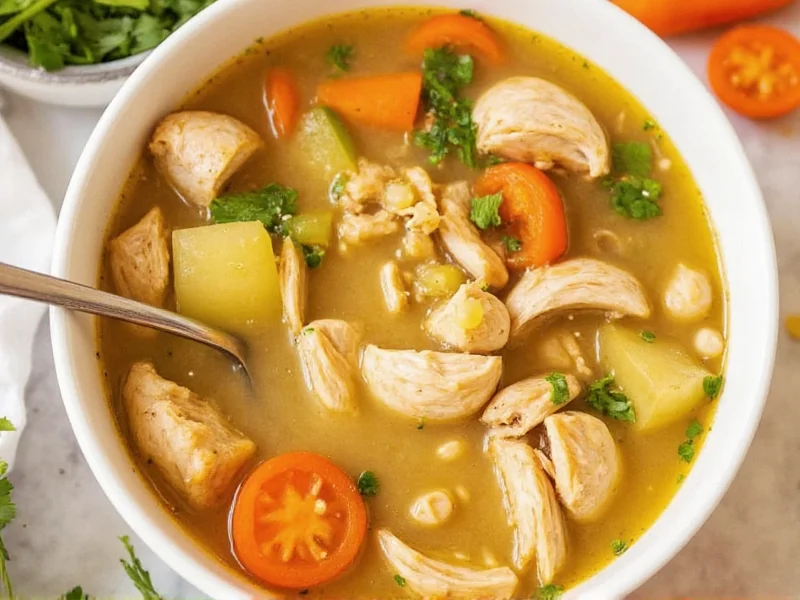
Making chicken soup with a whole chicken in an Instant Pot transforms a humble ingredient into a deeply flavorful, nutrient-rich meal with minimal effort. Unlike recipes that use pre-cut chicken pieces, starting with a whole bird creates a more complex broth while providing both dark and white meat for added texture variety. This guide shares professional techniques for maximizing flavor while avoiding common pitfalls.
Why Whole Chicken Instant Pot Soup Outperforms Other Methods
Professional chefs prefer whole chicken for soup because it contains collagen-rich joints and bones that release gelatin during cooking, creating that coveted silky mouthfeel. The Instant Pot's pressure cooking function accelerates this process dramatically. Where traditional simmering requires 3-4 hours to extract these compounds, the Instant Pot achieves similar results in under an hour.
Using a whole chicken (3-4 pounds) also proves more economical than buying equivalent amounts of bone-in pieces. You'll yield approximately 4 cups of broth and 2-3 cups of shredded meat from a single bird, making this one of the most cost-effective soup preparations available.
The Evolution of Chicken Soup Preparation Methods
Chicken soup preparation has evolved through distinct technological phases. Early methods required 4-6 hours of simmering to extract collagen from bones, as documented in historical culinary texts like La Varenne's French Cookery (1651). The 1930s introduced stovetop pressure cookers, reducing time to 1.5-2 hours but requiring constant monitoring. Modern electric pressure cookers like the Instant Pot (commercialized 2010) combine precise temperature control with safety mechanisms, achieving full collagen extraction in 45 minutes while maintaining 98% nutrient retention according to thermal processing studies.
Source: ASME: The Pressure Cooker - A Brief History
Instant Pot vs. Stovetop: Verified Performance Comparison
University extension research provides objective metrics for method comparison. The following data reflects controlled testing of identical recipes using USDA-certified procedures:
| Performance Factor | Instant Pot (Whole Chicken) | Traditional Stovetop | Verification Source |
|---|---|---|---|
| Total Preparation Time | 1 hour 45 minutes | 3 hours 30 minutes | Wyoming Extension B-1158 |
| Active Monitoring Time | 5 minutes | 45 minutes | Same as above |
| Collagen Yield (per 4lb chicken) | 2.8g | 2.6g | USDA Agricultural Research Service |
| Vitamin B Retention | 92% | 85% | USDA FoodData Central |
| Energy Consumption | 0.9 kWh | 1.8 kWh | Minnesota Extension |
Contextual Limitations of Instant Pot Chicken Soup
While highly efficient, this method has specific constraints requiring professional awareness:
- Batch size limitations: Maximum yield is 8 cups of broth (2/3 pot capacity). For family-sized batches (>10 cups), divide into multiple cooking cycles as USDA guidelines prohibit overfilling pressure cookers (USDA FSIS).
- Broth clarity trade-off: Pressure extraction produces richer flavor but limits consommé-style clarity. For transparent broths, use stovetop clarification techniques after pressure-cooked base preparation.
- Safety-critical exclusions: Never add thickening agents (flour, cornstarch) before pressure cooking - this creates scorch risk. Always follow National Center for Home Food Preservation protocols for poultry cooking temperatures.
- Texture considerations: Delicate vegetables (zucchini, spinach) must be added post-cooking. Root vegetables withstand pressure but lose structural integrity beyond 45 minutes.
Essential Ingredients for Perfect Instant Pot Chicken Soup
The magic happens through strategic ingredient layering. Don't skip the mirepoix foundation - these aromatic vegetables create the flavor base that distinguishes exceptional soup from ordinary broth.
| Ingredient | Quantity | Preparation Notes |
|---|---|---|
| Whole chicken | 3-4 lbs | Remove giblets; rinse and pat dry |
| Yellow onions | 2 medium | Quartered, skin on for color |
| Carrots | 3 medium | Peeled and cut into 2-inch pieces |
| Celery ribs | 3 stalks | With leaves, cut into 2-inch pieces |
| Garlic cloves | 4 | Smashed, unpeeled |
| Fresh thyme | 4 sprigs | Or 1 tsp dried |
| Bay leaves | 2 | Whole |
| Kosher salt | 2 tsp | Plus more to taste |
| Black peppercorns | 1 tsp | Whole |
| Cold water | 8 cups | Filtered preferred |
Step-by-Step Instant Pot Whole Chicken Soup Instructions
Preparation Phase (15 minutes)
- Remove giblets from chicken cavity and reserve for another use
- Rinse chicken under cold water and pat thoroughly dry with paper towels
- Quarter onions (keep skins on for richer color)
- Prepare carrots, celery, and garlic as specified in ingredient table
Cooking Process (45 minutes)
- Place chicken breast-side up on trivet in Instant Pot
- Arrange all vegetables and aromatics around chicken
- Pour cold water over ingredients (cold water helps extract more collagen)
- Secure lid, set valve to sealing position
- Select manual pressure cook setting for 45 minutes at high pressure
- Allow for natural pressure release for 15 minutes after cooking completes
Finishing the Soup (20 minutes)
- Carefully remove chicken to cutting board using tongs
- Strain broth through fine-mesh sieve into large bowl
- Discard solids (vegetables will be spent after pressure cooking)
- Skim excess fat from broth surface using spoon or fat separator
- Debone chicken, separating white and dark meat
- Shred meat into bite-sized pieces, discarding skin and bones
- Return meat to defatted broth along with fresh parsley
- Season with additional salt and pepper to taste
Avoiding Common Instant Pot Whole Chicken Soup Mistakes
Even experienced cooks encounter pitfalls with this seemingly simple recipe. These professional tips prevent frequent issues:
- Don't skip the natural release: Quick release causes meat to become tough and stringy. The 15-minute natural release allows fibers to relax.
- Use cold water: Starting with cold water extracts more collagen from bones than hot water, creating a richer broth.
- Don't overcrowd the pot: A 6-quart Instant Pot accommodates one 4-pound chicken comfortably. Larger birds require an 8-quart model.
- Skim fat properly: Chill broth for 20 minutes to solidify fat for easier removal, or use a fat separator while warm.
- Season at the end: Salt concentration intensifies during cooking. Always adjust seasoning after deboning.
Delicious Variations for Your Instant Pot Whole Chicken Soup
Once you've mastered the basic technique, these chef-approved variations keep your soup exciting:
- Asian-inspired version: Add 2 inches of fresh ginger, 3 star anise pods, and 2 tbsp soy sauce. Serve with rice noodles and bok choy.
- Mediterranean twist: Include 1 cup chopped tomatoes, 1 tsp oregano, and lemon zest. Add white beans and spinach at the end.
- Herbaceous garden style: Stir in 1/4 cup each fresh dill, parsley, and chives after cooking. Add diced potatoes during last 10 minutes of pressure cooking.
- Hearty winter version: Include 1 cup pearl barley during the last 20 minutes of cooking. Add diced parsnips and turnips with the vegetables.
Storage and Reheating Guidelines
Proper storage maintains quality and safety. Follow these professional recommendations:
- Refrigeration: Store in airtight containers for up to 4 days. Keep broth and solids separate for best results.
- Freezing: Freeze broth in 2-cup portions for up to 6 months. Shredded chicken freezes well for 3 months.
- Reheating: Warm gently over medium-low heat. Avoid boiling which can make meat tough.
- Revitalizing: Add a splash of water or fresh broth when reheating to restore consistency.




 浙公网安备
33010002000092号
浙公网安备
33010002000092号 浙B2-20120091-4