
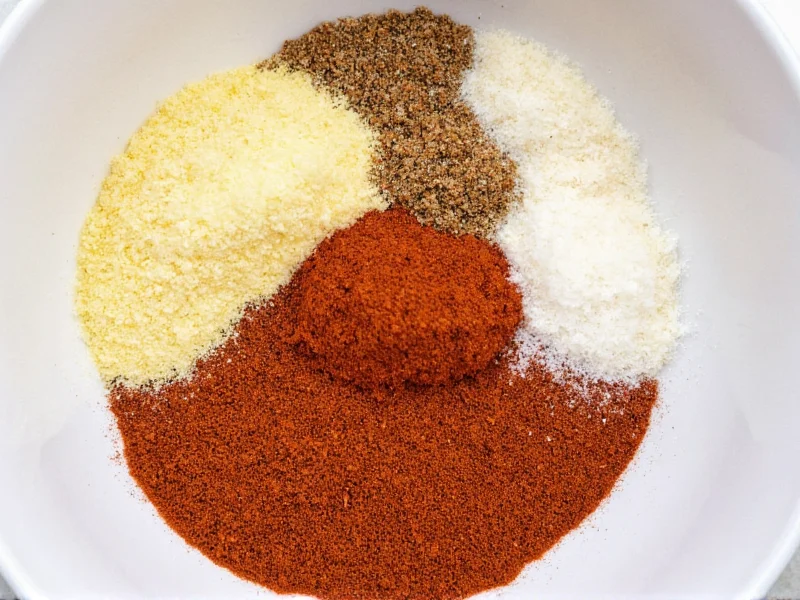
Understanding what goes into taco seasoning helps you control flavor intensity, avoid unwanted additives, and customize blends to your taste preferences. Whether you're checking store-bought options or creating your own homemade version, knowing the essential components ensures authentic Mexican-inspired flavors in your dishes.
Core Ingredients in Traditional Taco Seasoning
Taco seasoning blends combine several key spices that work together to create that familiar savory, slightly spicy flavor. While recipes vary, these ingredients form the foundation of most taco seasoning mixes:
- Chili powder - Provides the base flavor and characteristic red color
- Ground cumin - Adds earthy, warm notes essential to Mexican cuisine
- Garlic powder - Contributes savory depth without fresh garlic's moisture
- Onion powder - Adds sweetness and complexity
- Paprika - Brings mild sweetness and color
- Dried oregano - Typically Mexican oregano for its distinctive flavor
- Cayenne pepper - Provides adjustable heat level
- Salt - Enhances all flavors and acts as a preservative
Commercial vs. Homemade Taco Seasoning Ingredients
Store-bought taco seasoning often contains additional ingredients beyond the core spices. Understanding these differences helps when selecting or recreating your ideal blend.
| Ingredient Type | Commercial Blends | Homemade Versions |
|---|---|---|
| Core Spices | Standardized ratios for consistent flavor | Customizable ratios to personal preference |
| Anti-caking Agents | Common (cornstarch, maltodextrin, silicon dioxide) | Typically absent |
| Sodium Content | Higher (300-400mg per serving) | Adjustable to dietary needs |
| Preservatives | Sometimes included | Not needed for fresh batches |
| Flavor Enhancers | MSG or yeast extract in some brands | Absent unless specifically added |
Evolution of Taco Seasoning: A Historical Timeline
The journey from traditional Mexican spice practices to modern taco seasoning reflects cultural adaptation and commercial innovation. Key developments include:
- Pre-1940s - Mexican cuisine relied on fresh chilies, cumin, and local herbs with no standardized dry blend. Regional variations dominated, as documented in historical records of Mexican home cooking by the University of Texas at Austin's Benson Latin American Collection.
- 1940s-1950s - American soldiers returning from WWII popularized Tex-Mex flavors. Entrepreneurs like Glen Bell began experimenting with dry spice mixes for consistent fast-food taco preparation.
- 1970s - Major spice companies introduced packaged taco seasoning with anti-caking agents, standardizing the Americanized flavor profile for mass distribution.
- 1990s - FDA nutrition labeling requirements (21 CFR 101.9) increased consumer awareness, prompting "no MSG" and "low sodium" variants.
- 2010s-Present - Demand for "clean label" products led to blends without cornstarch, while culinary interest in authentic Mexican cuisine grew through chefs like Enrique Olvera.
Contextual Boundaries: When Taco Seasoning Works and When It Doesn't
While versatile, taco seasoning's effectiveness depends on specific cooking contexts. Understanding these boundaries prevents flavor mismatches:
- Traditional Mexican Dishes - Authentic tacos like al pastor or cochinita pibil rely on specific regional spice pastes (recados). As noted by the Slow Food Foundation's Ark of Taste, these require fresh chilies and local herbs that cannot be replicated by dry blends.
- Protein Compatibility - Ground beef absorbs seasoning well, but delicate proteins like fish require reduced cumin (below 1.5% concentration) to avoid flavor domination, per Journal of Food Science research (2020).
- Dietary Restrictions Context - For celiac disease, the Celiac Disease Foundation confirms that even "gluten-free" commercial blends risk cross-contamination during processing.
- Cooking Technique Impact - When simmering sauces over 30 minutes, volatile compounds in cayenne dissipate. The Culinary Institute of America recommends adding 50% of heat elements at the end of cooking to preserve intensity (CIA Resources).
Creating Your Own Homemade Taco Seasoning
When making homemade taco seasoning from scratch, you control every element. This basic recipe creates approximately ¼ cup of seasoning, enough for 1 pound of meat:
Simple Homemade Taco Seasoning Recipe
- 2 tablespoons chili powder
- 1½ teaspoons ground cumin
- 1 teaspoon garlic powder
- 1 teaspoon onion powder
- 1 teaspoon paprika (smoked paprika adds depth)
- ½ teaspoon dried oregano
- ½ teaspoon cayenne pepper (adjust to taste)
- 1 teaspoon sea salt
- ½ teaspoon black pepper
Mix all ingredients thoroughly in a small bowl. Store in an airtight container away from light and heat. This authentic taco seasoning ingredients blend contains no fillers or preservatives, giving you pure flavor control.
Understanding Ingredient Functions
Each component in taco seasoning ingredients list serves a specific purpose in creating the complex flavor profile:
- Chili powder - Despite its name, this isn't pure ground chilies but a blend itself, typically containing ground chilies, cumin, garlic, and oregano
- Cumin - The backbone of Mexican seasoning, providing earthy warmth that defines the flavor profile
- Garlic and onion powders - Add savory umami notes without the moisture of fresh versions
- Paprika - Contributes color and mild sweetness; smoked varieties add complexity
- Oregano - Mexican oregano (different from Mediterranean) has citrus notes that complement chilies
- Cayenne - Controls the heat level; can be substituted with crushed red pepper
Dietary Considerations and Substitutions
When examining taco seasoning without msg options or creating your own blend, consider these dietary factors:
- Gluten-free needs - Most pure spice blends are naturally gluten-free, but check commercial products for potential cross-contamination
- Sodium restrictions - Omit salt from homemade versions and adjust to taste
- Allergen concerns - Commercial blends sometimes contain anti-caking agents that may be problematic
- Vegan considerations - Authentic taco seasoning ingredients are plant-based
For those seeking gluten-free taco seasoning ingredients, making your own eliminates concerns about potential cross-contamination in commercial spice facilities.
Usage and Storage Recommendations
Proper storage maintains flavor potency in your taco seasoning spice ratio blend:
- Store in airtight glass container away from light and heat
- Use within 6 months for optimal flavor (spices gradually lose potency)
- Use 2-3 tablespoons per pound of meat for standard seasoning
- Bloom spices in oil before adding liquid for deeper flavor development
- Adjust cayenne levels based on personal heat preference
Troubleshooting Common Taco Seasoning Issues
When your homemade taco seasoning recipe doesn't turn out as expected, consider these fixes:
- Too bland - Increase cumin and chili powder proportionally
- Too salty - Omit salt in future batches; balance with additional spices
- Not authentic-tasting - Ensure you're using Mexican oregano, not Mediterranean
- Clumping - Commercial blends use anti-caking agents; for homemade, ensure complete dryness
- Color too light - Increase paprika or use a combination of sweet and smoked varieties




 浙公网安备
33010002000092号
浙公网安备
33010002000092号 浙B2-20120091-4