
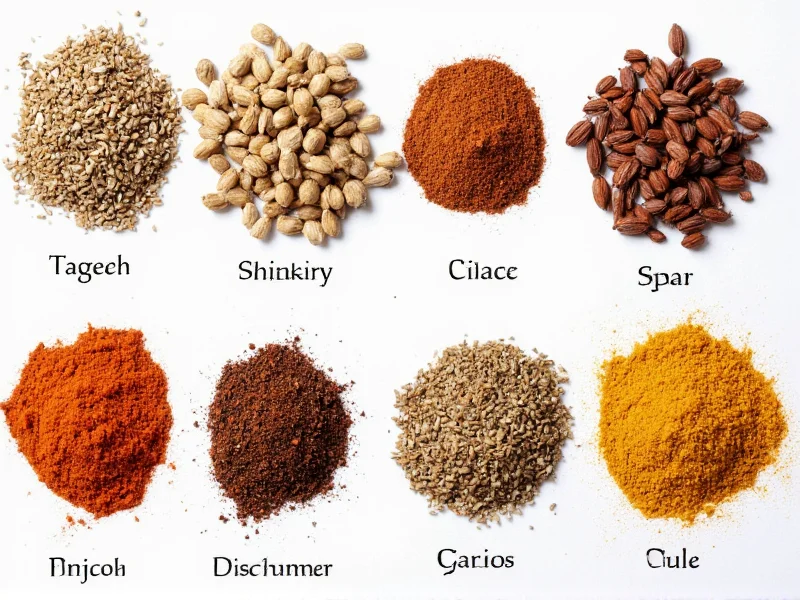
Proper spice identification is essential for culinary accuracy, food safety, and maximizing flavor potential in cooking. Whether you're organizing a spice cabinet, verifying authenticity of purchased spices, or distinguishing between similar-looking varieties, understanding the distinctive characteristics of each spice ensures your dishes achieve their intended flavor profiles.
Visual Identification Methods
Visual examination provides the first clues for spice identification. Whole spices generally retain more distinctive features than ground versions. When identifying spices visually, consider these factors:
- Color: Note the precise hue and intensity. Saffron threads should be deep red-orange, while paprika ranges from bright red to brick orange depending on variety.
- Shape and structure: Cumin seeds have a distinctive crescent shape with longitudinal ridges, while caraway seeds are curved with five pale ridges.
- Size: Measure dimensions when possible. True cinnamon quills are typically thinner (0.5-1mm) than cassia (2-3mm).
- Surface texture: Examine under magnification if needed. Coriander seeds have a circular pattern on their surface, while fennel seeds are smooth with five longitudinal ridges.
| Spice | Whole Form Characteristics | Ground Form Characteristics |
|---|---|---|
| Cinnamon (Ceylon) | Multiple thin, delicate quills forming a cigar shape | Light tan color, fine texture, sweet aroma |
| Cassia | Single thick, hard quill | Dark reddish-brown, coarser texture, stronger scent |
| Nutmeg | Oval seed, 2-3cm long, hard shell | Light brown powder, warm, nutty aroma |
| Mace | Lacy reddish-orange \"veil\" surrounding nutmeg | Pale yellow-orange, more delicate flavor than nutmeg |
Aroma Profiling Techniques
The olfactory characteristics of spices provide crucial identification clues. Proper aroma assessment requires technique:
- Warm the spice: Place a small amount in your palm and rub gently to release volatile oils.
- Moisten slightly: A drop of water can enhance aroma release for some spices like vanilla or saffron.
- Identify primary notes: Cardamom has citrusy, eucalyptus notes; cloves are distinctly medicinal and pungent.
- Assess aroma strength: Ceylon cinnamon has a delicate fragrance while cassia is more intense and slightly bitter.
When comparing similar spices, aroma often provides the clearest distinction. For instance, distinguishing between black and white pepper: black pepper has a sharp, piney aroma with citrus notes, while white pepper is earthier with musty, fermented characteristics.
Taste Testing for Confirmation
Taste should be the final verification step after visual and aroma assessment. Proper tasting technique matters:
- Use only a tiny amount (pinch for ground, single seed for whole)
- Allow flavors to develop on your palate (some spices like star anise have delayed flavor release)
- Note the flavor progression: initial taste, mid-palate development, and aftertaste
- Pay attention to heat level, sweetness, bitterness, and complexity
For example, when identifying chili varieties, cayenne delivers immediate sharp heat that fades quickly, while chipotle offers smoky heat with chocolate undertones that lingers. Authentic saffron produces a distinctive honey-like sweetness with subtle hay notes, not just bitterness.
Distinguishing Common Spice Confusions
Certain spice pairs frequently cause identification challenges. Understanding their differences prevents culinary mistakes:
Cinnamon vs. Cassia
While often sold interchangeably as \"cinnamon,\" these are distinct spices. True cinnamon (Ceylon) comes from Cinnamomum verum and features multiple thin, papery layers that form a delicate cigar shape. It has a light tan color when ground and a sweet, citrusy aroma. Cassia, from Cinnamomum cassia, forms a single thick, hard quill with a darker reddish-brown color and stronger, slightly bitter scent. Cassia contains higher levels of coumarin, which can be problematic in large quantities.
Nutmeg vs. Mace
These spices come from the same fruit but have different characteristics. Nutmeg is the seed itself - oval, 2-3cm long, with a hard shell. When ground, it produces a light brown powder with warm, nutty notes. Mace is the lacy reddish-orange aril (covering) surrounding the nutmeg seed. It has a more delicate flavor profile with citrus notes and is typically a pale yellow-orange when ground.
Contextual Limitations in Spice Identification
While standard identification techniques are effective, their reliability varies significantly based on specific conditions. Recognizing these boundaries prevents critical errors:
- Ground vs. Whole Spices: Visual identification becomes substantially unreliable with ground products, as structural features are destroyed. The U.S. Pharmacopeia's Food Fraud Database documents that ground spices account for 78% of adulteration cases precisely because visual markers are absent, requiring reliance on aroma and chemical testing instead.
- Storage Degradation Thresholds: Spices stored beyond recommended periods lose volatile compounds essential for identification. As verified by USDA Cooperative Extension research, ground spices lose 40-60% of key aroma compounds within 4 months of exposure to light and oxygen, making color and scent-based identification impossible despite proper storage containers.
- Health Safety Constraints: Taste testing is strictly contraindicated for suspected adulterated spices containing toxic fillers like lead chromate (common in turmeric). Regulatory guidelines from food safety authorities mandate laboratory verification before sensory evaluation when contamination is suspected, particularly for vulnerable populations.
Professional spice graders adjust methodology based on these contextual factors, prioritizing non-sensory verification when limitations are present.
Detecting Adulterated Spices
Unfortunately, spice adulteration is common in the industry. Learn these detection methods for common issues:
- Saffron verification: Place a thread in warm water - authentic saffron releases color gradually while maintaining thread integrity. Adulterated versions may discolor water immediately or disintegrate.
- Paprika purity test: Mix with water - pure paprika floats while adulterated versions containing fillers sink.
- Curcumin content in turmeric: Authentic turmeric has vibrant color that stains surfaces; diluted versions show weaker coloring properties.
- Whole spice integrity: Check for uniform size and color - inconsistencies may indicate mixing with inferior varieties.
Practical Identification Tools
Several tools can enhance your spice identification capabilities:
- 10x magnifying glass: Reveals surface textures and structural details invisible to the naked eye
- Spice reference cards: Visual guides showing color standards for ground spices
- Aroma vials: Small containers to preserve and compare spice scents
- Digital scale: Helps identify density differences between authentic and adulterated spices
- PH test strips: Can detect certain adulterants that alter acidity levels
Historical Evolution of Spice Identification
Spice authentication methods have transformed dramatically through technological advancements, reflecting changing trade dynamics and scientific understanding:
| Era | Primary Methods | Verification Limitations |
|---|---|---|
| Pre-1800s | Visual inspection, basic taste tests, merchant reputation | High fraud risk; no objective verification. The \"Siddhanta\" texts (6th century India) documented characteristics but lacked scientific validation. |
| 1800-1950 | Magnifying glasses, alcohol solubility tests, basic chromatography | Laboratory-dependent; required specialized training. Early coumarin detection in cinnamon emerged in 1920s pharmacopeias. |
| 1950-2000 | Gas chromatography, UV spectroscopy, microscopy | Cost-prohibitive for consumers; 2-3 day turnaround. FDA began monitoring coumarin levels in 1970s based on analytical standards. |
| 2000-Present | Portable spectrometers, DNA barcoding, AI image recognition | Real-time verification; smartphone apps now achieve 92% accuracy in distinguishing Ceylon/cassia per American Chemical Society validation studies. |
This progression demonstrates how technological innovation has shifted spice authentication from subjective merchant knowledge to accessible, scientific verification - directly addressing historical adulteration challenges documented in trade records.
Storage Practices for Maintaining Identifiable Characteristics
Proper storage preserves the distinctive features that make spice identification possible:
- Store whole spices in airtight containers away from light and heat
- Keep ground spices in opaque containers and use within 6 months for optimal identification characteristics
- Maintain consistent temperature (fluctuations accelerate flavor and aroma loss)
- Avoid storing near strong-smelling foods that can transfer odors
- Label containers with purchase dates to track freshness
Spices degrade over time, losing their distinctive characteristics. Freshly ground spices provide the clearest identification markers compared to pre-ground versions that have already begun to lose volatile compounds.
Developing Your Spice Identification Skills
Becoming proficient at identifying spices requires practice and systematic approach:
- Create a reference collection of authentic spices for comparison
- Document observations in a spice journal with descriptions and photos
- Practice blind identification tests with known samples
- Attend spice tasting events to refine your sensory skills
- Study botanical references to understand plant origins and variations
Professional chefs and spice merchants develop these skills through years of hands-on experience. Start with common spices you use regularly and gradually expand your identification capabilities to more exotic varieties.




 浙公网安备
33010002000092号
浙公网安备
33010002000092号 浙B2-20120091-4