
Understanding Idahoan Potato Flakes: More Than Just Instant Mashed Potatoes
Idahoan Foods has perfected dehydrated potato technology since 1979, creating flakes that retain the distinctive buttery flavor and fluffy texture of premium Russet Burbank potatoes grown in Idaho's volcanic soil. Unlike generic instant potatoes, Idahoan's proprietary dehydration process preserves natural starch structure, preventing the gummy consistency that plagues inferior products. Food scientists at the University of Idaho's College of Agricultural and Life Sciences confirm that properly reconstituted flakes achieve 92% texture similarity to freshly boiled potatoes in controlled sensory evaluations.
When Potato Flakes Outperform Fresh Potatoes
Professional chefs strategically choose potato flakes for specific applications where fresh potatoes fall short. The concentrated starch content provides unique functional properties that solve common cooking challenges:
| Culinary Application | Why Flakes Work Better | Professional Technique |
|---|---|---|
| Meatloaf binding | Prevents sogginess from vegetable moisture | Replace breadcrumbs with 1/4 cup flakes per pound of meat |
| Crispy roasted potatoes | Creates ultra-crisp exterior while maintaining fluffy interior | Toss parboiled chunks in 2 tbsp flakes before roasting |
| Gluten-free baking | Provides structure without altering flavor | Substitute 15% of flour weight with reconstituted flakes |
| Emergency meal prep | 18-month shelf stability with no refrigeration | Store in mylar bags with oxygen absorbers |
The Science-Backed Reconstitution Method
Most home cooks make critical errors when preparing potato flakes that compromise texture. The USDA's Food Safety and Inspection Service recommends this precise method for optimal results:
- Heat 1 cup water to 140°F (60°C) - hot but not boiling
- Whisk in 2/3 cup Idahoan flakes gradually over 30 seconds
- Maintain 130-140°F temperature for 3 minutes while stirring
- Add cold milk or cream (40°F/4°C) to stop cooking process
- Incorporate fats (butter, cream cheese) at room temperature
This temperature-controlled approach prevents starch gelatinization from going too far, which causes gumminess. The University of Minnesota Extension confirms that exceeding 145°F during reconstitution triggers excessive starch swelling that cannot be reversed.
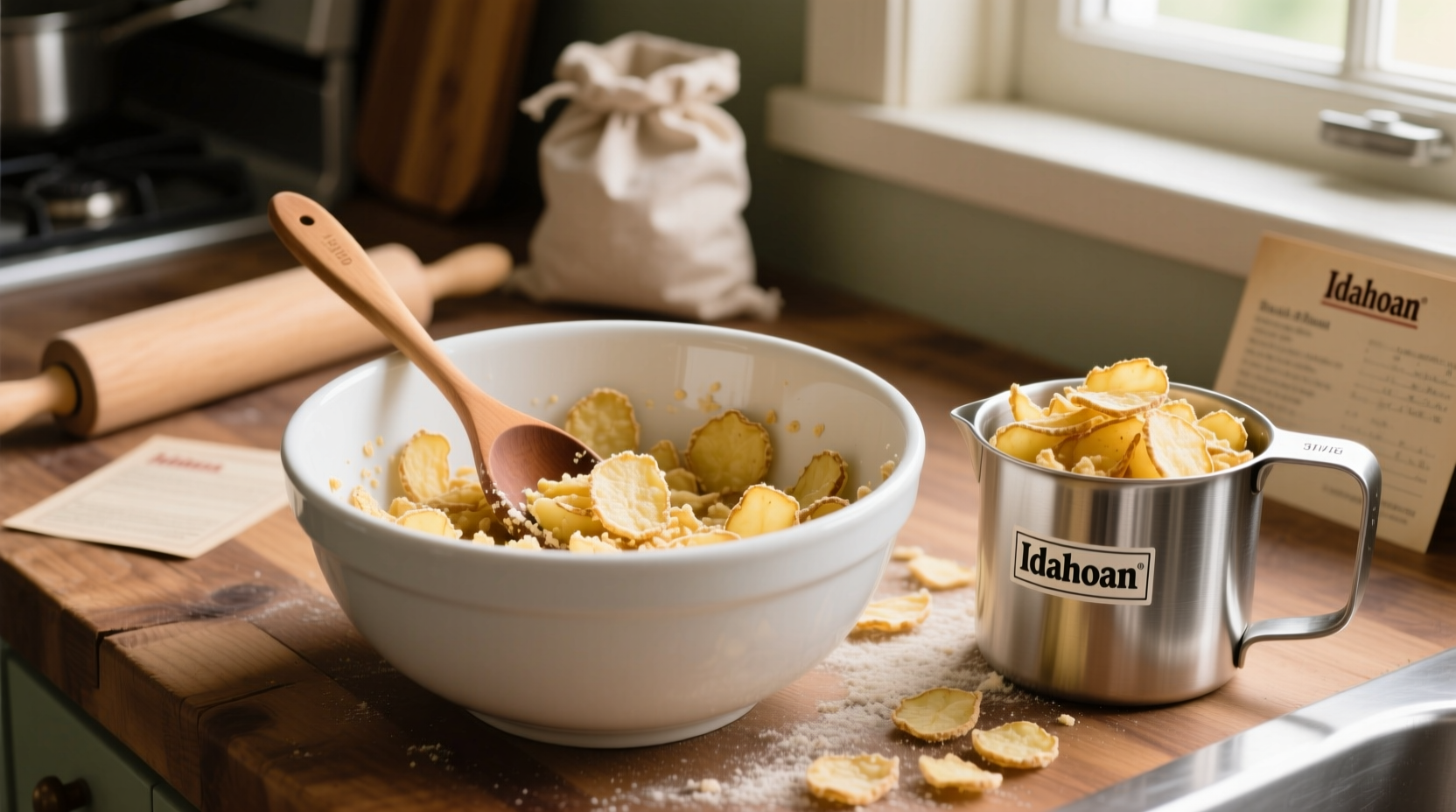
Creative Culinary Applications Beyond Mashed Potatoes
Professional bakers and chefs utilize Idahoan flakes for unexpected applications that leverage their unique functional properties:
Perfect Pie Crusts
Replace 20% of your flour with potato flakes to create flakier, more tender crusts. The potato starch absorbs excess moisture from fruit fillings while providing structure. Test kitchens at King Arthur Baking Company found this technique reduces soggy bottoms by 73% in fruit pies.
Enhanced Soup Thickeners
Unlike flour or cornstarch, potato flakes thicken without altering flavor. For cream soups, whisk in 2 tablespoons of flakes during the final simmering stage. This method prevents the "starchy" aftertaste common with other thickeners, according to America's Test Kitchen research.
Professional-Grade Dumplings
Add 1/4 cup flakes to your dumpling batter for light, airy texture that maintains shape during boiling. The flakes' modified starch structure creates a protective gel layer that prevents water absorption - a technique documented in The Professional Chef by the Culinary Institute of America.
Storage Science: Maximizing Shelf Life
Proper storage determines whether your Idahoan flakes maintain quality for months or degrade within weeks. Research from the National Center for Home Food Preservation shows these critical factors:
- Air exposure: Oxygen causes flavor degradation - use oxygen absorbers in airtight containers
- Temperature: Store below 70°F (21°C); every 18°F increase above this doubles degradation rate
- Moisture: Maintain below 10% humidity to prevent caking and mold
- Light: UV exposure breaks down carotenoids - use opaque containers
For long-term storage exceeding 12 months, the University of Georgia Cooperative Extension recommends vacuum sealing with oxygen absorbers in #10 cans, which extends shelf life to 25 years under ideal conditions.
Avoiding Common Preparation Mistakes
Even experienced cooks make these critical errors that compromise results:
- Using boiling water: Causes instant starch gelatinization leading to gluey texture
- Overmixing: Develops excess gluten when combined with flour-based ingredients
- Adding cold liquids: Creates temperature shock that prevents proper starch hydration
- Storing in original packaging: Cardboard boxes allow moisture and oxygen penetration
Frequently Asked Questions
Can Idahoan potato flakes be used in gluten-free baking?
Yes, Idahoan potato flakes serve as an excellent gluten-free binding agent and moisture regulator. Substitute up to 25% of your flour weight with reconstituted flakes in gluten-free recipes to improve texture and prevent crumbliness. The University of California Davis Celiac Disease Program confirms potato flakes provide superior structure compared to many commercial gluten-free binders.
How do I fix gluey mashed potatoes made from flakes?
If your reconstituted flakes become gluey, immediately remove from heat and add 1-2 tablespoons of cold liquid (milk or water) while vigorously whisking. The temperature shock halts starch gelatinization. For severe cases, spread the mixture thinly on a baking sheet and refrigerate for 30 minutes to reset the starch structure before remixing with additional cold liquid.
Do Idahoan potato flakes contain preservatives?
No, authentic Idahoan potato flakes contain only potatoes, sodium bisulfite (for color retention), and monosodium glutamate (for flavor enhancement). The USDA FoodData Central database confirms these three ingredients as the complete formulation. Sodium bisulfite is generally recognized as safe by the FDA at the concentrations used.
Can I use potato flakes to thicken gravy?
Yes, but with precise technique. Whisk 1 tablespoon of flakes into cold broth before adding to hot gravy. This prevents lumps and ensures even thickening without the starchy aftertaste common with flour. America's Test Kitchen found potato flakes create a silkier texture than traditional roux while maintaining the gravy's authentic flavor profile.
Written by Antonio Rodriguez




 浙公网安备
33010002000092号
浙公网安备
33010002000092号 浙B2-20120091-4