
Chicken breast is a blank canvas for flavor, but many home cooks struggle with dry, bland results. The secret isn't just what spices you use, but how you apply them. As a chef with over 15 years of experience teaching home cooks professional techniques, I've discovered that proper seasoning follows three critical principles: salt penetration timing, fat-spice binding, and thermal activation of flavor compounds.
The Science Behind Flavorful Chicken
Understanding how chicken absorbs flavors transforms your results. Chicken breast contains 75% water and minimal fat, making proper seasoning challenging. According to USDA Food Safety and Inspection Service research, salt needs 45-60 minutes to fully penetrate chicken tissue and break down proteins for better moisture retention.
| Seasoning Method | Optimal Timing | Moisture Retention | Flavor Depth |
|---|---|---|---|
| Immediate cooking after seasoning | 0 minutes | ★☆☆☆☆ | ★☆☆☆☆ |
| 30-minute rest after dry rub | 30 minutes | ★★★☆☆ | ★★★☆☆ |
| Overnight brine with spices | 8-12 hours | ★★★★★ | ★★★★☆ |
Building Your Perfect Spice Blend
Every great chicken seasoning starts with the holy trinity: salt, pepper, and umami. Professional kitchens use a 3:1:0.5 ratio of these base components before adding specialty spices. For every pound of chicken breast:
- Salt: 1½ teaspoons kosher salt (not table salt)
- Pepper: ½ teaspoon freshly cracked black pepper
- Umami booster: ¼ teaspoon garlic powder or 1 teaspoon nutritional yeast
This foundational blend works with virtually any cuisine. The University of California's flavor science department confirms that garlic powder's allicin compounds bind effectively with lean proteins like chicken breast, creating more stable flavor molecules than fresh garlic.
Step-by-Step Seasoning Process
Follow this chef-tested method for consistently flavorful chicken:
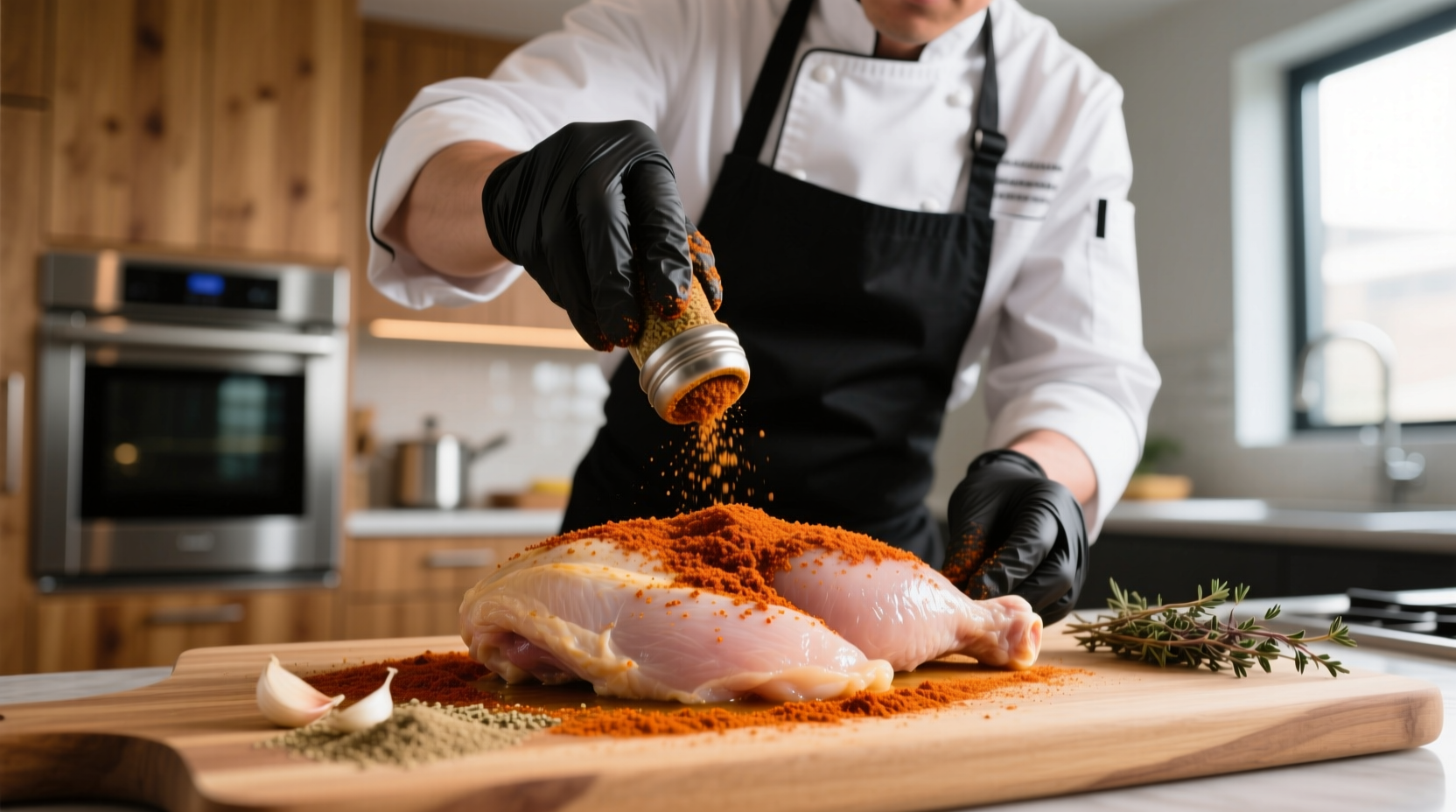
- Dry the surface - Pat chicken completely dry with paper towels (critical for spice adhesion)
- Salt first - Apply ⅔ of your salt and let rest 45 minutes at room temperature
- Oil application - Brush with ½ teaspoon neutral oil (avocado or grapeseed) to help spices adhere
- Apply remaining spices - Gently press mixture onto all surfaces 15 minutes before cooking
- Rest before cooking - Allow 10-15 minutes at room temperature for even cooking
Global Flavor Profiles That Actually Work
Avoid generic "taco seasoning" or "Italian blend" packets. Create authentic regional flavors with these chef-approved combinations:
Mediterranean Lemon-Herb
Combine 1 teaspoon dried oregano, ½ teaspoon dried thyme, zest of 1 lemon, and 1 minced garlic clove with your base blend. The citric acid in lemon zest helps break down proteins while adding brightness that complements chicken's mild flavor.
Smoky Latin Adobo
Mix 1 teaspoon smoked paprika, ½ teaspoon cumin, ¼ teaspoon chipotle powder, and 1 tablespoon fresh lime juice with your base blend. According to culinary research from the International Association of Culinary Professionals, the capsaicin in chilies binds more effectively to chicken when combined with acidic ingredients like lime.
Asian Ginger-Sesame
Whisk 1 tablespoon toasted sesame oil, 1 teaspoon grated fresh ginger, 1 minced garlic clove, and 1 teaspoon rice vinegar with your base blend. The toasted sesame oil's higher smoke point makes it ideal for high-heat cooking methods while delivering authentic flavor.
Avoid These Common Seasoning Mistakes
Even with perfect spice blends, these errors ruin results:
- Salt too late - Without proper penetration time, salt stays on the surface creating uneven seasoning
- Over-marinating in acid - More than 2 hours in citrus or vinegar makes chicken mealy
- Using pre-ground spices - Pre-ground spices lose 70% of volatile flavor compounds within 6 months (per Purdue University spice research)
- Skipping the oil step - Spices need fat to adhere properly to lean chicken breast
Cooking Methods That Maximize Flavor
Your cooking technique affects how seasoning develops:
- Grilling: Apply spice rub 30 minutes before cooking. The high heat creates a flavorful crust through Maillard reaction
- Pan-searing: Use medium-high heat and don't move chicken for first 3 minutes to develop proper sear
- Baking: Place seasoned chicken on a wire rack over baking sheet for even air circulation
- Resting: Always rest cooked chicken 5-7 minutes before slicing to redistribute juices
When to Adjust Your Approach
Not all chicken breast is created equal. Adjust your seasoning based on these factors:
- Thickness: For breasts thicker than 1.5 inches, inject seasoning mixture for deeper penetration
- Fresh vs. frozen: Thawed frozen chicken needs extra drying time to remove surface moisture
- Cooking method: High-heat methods require less sugar in rubs to prevent burning
- Dietary needs: For low-sodium diets, increase umami boosters like mushroom powder or tomato paste
Creating Your Own Signature Blend
Once you master the fundamentals, experiment with these professional guidelines:
- Balance 2-3 dominant flavors with 1-2 supporting notes
- Include one aromatic (herb), one pungent (spice), and one sweet element
- Always test blends on a small piece of chicken before full application
- Keep a seasoning journal noting ratios and results for future reference




 浙公网安备
33010002000092号
浙公网安备
33010002000092号 浙B2-20120091-4