
Thaw frozen shrimp in the refrigerator overnight for best results, or use the cold water method (30-45 minutes in sealed bag submerged in cold water). Never thaw at room temperature. After thawing, rinse under cold water, pat dry thoroughly, and cook immediately for optimal texture and safety.
Discover the professional chef's approach to preparing frozen shrimp that maintains texture, flavor, and food safety. Whether you're meal prepping for the week or caught without fresh seafood, these scientifically-backed methods transform frozen shrimp from rubbery disappointment to restaurant-quality results.
Your Complete Frozen Shrimp Preparation Roadmap
Why Proper Frozen Shrimp Preparation Matters
Frozen shrimp constitutes over 90% of shrimp consumed in American households according to the U.S. Food and Drug Administration. When handled correctly, frozen shrimp can rival fresh in quality—but improper thawing causes texture degradation and potential food safety risks. The key lies in controlling temperature changes to prevent protein denaturation and bacterial growth.
Step 1: Selecting Your Thawing Method (Based on Your Timeline)
Your available time determines the optimal approach. Each method affects texture differently—understanding these differences prevents disappointing results.
| Thawing Method | Time Required | Texture Result | Food Safety Rating | Best For |
|---|---|---|---|---|
| Refrigerator Thawing | 8-12 hours | ★★★★★ (Best) | ★★★★★ | Meal prep, planned cooking |
| Cold Water Bath | 30-45 minutes | ★★★★☆ | ★★★★☆ | Last-minute cooking |
| Running Water | 15-20 minutes | ★★★☆☆ | ★★★☆☆ | Urgent needs (use cautiously) |
| Room Temperature | 1-2 hours | ★☆☆☆☆ | ★☆☆☆☆ | Avoid completely |
Step 2: Executing the Refrigerator Method (Best Quality)
Transfer frozen shrimp from freezer to refrigerator 8-12 hours before cooking. Place in a covered container on the bottom shelf to prevent cross-contamination. This slow thaw preserves cell structure, minimizing moisture loss during cooking. The FDA confirms this method keeps shrimp safely below 40°F (4°C), the critical temperature for bacterial growth.
Step 3: Cold Water Bath Technique (When Time Is Limited)
For reliable last-minute thawing:
- Place shrimp in leak-proof plastic bag
- Submerge completely in cold water (never warm)
- Change water every 10 minutes
- Thawing complete in 30-45 minutes for 1 pound
This method works because water transfers heat 25 times more efficiently than air, accelerating thawing while maintaining safe temperatures. Research from the USDA Food Safety and Inspection Service shows this technique keeps shrimp below the danger zone when properly executed.
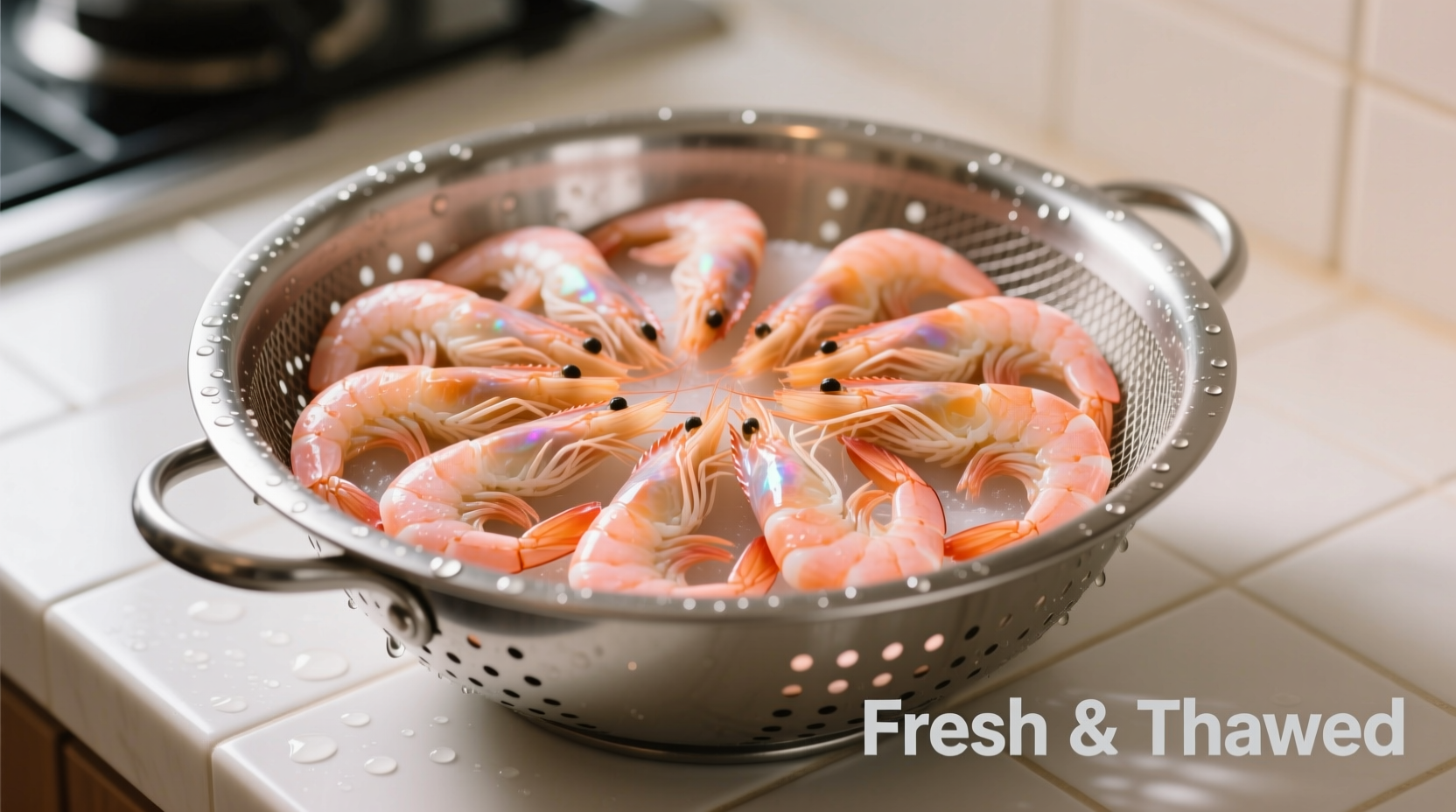
Step 4: Critical Post-Thaw Handling
After thawing, improper handling ruins your efforts. Follow these professional steps:
- Rinse thoroughly under cold running water to remove ice crystals
- Pat completely dry with paper towels—moisture causes steaming instead of searing
- Inspect for black spots (indicating freezer burn) or ammonia smell (spoilage)
- Cook within 1-2 hours—never refreeze thawed shrimp
Step 5: Cooking Previously Frozen Shrimp Successfully
Frozen shrimp requires slight technique adjustments:
- Reduce cooking time by 15-20% compared to fresh shrimp
- Season after cooking (salt draws out moisture during thawing)
- Avoid overcrowding pans to prevent steaming
- For best sear, bring shrimp to room temperature 15 minutes before cooking
Food Safety Timeline You Must Know
Understanding these critical time windows prevents foodborne illness:
- 0-4 hours: Safe thawing time in cold water method (with water changes)
- 1-2 days: Maximum safe refrigeration time after thawing
- 3-6 months: Optimal freezer storage for raw shrimp (beyond this, quality declines)
- 140°F (60°C): Internal temperature required for safe consumption
Common Mistakes That Ruin Frozen Shrimp
Avoid these pitfalls that turn good shrimp rubbery or unsafe:
- Using warm water—begins cooking outer layers while center remains frozen
- Thawing in original packaging—traps moisture causing freezer burn
- Overcooking—frozen shrimp cooks faster than fresh
- Seasoning too early—salt draws out moisture before cooking
- Ignoring smell test—ammonia odor means discard immediately
When Frozen Shrimp Shouldn't Be Used
Recognize these quality boundaries where even proper thawing won't save your shrimp:
- Ice crystals covering shrimp (indicating temperature fluctuations)
- Shrimp stuck together in solid block (refrozen after thawing)
- Discolored spots (gray or yellow hues)
- Package damaged or with excessive ice
- Stored beyond 6 months (quality degrades significantly)
Pro Tips for Restaurant-Quality Results
Professional chefs use these advanced techniques:
- Add 1 tablespoon vinegar to cold water bath to maintain firmness
- Brine thawed shrimp in 4% salt solution for 30 minutes for juicier results
- Freeze shrimp in vacuum-sealed portions with 10% salt solution for best home freezing
- Cook frozen shrimp directly in simmering broth for soups (skips thawing)




 浙公网安备
33010002000092号
浙公网安备
33010002000092号 浙B2-20120091-4