
Plant radish seeds 1/2 inch deep and 1 inch apart in well-draining soil with a pH of 5.8-6.8. Water immediately after planting and maintain consistent moisture. Radishes germinate in 3-6 days and are ready to harvest in 25-30 days for most varieties. Plant in early spring or fall when soil temperatures are between 50-65°F (10-18°C) for best results.
Nothing beats the crisp, peppery bite of homegrown radishes fresh from your garden. As one of the fastest-growing vegetables you can cultivate, radishes offer beginner gardeners an almost immediate reward for their efforts. With proper planting techniques, you'll be harvesting vibrant red globes or elegant white icicles in less than a month—making them perfect for impatient gardeners or kids learning about plant life cycles.
Why Radishes Are the Perfect Starter Crop
Radishes stand out among vegetables for their remarkably short growth cycle. Unlike tomatoes or peppers that require months of care, radishes deliver results in just 25-30 days for most varieties. This quick turnaround provides instant gardening satisfaction while teaching essential planting principles. Their small size makes them ideal for container gardening or interplanting between slower-growing crops. Plus, they naturally repel certain pests that might target your other vegetables.
Timing Your Radish Planting for Success
Getting the timing right is crucial for radish success. These cool-season crops bolt (go to seed) quickly in warm weather, resulting in tough, pithy roots. The ideal planting window spans from early spring through fall:
| Season | Planting Timeframe | Soil Temperature | Days to Harvest |
|---|---|---|---|
| Early Spring | 4-6 weeks before last frost | 50-65°F (10-18°C) | 25-30 days |
| Summer | Shade varieties only | Below 75°F (24°C) | 18-22 days |
| Fall | 6-8 weeks before first frost | 50-65°F (10-18°C) | 30-40 days |
According to the USDA Plant Hardiness Zone Map, gardeners in zones 3-10 can successfully grow radishes with proper timing. Northern gardeners should focus on spring and fall planting, while southern gardeners can plant throughout winter months. Succession planting every 10-14 days ensures a continuous harvest rather than a single overwhelming crop.
Preparing the Perfect Radish Bed
Radishes need loose, well-draining soil to develop their characteristic round shape. Compacted or rocky soil causes misshapen roots. Follow these soil preparation steps:
- Clear the planting area of rocks, sticks, and large debris
- Loosen soil to a depth of 6-8 inches using a garden fork
- Mix in 1-2 inches of compost to improve soil structure
- Test soil pH—radishes prefer slightly acidic conditions (5.8-6.8)
- Avoid fresh manure which can cause forked roots
For container gardening, use a pot at least 6 inches deep with drainage holes. Fill with a quality potting mix rather than garden soil, which compacts in containers. Container-grown radishes require more frequent watering but offer better control over soil conditions.
Step-by-Step Planting Instructions
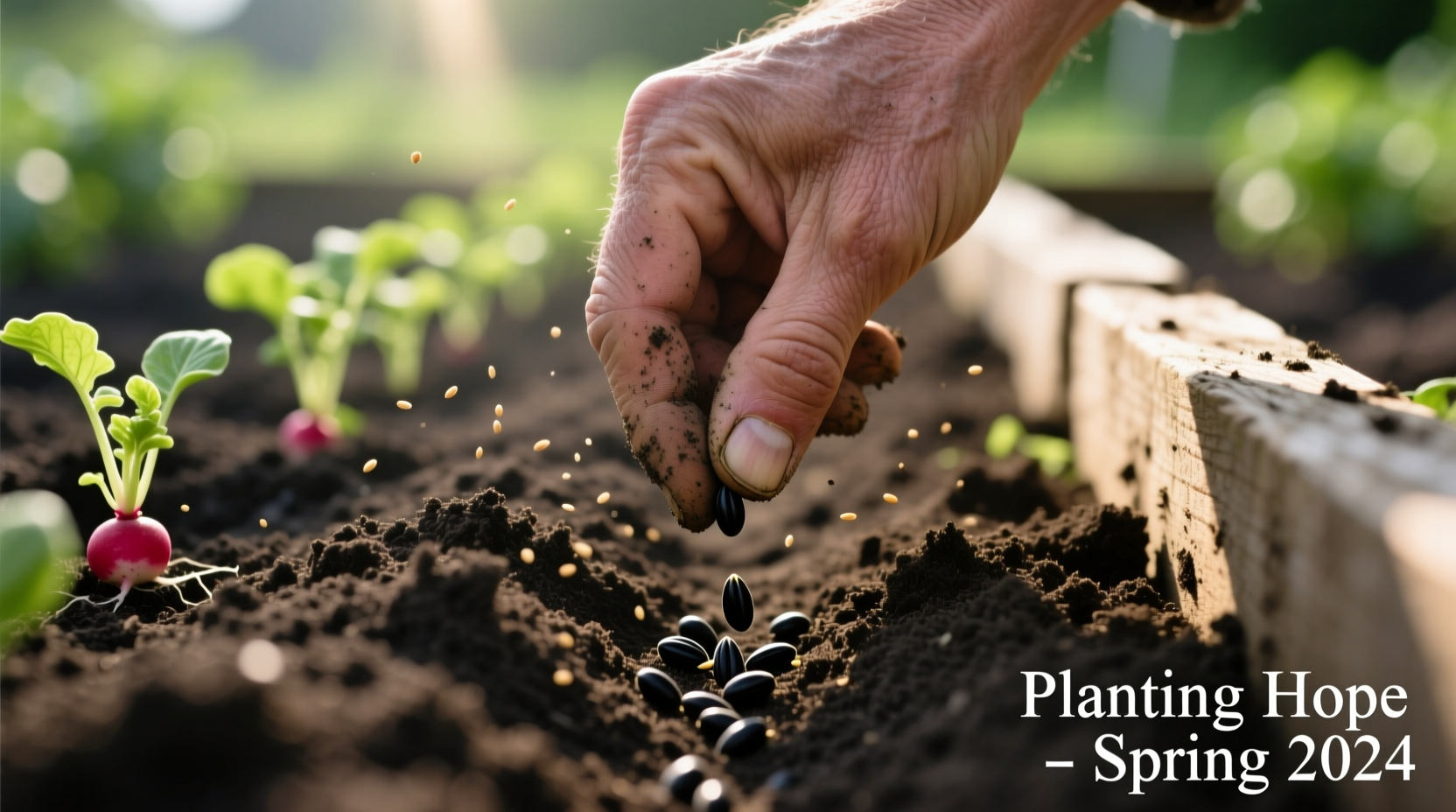
Follow these precise steps for optimal radish seed germination and growth:
- Seed selection: Choose varieties suited to your climate—'Cherry Belle' for beginners, 'French Breakfast' for milder flavor, or 'Daikon' for summer planting
- Planting depth: Create shallow furrows 1/2 inch deep using a stick or trowel edge
- Seed spacing: Place seeds 1 inch apart in the furrow (don't worry about exact orientation)
- Covering seeds: Gently fill furrow with soil and pat down lightly
- Watering: Water thoroughly but gently to avoid displacing seeds
- Labeling: Mark the row with variety and planting date
For dense plantings, thin seedlings to 2 inches apart when they reach 1-2 inches tall. Don't discard thinnings—small radish greens make excellent salad additions. Remember that overcrowded radishes produce small, misshapen roots.
Nurturing Your Radish Crop
Proper care during growth ensures crisp, flavorful radishes:
- Water consistently: Maintain even moisture—dry spells cause pithiness, while irregular watering leads to splitting
- Weed carefully: Hand-pull weeds rather than hoeing to avoid damaging shallow roots
- Monitor temperature: Provide shade when temperatures exceed 75°F (24°C)
- Avoid nitrogen-heavy fertilizers: Excess nitrogen promotes leaf growth at the expense of roots
According to Cornell University's gardening resources, radishes require about 1 inch of water per week, including rainfall. During hot spells, they may need watering twice daily. Mulching with straw helps maintain consistent soil moisture and temperature.
Harvesting at Peak Perfection
Timing your harvest correctly makes all the difference between crisp, mild radishes and woody, bitter ones. Check your variety's expected days to maturity, then begin checking roots at that timeframe:
- Gently brush soil away from the top of a few radishes
- Harvest when roots reach 1 inch in diameter (or as specified for your variety)
- Morning harvests yield the crispest texture
- Pull entire plant rather than cutting roots
Summer radishes left in the ground too long become pithy and develop a sharp, unpleasant flavor. Winter varieties like Daikon can remain in the ground longer but should be harvested before hard frosts. For continuous harvest, plant new seeds every 10-14 days throughout the growing season.
Troubleshooting Common Radish Problems
Even with proper planting, gardeners sometimes encounter these common issues:
- Hollow or pithy roots: Caused by uneven watering or leaving radishes in the ground too long
- Excessive leaf growth, small roots: Too much nitrogen or overcrowding
- Splitting: Sudden heavy watering after dry periods
- Bitter taste: Heat stress or maturity beyond optimal harvest time
- Holes in leaves: Flea beetles—use floating row covers for prevention
The Royal Horticultural Society notes that proper spacing and consistent moisture prevent most common radish problems. If your radishes consistently fail to form proper roots, consider testing your soil pH—extreme acidity or alkalinity affects nutrient availability.
Maximizing Your Radish Success
For truly exceptional radishes, implement these professional techniques:
- Plant radish seeds between slower-growing crops like carrots—they'll be harvested before competing for space
- Use succession planting to maintain a steady supply throughout the season
- Try intercropping with lettuce for a beautiful, productive mixed bed
- Keep a garden journal noting planting dates, varieties, and results for future reference
Remember that radishes aren't just for eating raw in salads. Roasted radishes develop a delightful sweetness, while pickled radishes add vibrant color and flavor to sandwiches and tacos. The greens are completely edible too—sauté them like spinach for a nutrient-packed side dish.




 浙公网安备
33010002000092号
浙公网安备
33010002000092号 浙B2-20120091-4