
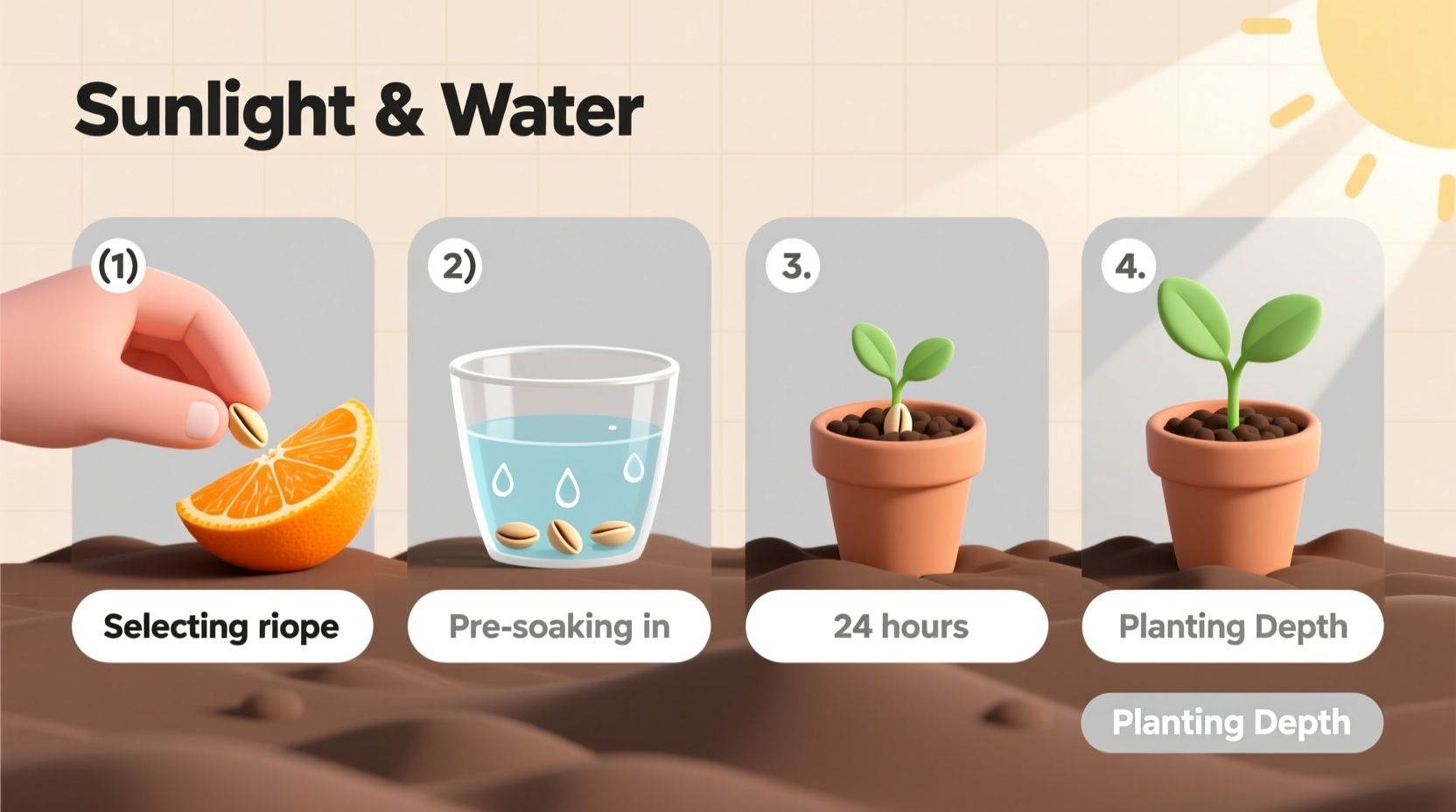
Planting orange seeds at home is simpler than most gardeners realize, but success depends on proper seed preparation and environmental conditions. Unlike store-bought grafted trees, seed-grown orange trees develop deep taproots that enhance drought tolerance, though they typically require 7-15 years to produce fruit. This comprehensive guide reveals the exact methods used by horticulturists to maximize germination rates while managing expectations about fruit quality.
Why Growing Orange Trees from Seeds Works (With Caveats)
While commercial growers use grafting to ensure consistent fruit, home gardeners can successfully grow ornamental orange trees from seeds. The University of California Citrus Research Center confirms that seed propagation produces genetically unique trees with potential for improved disease resistance. However, understand that fruit from seed-grown trees may differ from the parent orange due to citrus' complex genetics.
| Germination Stage | Typical Timeline | Success Rate |
|---|---|---|
| Seed soaking | 24-48 hours | 95%+ with fresh seeds |
| Initial sprouting | 2-6 weeks | 70-85% under ideal conditions |
| Transplant readiness | 3-4 months | 80% survival rate |
Essential Materials Checklist
Before planting orange seeds, gather these critical supplies:
- Fresh seeds from organic oranges (non-organic may have growth inhibitors)
- Well-draining potting mix (citrus-specific blend preferred)
- 4-6 inch pots with drainage holes
- Clear plastic bags or humidity domes
- Grow lights or south-facing window
The USDA Agricultural Research Service emphasizes that soil pH between 6.0-7.5 dramatically improves citrus seedling survival. Test your mix with a $10 pH meter before planting to avoid common alkalinity issues that cause nutrient deficiencies.
Step-by-Step Planting Process
Seed Selection and Preparation
Choose plump seeds from ripe, juicy oranges - avoid dried or shriveled specimens. Immediately rinse seeds under cool water to remove all pulp, which contains germination inhibitors. Soak cleaned seeds in room-temperature water for 24-48 hours, changing water twice daily. This critical pre-treatment mimics natural decomposition processes that break seed dormancy.

Planting Technique
Fill pots with moistened potting mix, leaving 1 inch space below rim. Plant 2-3 seeds per pot at ½ inch depth, spacing them evenly. Water gently until soil is uniformly moist but not soggy. Cover pots with plastic to maintain 70-80% humidity - this creates a mini greenhouse effect essential for citrus germination.
Environmental Requirements
Maintain consistent soil temperature between 70-85°F (21-29°C) using a heat mat if necessary. Place containers in bright, indirect light - direct sun will cook emerging seedlings. Check daily for moisture, ensuring soil never dries completely but avoids waterlogging. The University of Minnesota Extension notes that temperature fluctuations below 65°F significantly delay germination.
Troubleshooting Common Problems
Why Seeds Fail to Germinate
If seeds haven't sprouted after 6 weeks, consider these frequent issues:
- Old seeds: Citrus seeds lose viability quickly - use within 1 week of extraction
- Incorrect depth: Planting deeper than 1 inch prevents emergence
- Temperature issues: Consistent warmth is non-negotiable for citrus
- Mold growth: Excess moisture invites fungal problems - reduce humidity slightly
Early Seedling Care
Once sprouts appear, gradually acclimate them to lower humidity over 7-10 days. Move to direct morning sun while protecting from afternoon heat. Water when top inch of soil feels dry - citrus seedlings hate "wet feet." Fertilize monthly with half-strength citrus formula after true leaves develop.
Realistic Expectations for Home Growers
Understand that seed-grown orange trees require patience:
- First flowers may appear in 5-8 years
- Fruit quality often differs from parent orange
- Dwarf varieties stay manageable indoors (8-10 ft)
- Grafting mature seedlings improves fruit quality
The Royal Horticultural Society recommends treating seed-grown citrus primarily as attractive houseplants unless you're prepared for the decade-long commitment to fruit production. Many gardeners enjoy the glossy foliage and fragrant blossoms regardless of fruiting success.
Advanced Tip: Improving Fruit Quality
For those determined to produce quality fruit, consider grafting your mature seedling (3+ years old) with budwood from a known variety. This combines your seedling's hardy rootstock with proven fruiting characteristics. The grafting process requires practice but yields fruit identical to the donor tree in 2-3 years post-graft.




 浙公网安备
33010002000092号
浙公网安备
33010002000092号 浙B2-20120091-4