
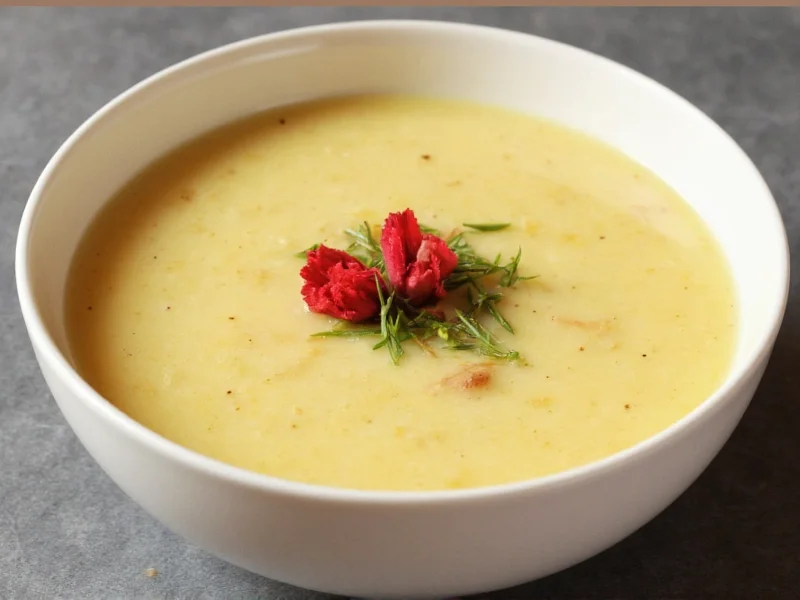
The Essential Guide to Perfect Egg Flower Soup
Egg flower soup, known as dan hua tang in Chinese cuisine, represents one of the most elegant yet simple dishes in culinary tradition. This classic Chinese soup transforms basic pantry staples into a delicate, silky broth adorned with beautiful egg ribbons that resemble blossoms. Originating from northern Chinese cooking traditions, this soup has become a staple in Chinese-American restaurants worldwide while maintaining its cultural authenticity.
Why This Recipe Works Every Time
Creating perfect egg swirls requires understanding the science behind egg proteins and broth temperature. When eggs hit liquid just below boiling point (180-190°F), the proteins coagulate slowly, forming those signature 'flowers' rather than scrambling. The cornstarch slurry serves dual purposes: it thickens the broth to proper restaurant consistency while protecting egg proteins from overcoagulating in the hot liquid.
Traditional Egg Flower Soup Ingredients
Authentic Chinese egg flower soup requires minimal ingredients, but each plays a critical role in achieving that perfect texture and flavor balance:
| Ingredient | Quantity | Key Purpose |
|---|---|---|
| Low-sodium chicken broth | 4 cups | Provides clean flavor base without overpowering saltiness |
| Large eggs | 2 | Creates the signature 'flower' ribbons when properly incorporated |
| Cornstarch | 1 tablespoon | Thickens broth to proper silky consistency |
| Cold water | 2 tablespoons | Dissolves cornstarch without lumps |
| Sesame oil | 1 teaspoon | Adds authentic nutty aroma (essential for authentic flavor) |
| Green onions | 2, thinly sliced | Provides fresh contrast and visual appeal |
Step-by-Step Preparation Guide
Follow these precise steps to achieve restaurant-quality egg flower soup at home. The entire process takes just 12 minutes from start to finish.
Broth Preparation
- Pour 4 cups of broth into a medium saucepan and bring to a gentle simmer over medium heat (do not boil vigorously)
- Mix 1 tablespoon cornstarch with 2 tablespoons cold water until completely smooth
- Slowly whisk cornstarch mixture into simmering broth
- Cook for 1-2 minutes until broth thickens slightly to a silky consistency
Creating Perfect Egg Flowers
- Reduce heat to maintain a gentle simmer (small bubbles should occasionally break the surface)
- Whisk 2 eggs thoroughly in a separate bowl until completely uniform in color
- Slowly drizzle eggs into the broth while simultaneously stirring the broth in one direction with a chopstick or whisk
- Continue pouring eggs for 10-15 seconds until ribbons form but remain slightly soft
- Remove from heat immediately after adding eggs (residual heat will finish cooking)
Finishing Touches
- Stir in 1 teaspoon sesame oil and half the green onions
- Taste and adjust with white pepper if desired (traditional Chinese version avoids black pepper)
- Ladle into bowls and garnish with remaining green onions
- Serve immediately while hot for best texture
Common Mistakes That Ruin Egg Flower Soup
Achieving perfect egg swirls requires avoiding these frequent errors that prevent proper 'flower' formation:
- Boiling broth too vigorously - Creates scrambled eggs instead of ribbons
- Adding eggs too quickly - Results in large clumps rather than delicate strands
- Stirring in multiple directions - Breaks up the forming egg ribbons
- Overcooking after adding eggs - Makes eggs tough and rubbery
- Using old eggs - Fresh eggs create more defined, beautiful ribbons
Scientific Principles Behind Perfect Egg Flower Soup
Understanding the food science behind each element ensures consistent results. The table below details how specific variables affect the final dish, supported by culinary research:
| Factor | Optimal Condition | Suboptimal Condition | Scientific Consequence | Reference |
|---|---|---|---|---|
| Broth Temperature | 180-190°F (82-88°C) | Boiling (212°F/100°C) | Gradual protein denaturation creates smooth ribbons; boiling causes rapid coagulation and scrambling | University of Illinois Extension |
| Egg Freshness | Within 7 days of purchase (USDA Grade A) | Older than 2 weeks | Fresh eggs have tighter protein structure, forming defined ribbons; older eggs have thinner whites that disperse too quickly | USDA Food Safety |
| Cornstarch Ratio | 1 tbsp per 4 cups broth | Insufficient or excessive | Proper ratio creates viscosity that suspends egg ribbons; too little causes sinking, too much creates unnatural thickness | Purdue University |
| Stirring Technique | Gentle, consistent circular motion | Aggressive or multi-directional stirring | Uniform motion allows ribbons to form without breaking; erratic motion shreds the delicate strands | Serious Eats |
Contextual Suitability: When Egg Flower Soup Shines and When to Choose Alternatives
Egg flower soup's delicate nature makes it ideal for specific dining contexts but unsuitable for others. Understanding these boundaries ensures optimal culinary experiences:
- Ideal for convalescence: Traditional Chinese Medicine (TCM) principles recognize egg flower soup as easily digestible nourishment during recovery. The warm, liquid form with high-quality protein supports healing without taxing the digestive system. (Reference: National Center for Complementary and Integrative Health)
- Perfect starter course: Its light texture prepares the palate for richer main dishes in multi-course Chinese meals, typically served before rice and entrees.
- Not suitable for egg allergies: Contains significant egg protein that triggers reactions in sensitive individuals. Always verify dietary restrictions using FDA guidelines for allergen identification. (Reference: U.S. Food and Drug Administration)
- Limited storage viability: The fragile egg ribbons degrade rapidly upon reheating. Unlike heartier soups, it cannot be frozen due to irreversible textural changes in egg proteins (USDA food storage science). (Reference: USDA Food Safety and Inspection Service)
Authentic Variations Worth Trying
While the basic recipe remains consistent, regional Chinese variations offer interesting twists on this classic soup:
- Sichuan style - Add a pinch of Sichuan peppercorns and a few drops of chili oil for subtle heat
- Vegetarian version - Use mushroom broth and add tofu cubes for protein
- Seafood egg flower soup - Incorporate small shrimp or crab meat before adding eggs
- Winter melon variation - Add thin slices of winter melon during broth preparation
- Medicinal herb version - Traditional Chinese medicine approach adds goji berries and dried longan
Serving Suggestions and Pairings
Egg flower soup serves as the perfect starter to any Chinese meal. For authentic dining experience:
- Always serve immediately after preparation for optimal texture
- Pair with hot mustard and Chinese black vinegar on the side
- Complement with steamed rice and stir-fried vegetables
- Follow with main dishes like kung pao chicken or mapo tofu
- Enjoy as a light meal with crispy spring rolls
Storage and Reheating Instructions
While egg flower soup tastes best fresh, proper storage maintains quality for later enjoyment:
- Cool completely before transferring to airtight container
- Refrigerate for up to 2 days (egg texture degrades after this)
- Reheat gently over low heat without boiling
- Stir in 1 teaspoon water if broth has thickened too much
- Never freeze egg flower soup (eggs become rubbery when thawed)
Troubleshooting Guide
Encountering issues with your egg flower soup? These solutions fix common problems:
- Eggs scrambling instead of forming flowers: Broth temperature too high - reduce heat and try again with fresh eggs
- Broth too thin: Mix additional 1/2 tablespoon cornstarch with 1 tablespoon cold water and whisk in
- Broth too thick: Gradually add small amounts of warm broth or water until desired consistency
- Dull flavor: Add 1/4 teaspoon white pepper or a small piece of kombu seaweed while simmering broth
- Eggs sinking to bottom: Broth not thick enough - ensure proper cornstarch ratio and simmering time
Mastering the Art of Egg Swirls
The signature 'flower' effect depends on precise technique. Professional chefs use these advanced methods:
- Hold the bowl of beaten eggs 12-18 inches above the pot for optimal ribbon formation
- Use chopsticks to create a gentle vortex in the broth before adding eggs
- Whisk eggs with 1 teaspoon broth before adding to main pot for smoother integration
- For extra delicate flowers, separate egg whites and yolks, adding whites first
- Practice makes perfect - your third attempt will show significant improvement over the first




 浙公网安备
33010002000092号
浙公网安备
33010002000092号 浙B2-20120091-4