
Starting papaya trees from seeds is one of the most rewarding gardening projects you can undertake. Unlike many fruit trees that take years to produce, papayas grown from seed can yield delicious, nutrient-rich fruit in as little as 6-12 months under optimal conditions. This comprehensive guide walks you through every stage of the process with actionable steps that ensure success, whether you're growing in your backyard or in containers.
Why Growing Papaya from Seed Beats Buying Mature Plants
While purchasing established papaya plants seems convenient, starting from seed offers significant advantages:
- Complete control over growing conditions from day one
- Access to diverse varieties not available commercially
- Stronger root systems that develop naturally without transplant shock
- Cost savings—seeds cost pennies compared to mature plants
- Higher success rates when following proper germination techniques
Seed Selection and Preparation: The Foundation for Success
The quality of your papaya seeds directly impacts your success rate. Follow these steps for optimal results:
Finding Quality Seeds
Source seeds from fully ripe papayas with deep orange flesh. Avoid seeds from underripe fruit as they have lower germination rates. The University of Florida Institute of Food and Agricultural Sciences (IFAS) confirms that seeds from ripe fruit have germination rates exceeding 90% compared to just 40-60% from underripe fruit (edis.ifas.ufl.edu).
Extracting and Cleaning Seeds
- Scoop seeds from ripe papaya into a bowl
- Add water and rub seeds between your fingers to remove the gelatinous coating
- Rinse thoroughly until water runs clear
- Spread cleaned seeds on paper towel to dry for 2-3 days
| Seed Preparation Method | Germination Time | Success Rate |
|---|---|---|
| Untreated seeds | 2-3 weeks | 65-75% |
| Seeds with coating removed | 10-14 days | 85-90% |
| Seeds with coating removed + 24hr water soak | 7-10 days | 90-95% |
Planting Your Papaya Seeds: Creating the Perfect Environment
Proper planting technique ensures strong root development and healthy growth.
Soil Requirements
Papayas thrive in well-draining, slightly acidic soil (pH 5.5-6.5). Create an ideal mix by combining:
- 60% potting soil
- 30% perlite or coarse sand
- 10% compost
Container Selection
Choose containers with excellent drainage. 4-6 inch pots work well for initial growth. Papayas develop deep taproots, so deeper containers prevent root binding.
Planting Process
- Fill container with prepared soil mix
- Plant 3-4 seeds per container 1/4 inch deep
- Cover lightly with soil and water gently
- Maintain consistent moisture (not soggy)
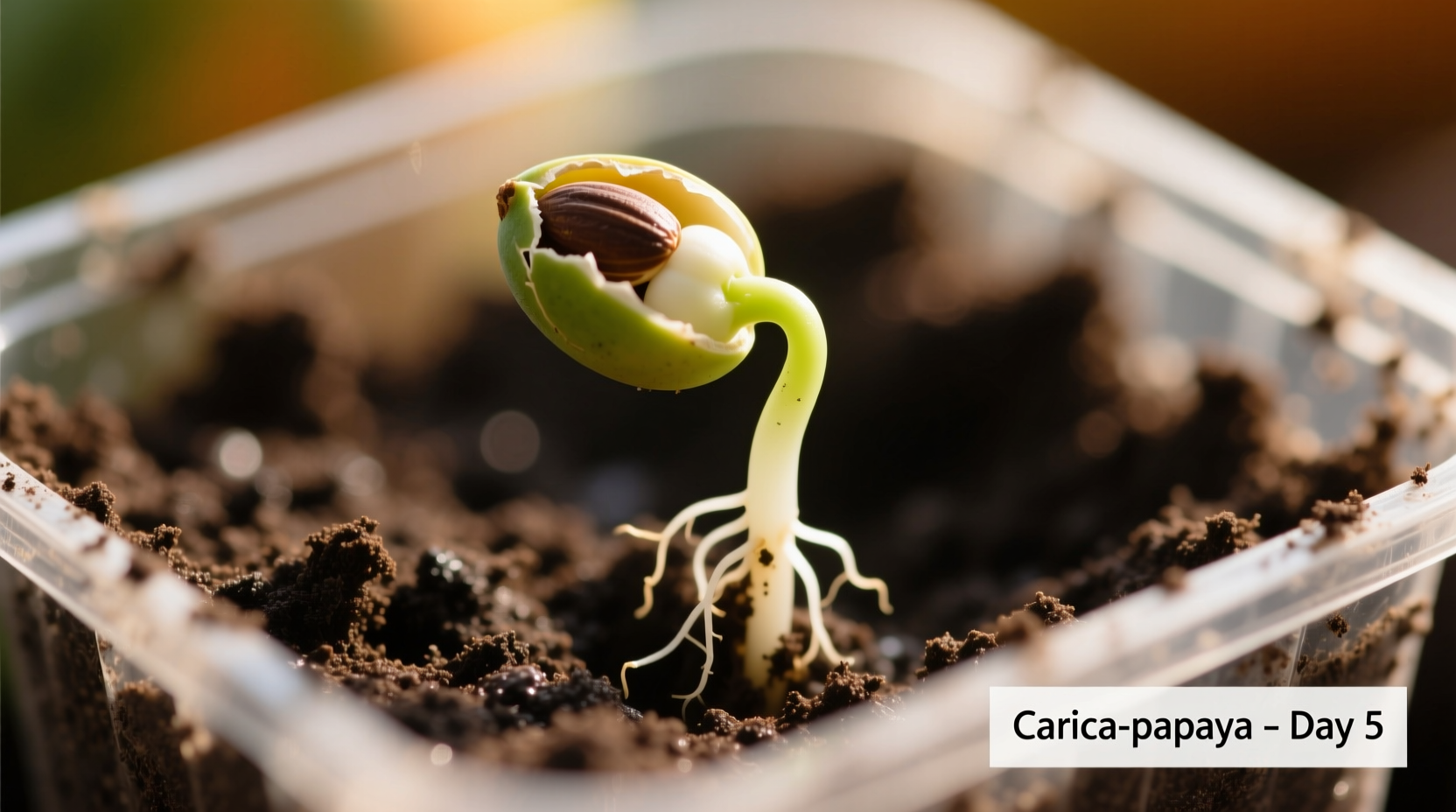
Germination and Early Care: Critical First Weeks
The first month after planting determines your papaya's long-term health.
Optimal Germination Conditions
- Temperature: 70-85°F (21-29°C) - use a heat mat if necessary
- Light: Bright, indirect light for first 2 weeks
- Moisture: Keep soil consistently moist but not waterlogged
Growth Timeline
Understanding the papaya growth timeline helps you anticipate needs:
- Days 1-7: Seed preparation and planting
- Days 7-14: Germination begins (earlier with pre-soaked seeds)
- Weeks 2-4: First true leaves develop
- Month 2: Seedlings reach 6-8 inches tall
- Month 3: Ready for transplanting to larger containers or garden
- Months 6-12: First flowers appear
- Months 9-15: First fruit ready for harvest
Transplanting and Outdoor Care
Proper transplanting ensures your papaya continues thriving.
When to Transplant
Move seedlings when they reach 6-8 inches tall and have 4-6 true leaves. Wait until nighttime temperatures consistently stay above 55°F (13°C).
Site Selection Considerations
Papayas require specific conditions to thrive:
- Climate limitations: USDA zones 9-11 for outdoor growth (can grow in containers elsewhere)
- Sunlight: Minimum 6-8 hours of direct sun daily
- Wind protection: Papayas have shallow roots and need shelter from strong winds
- Space requirements: Allow 8-10 feet between plants for optimal growth
Long-Term Maintenance for Healthy Trees
Proper ongoing care ensures maximum fruit production.
Watering Schedule
Establish consistent watering habits:
- Seedling stage: Water daily to maintain moist soil
- Established plants: Water deeply 2-3 times weekly
- Drought signs: Wilting leaves, yellowing foliage
- Overwatering signs: Yellow leaves, root rot, stunted growth
Fertilizing for Maximum Growth
Use a balanced fertilizer (10-10-10) every 2-3 weeks during growing season. The University of Hawaii Cooperative Extension recommends adding magnesium and zinc supplements for optimal fruit development (ctahr.hawaii.edu).
Troubleshooting Common Problems
Address these frequent issues before they become serious:
Pest Management
- Papaya fruit fly: Use protective bags on developing fruit
- Spider mites: Spray with insecticidal soap solution
- Aphids: Introduce ladybugs or spray with neem oil
Disease Prevention
- Ring spot virus: Plant resistant varieties like 'Sunrise' or 'Red Lady'
- Root rot: Ensure proper drainage and avoid overwatering
- Anthracnose: Remove affected fruit and apply copper fungicide
Harvesting Your Homegrown Papaya
Knowing when to harvest ensures the best flavor and texture.
- Ripe papayas develop 30-50% yellow color on skin
- Fruit should yield slightly to gentle pressure
- Harvest when 1/3 to 1/2 of skin turns yellow
- Cut fruit from tree with 1 inch of stem attached
- Ripen at room temperature until fully yellow
Frequently Asked Questions
How long does it take for papaya seeds to germinate?
Papaya seeds typically germinate in 7-14 days when properly prepared. Seeds with the gelatinous coating removed and soaked in water for 24 hours germinate fastest, often within a week under optimal conditions of 75-85°F (24-29°C) and consistent moisture.
Can I grow papaya from grocery store seeds?
Yes, you can grow papaya from grocery store seeds, but success varies. Seeds from fully ripe papayas have the highest germination rates. Avoid seeds from underripe fruit, which may not germinate well. Remember that hybrid varieties might not produce fruit identical to the parent, and some commercial varieties are bred for specific growing conditions.
How much sun does a papaya tree need?
Papaya trees require 6-8 hours of direct sunlight daily for optimal growth and fruit production. While they can tolerate partial shade, reduced sunlight results in slower growth, fewer flowers, and less sweet fruit. In extremely hot climates (above 95°F/35°C), some afternoon shade can prevent leaf scorch.
Do papaya trees need male and female plants?
Most papaya varieties produce hermaphroditic flowers that contain both male and female parts, so you only need one plant to produce fruit. However, some varieties are dioecious (separate male and female plants). When growing from seed, you'll typically get a mix of plant types, but having multiple plants increases your chances of successful pollination and fruit set.
How often should I water papaya seedlings?
Water papaya seedlings daily to keep the soil consistently moist but not waterlogged. As plants mature, reduce frequency but increase water volume—established plants need deep watering 2-3 times weekly. Always check soil moisture before watering; the top inch should feel dry before watering again. During hot, dry periods, you may need to water daily.




 浙公网安备
33010002000092号
浙公网安备
33010002000092号 浙B2-20120091-4