
Why Proper Cooking Oil Disposal Matters
Improper disposal of cooking oil creates serious problems. Just one liter of oil can contaminate 1 million liters of water according to the U.S. Environmental Protection Agency. When poured down drains, oil solidifies in pipes causing costly blockages. In 2023, U.S. municipalities spent over $1 billion clearing grease-related sewer backups. The environmental impact extends to wildlife habitats when oil enters waterways.
Your Step-by-Step Disposal Guide
Follow this sequence for safe, eco-friendly disposal:
1. Cool and Solidify Safely
Never handle hot oil. Allow oil to cool completely in the cooking vessel—this takes 1-2 hours. For liquid oils like canola or vegetable oil, pour into a heat-resistant container and refrigerate until solid (4+ hours). Solid fats like bacon grease will harden at room temperature. Never mix oil with water—this creates dangerous splatter risks.
2. Contain for Transport
Transfer cooled oil into:
• Original containers (like empty oil bottles with tight lids)
• Freezer-safe jars (mason jars work well)
• Dedicated grease cans (available at hardware stores)
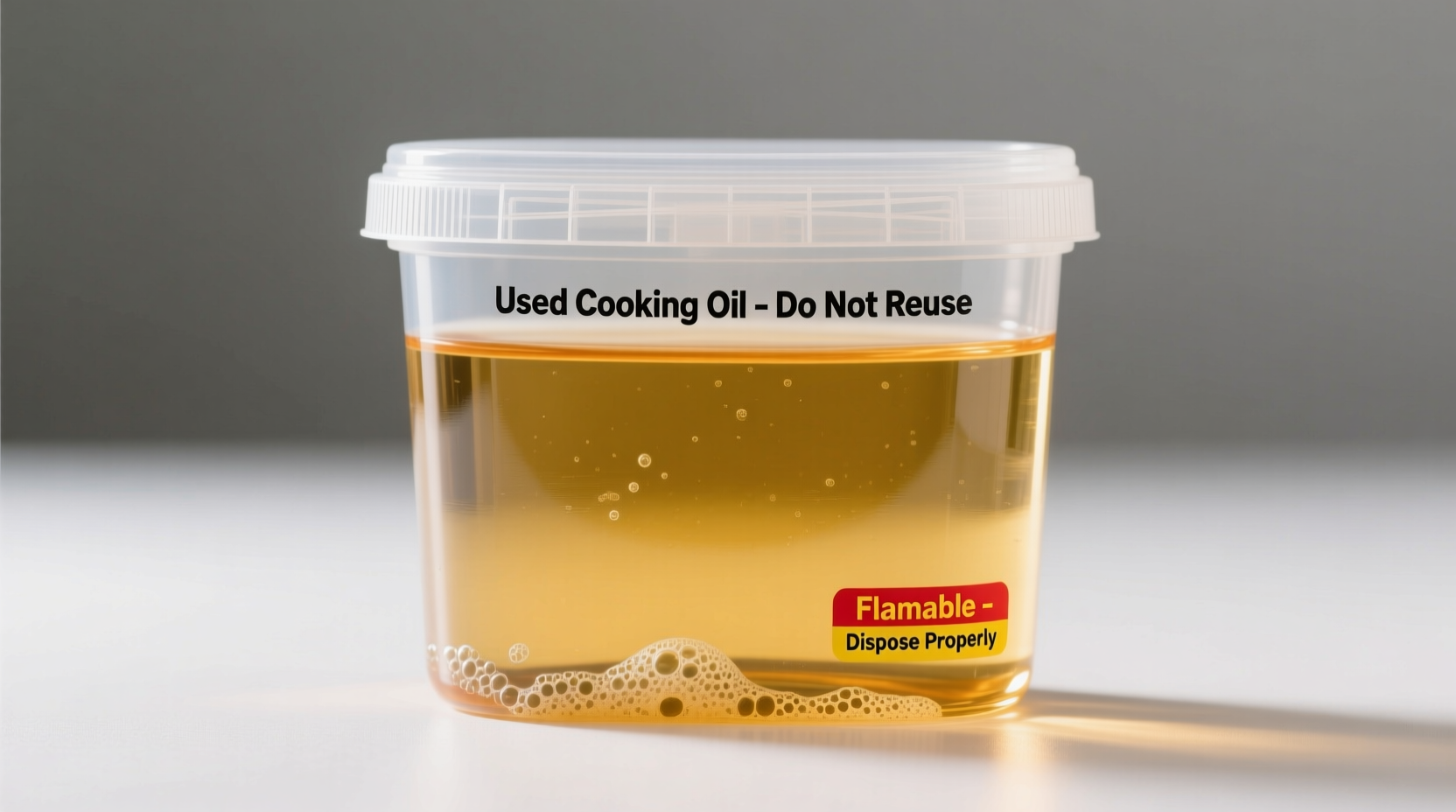
Ensure containers are leak-proof and clearly labeled "Used Cooking Oil". The University of Illinois Extension recommends filling containers only 3/4 full to prevent spills during transport.
3. Choose Your Disposal Method
| Method | Best For | Environmental Impact | Cost |
|---|---|---|---|
| Recycling Programs | Vegetable oils, large quantities | Converts to biodiesel (reduces emissions 80%) | Free (some pay for large volumes) |
| Trash Disposal | Small amounts, animal fats | Landfill (low impact when contained) | Regular waste fees |
| Composting | Small vegetable oil amounts only | Breaks down naturally | Free |
Recycling: The Eco-Friendly Choice
Recycling converts used oil into biodiesel fuel. To find programs:
• Use Earth911's recycling locator
• Check municipal waste websites (e.g., "[Your City] cooking oil recycling")
• Visit participating restaurants (many collect for biodiesel companies)
Important context: Animal fats (lard, tallow) generally can't be recycled for biodiesel. Check program requirements—most accept only vegetable oils. The New York City Sanitation Department notes recycling acceptance varies by municipality due to processing capabilities.
Trash Disposal: When Recycling Isn't Available
For small quantities (under 1 cup):
1. Solidify oil with absorbents like coffee grounds or cat litter
2. Seal in leak-proof container
3. Place in regular trash (not recycling bin)
Never pour into liquid waste streams. The EPA confirms contained disposal in landfills poses minimal environmental risk compared to drain disposal.
Composting: Limited Application
Only suitable for small amounts of vegetable oil (max 1/4 cup per week) in active compost systems. Mix thoroughly with brown materials like leaves. Animal fats and large quantities attract pests and disrupt decomposition. Most municipal compost programs reject oil entirely—verify with your provider first.
Avoid These Dangerous Mistakes
These common errors cause real harm:
• Pouring down sinks: Creates "fatbergs" that cost cities millions to remove
• Flushing with hot water: Oil re-solidifies further down pipes
• Using chemical drain cleaners: Reacts dangerously with oil residues
• Putting in regular recycling bins: Contaminates entire batches
Timeline of Cooking Oil Disposal Practices
Disposal methods have evolved significantly:
• Pre-1980s: Common practice to pour oil down drains
• 1990s: First municipal grease recycling programs emerge
• 2005: EPA establishes national guidelines for grease management
• 2010s: Biodiesel conversion becomes widespread
• 2020s: 78% of U.S. cities now offer oil recycling (per National Waste & Recycling Association)
When to Call Professionals
Contact your waste management provider if:
• You have over 5 gallons of oil
• Oil is contaminated with food debris
• You notice persistent drain odors (indicates existing blockage)
Most municipalities offer free hazardous waste collection for cooking oil emergencies.




 浙公网安备
33010002000092号
浙公网安备
33010002000092号 浙B2-20120091-4