
Unlock the full potential of your convection oven with these professional techniques. Whether you're roasting a holiday turkey or baking perfect cookies, understanding convection cooking principles transforms ordinary meals into extraordinary culinary achievements. This guide delivers precisely what home cooks need: actionable adjustments, specific temperature guidelines, and clear explanations of when (and when not) to use your oven's convection setting.
How Convection Ovens Transform Your Cooking
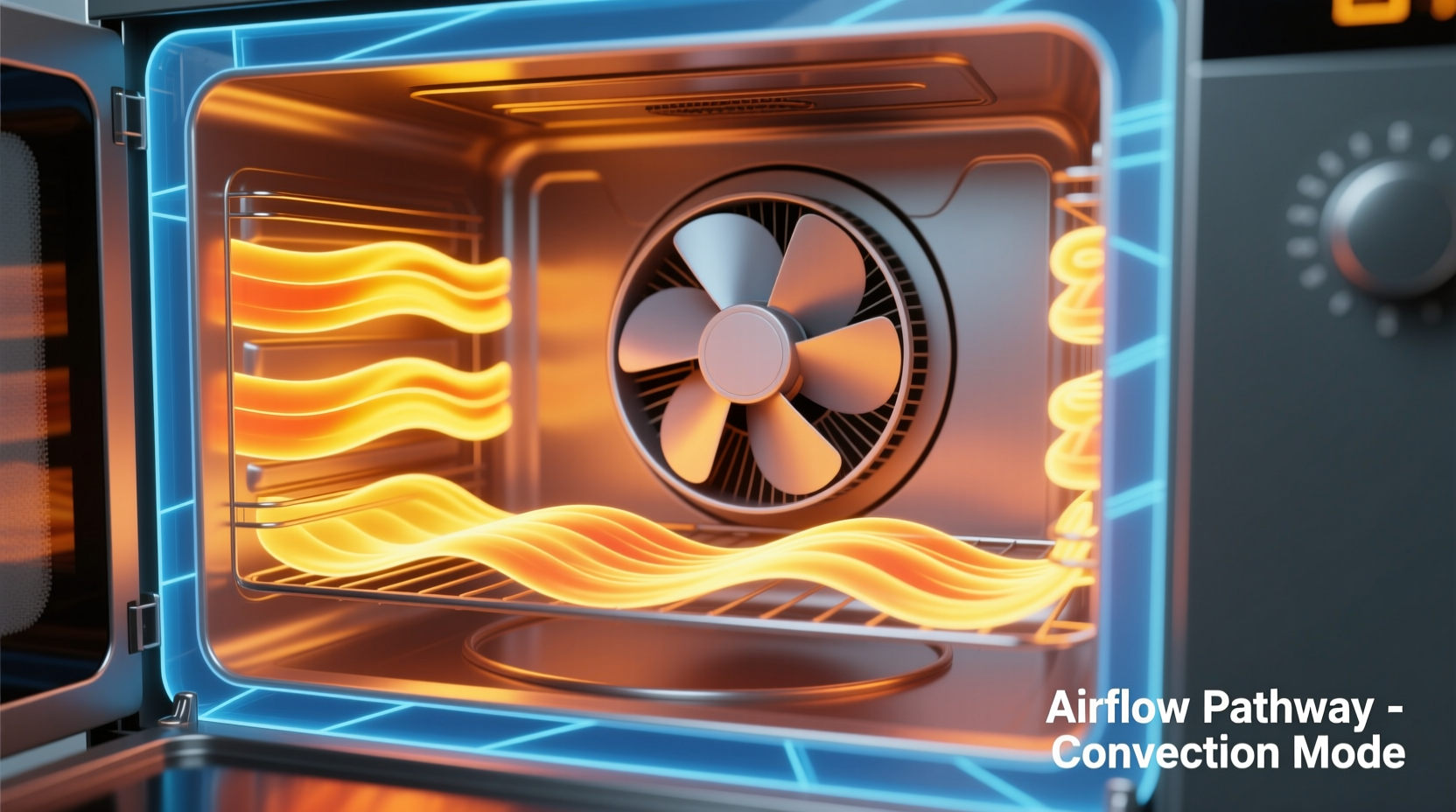
Unlike conventional ovens that rely on radiant heat, convection ovens feature a fan that actively circulates hot air around food. This continuous airflow creates three significant advantages:
- Faster cooking times - Food typically cooks 20-25% quicker due to improved heat transfer
- More even browning - Eliminates hot spots for consistent results across multiple racks
- Better moisture retention - Circulating air creates a drier environment that crisps exteriors while keeping interiors juicy
According to the American Council for an Energy-Efficient Economy, convection ovens can reduce energy consumption by up to 20% compared to conventional baking methods due to shorter cooking times. Modern convection technology has evolved significantly since its commercial kitchen origins in the 1940s, with today's residential models offering precise temperature control and quiet operation.
Essential Temperature and Time Adjustments
Mastering convection cooking starts with understanding these fundamental adjustments:
| Conventional Oven Setting | Convection Oven Adjustment | Best For |
|---|---|---|
| 350°F (177°C) | 325°F (163°C) | Cookies, pies, casseroles |
| 375°F (191°C) | 350°F (177°C) | Roasted vegetables, chicken |
| 400°F (204°C) | 375°F (191°C) | Seared meats, pizza |
| 425°F (218°C) | 400°F (204°C) | Quick roasts, broiling |
Always reduce temperatures by 25°F (15°C) from conventional oven recipes. For cooking time, begin checking for doneness at 75% of the original recipe time. Professional chefs at the Culinary Institute of America recommend using an instant-read thermometer rather than relying solely on time, as convection cooking varies based on food density and oven calibration.
Optimal Foods for Convection Cooking
Certain foods particularly benefit from convection's circulating air. Understanding these applications prevents common mistakes while maximizing your oven's capabilities.
Foods That Shine with Convection
- Roasted meats - Circulating air creates perfectly crispy skin on poultry while maintaining juicy interiors
- Baked goods requiring crispness - Cookies, pie crusts, and puff pastry achieve superior flakiness
- Multiple-rack cooking - Bake several trays of cookies or roast vegetables simultaneously with even results
- Dehydrating foods - Circulating air accelerates moisture removal for jerky or fruit leather
Foods That Require Conventional Settings
Convection isn't ideal for all cooking applications. Avoid using the convection setting for:
- Delicate cakes and soufflés that need still air to rise properly
- Custards and flans that require gentle, moist heat
- Bread dough during initial rising phase (though convection works well for final baking)
- Any recipe specifically developed for conventional ovens without adjustment instructions
The USDA Food Safety and Inspection Service confirms that convection cooking reaches safe internal temperatures more consistently in meats, reducing the risk of undercooked food. However, their research also notes that convection can accelerate surface drying in lean meats if temperature adjustments aren't made.
Professional Convection Cooking Techniques
Implement these chef-developed methods to maximize your convection oven's performance:
Perfect Rack Positioning
Place food in the center of the oven for most applications. When cooking multiple items, position racks in the upper and lower thirds of the oven and rotate pans front-to-back halfway through cooking. Never block the fan with oversized pans - maintain at least 2 inches of clearance around all sides.
Pan Selection Matters
Use low-sided baking sheets and roasting pans to maximize airflow. Dark metal pans work exceptionally well in convection ovens as they absorb and radiate heat efficiently. Avoid glass or ceramic dishes unless the recipe specifically calls for them, as they respond differently to convection's intense heat.
Moisture Management
For roasts, place a shallow pan of water on the bottom rack to introduce controlled moisture during the initial cooking phase. This prevents excessive drying while still allowing the convection fan to create crispy exteriors. For baked goods, avoid opening the oven door unnecessarily as convection ovens recover temperature more quickly than conventional models.
Troubleshooting Common Convection Issues
Address these frequent challenges with proven solutions:
Problem: Food Browning Too Quickly
Solution: Reduce temperature by an additional 10-15°F and cover exposed areas with foil. Check food 20% earlier than recipe times. Position food on a lower rack to reduce direct exposure to the heating element.
Problem: Uneven Cooking Despite Convection
Solution: Rotate pans 180 degrees halfway through cooking. Ensure you're not overcrowding the oven - leave at least 1 inch between items for proper air circulation. Verify your oven's calibration with an independent oven thermometer.
Problem: Drying Out Lean Meats
Solution: Use a meat thermometer to prevent overcooking. Baste meats periodically during cooking. Consider using a convection roast setting (if available) which reduces fan speed during initial cooking phases.
Advanced Convection Strategies
Elevate your cooking with these professional techniques:
- Multi-stage cooking - Start at higher convection temperature for searing, then reduce for even cooking
- Hybrid methods - Use convection for roasting vegetables while switching to conventional for delicate side dishes
- Temperature mapping - Test your specific oven's hot spots with breadcrumbs to optimize rack placement
- Convection broiling - Combine top heating element with convection fan for perfect steaks and melts
Remember that convection ovens perform differently at various altitudes. The University of Colorado's Food Science Department recommends reducing temperature adjustments by 5°F for every 1,000 feet above sea level, as thinner air affects heat transfer dynamics.
Convection Cooking Myths Debunked
Several misconceptions persist about convection ovens. Let's clarify the facts:
- Myth: Convection always cooks food faster
Reality: While most foods cook faster, dense items like large roasts may require similar times with better browning - Myth: You must always reduce temperature
Reality: Some commercial recipes are developed specifically for convection and require no adjustment - Myth: Convection uses more energy
Reality: Shorter cooking times typically reduce overall energy consumption by 15-20%




 浙公网安备
33010002000092号
浙公网安备
33010002000092号 浙B2-20120091-4