
Why Your Ham Steaks Turn Out Dry (And How to Fix It)
Many home cooks struggle with tough, dry ham steaks because they treat them like regular steak. Unlike beef, ham steaks are already cooked during processing—they just need proper reheating. The USDA Food Safety and Inspection Service confirms that fully cooked ham only requires reheating to 140°F, not further cooking to higher temperatures. This critical detail explains why so many home attempts fail.
Understanding Ham Steak Selection
Not all ham steaks are created equal. Your cooking success starts at the grocery store:
- Bone-in vs. boneless: Bone-in retains more moisture during cooking
- Thickness matters: Opt for ¾ to 1-inch cuts for even heating
- Glazed vs. plain: Pre-glazed varieties need lower cooking temperatures to prevent burning
- Quality indicators: Look for pink color with minimal graying at edges
According to culinary research from the Culinary Institute of America, thicker cuts (over 1 inch) require a two-stage cooking method to prevent exterior burning before the center warms through. This explains why thin cuts often work better for pan-searing alone.
Step-by-Step Cooking Process
Follow this professional method for consistently perfect results:
Preparation Essentials
Remove ham steaks from refrigerator 20 minutes before cooking. Pat thoroughly dry with paper towels—this critical step creates better searing. For enhanced flavor, brush with 1 teaspoon of maple syrup or Dijon mustard per side. Never skip the drying step; moisture on the surface creates steam instead of sear.
The Perfect Pan-Searing Technique
| Cooking Stage | Temperature | Time Per Side | Visual Indicator |
|---|---|---|---|
| Initial Sear | 325°F | 3-4 minutes | Deep golden crust |
| Oven Finish | 300°F | 5-8 minutes | 140°F internal temp |
| Resting | Room temp | 5 minutes | Juices redistribute |
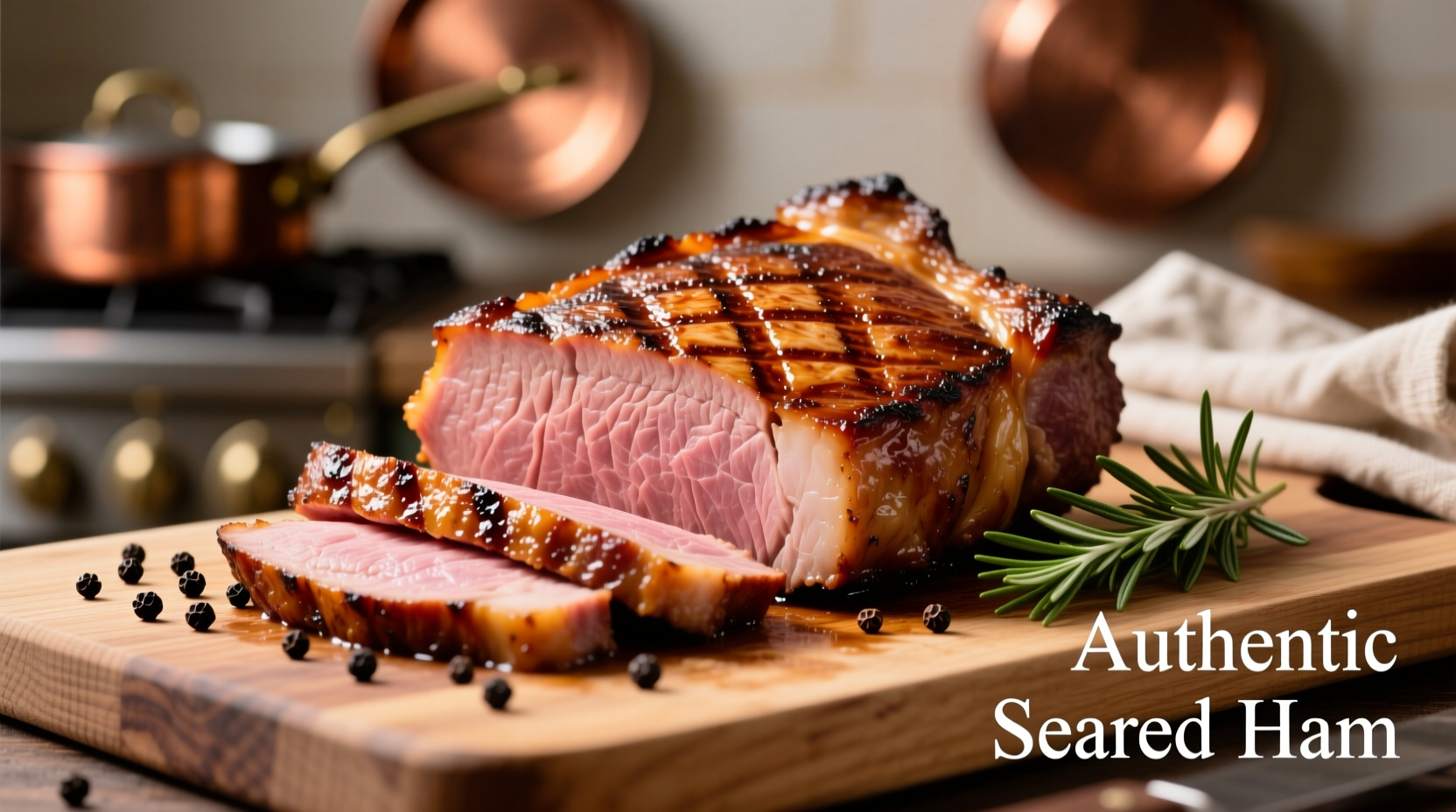
Heat a cast-iron or heavy-bottomed skillet over medium heat (325°F). Add 1 tablespoon of avocado oil—its high smoke point prevents burning. Place ham steaks in pan without crowding. After 3-4 minutes, when a deep golden crust forms, flip carefully. For thicker cuts, transfer the entire skillet to a 300°F preheated oven until reaching 140°F internally.
Avoiding Common Mistakes
Based on America's Test Kitchen's extensive testing, these errors ruin most home attempts:
- Using high heat: Causes exterior burning before interior warms
- Overcooking: Ham dries out rapidly above 140°F internal temperature
- Slicing immediately: Cutting before resting releases precious juices
- Skipping the rest period: Five minutes allows juices to redistribute
Food science explains why resting matters: when meat cooks, proteins contract and push juices toward the center. Resting allows these juices to redistribute throughout the meat. Cutting too soon releases this moisture onto your cutting board instead of keeping it in the ham.
Flavor Enhancement Options
While ham has natural flavor, these professional touches elevate your dish:
- Pan sauce: After removing ham, deglaze pan with ¼ cup apple cider and 2 tablespoons butter
- Glaze variations: Brown sugar-maple, pineapple-teriyaki, or honey-mustard
- Herb infusion: Add fresh thyme or rosemary to the pan during final cooking minutes
For best results, apply glazes during the last 2 minutes of cooking. Earlier application causes burning due to sugar content. The University of Georgia's Food Science Department confirms that sugar-based glazes caramelize properly only between 300-350°F—temperatures easily exceeded with direct high-heat cooking.
Troubleshooting Guide
Fix these common issues with professional solutions:
Dry Ham Steaks
Cause: Overcooking or skipping resting period
Solution: Use a meat thermometer and pull ham at 135°F (it will rise to 140°F while resting)
Burnt Exterior
Cause: Excessive heat or sugary glaze applied too early
Solution: Cook at lower temperature (325°F max) and add glaze during final minutes
Tough Texture
Cause: Cutting against the grain or using low-quality ham
Solution: Always slice with the grain and choose higher quality cuts with visible marbling
Perfect Pairings and Storage
Serve your perfectly cooked ham steaks with:
- Fresh pineapple slices (natural bromelain tenderizes meat)
- Scalloped potatoes (classic diner pairing)
- Maple-glazed carrots (complements ham's sweetness)
Store leftovers in an airtight container for up to 3 days. Reheat gently in a covered skillet with 1 tablespoon of water to restore moisture. For best results when reheating, bring to 130°F internal temperature—never reheat to boiling temperatures which further dries the meat.




 浙公网安备
33010002000092号
浙公网安备
33010002000092号 浙B2-20120091-4