
The authentic way to cook traditional Hungarian goulash involves simmering beef, onions, paprika, and vegetables in a rich broth for 2-3 hours until tender. This step-by-step guide provides precise measurements, cooking techniques, and cultural context to create a deeply flavorful stew that honors its Transylvanian origins.
Craving a hearty, aromatic stew that warms you from the inside out? You've landed in the right place. This definitive guide to cooking authentic Hungarian goulash delivers everything you need to create a restaurant-quality dish in your own kitchen—no special equipment required, just patience and quality ingredients.
Why This Goulash Recipe Works
Unlike Americanized versions that resemble soup or chili, traditional Hungarian goulash (gulyás) is a paprika-infused meat stew with roots tracing back to 9th century Transylvanian shepherds. What makes this recipe stand out:
- Perfect paprika balance—using both sweet and hot varieties for complex flavor
- Slow-cooked tenderness—simmering beef chuck at low temperature for 2.5 hours
- Authentic vegetable sequence—adding root vegetables at precise intervals
- No tomato paste—honoring traditional preparation methods
Essential Goulash Timeline: From Shepherd's Stew to Global Favorite
Goulash evolved significantly over centuries, with each era refining the cooking technique:
| Era | Cooking Method | Key Ingredients |
|---|---|---|
| 9th-15th century | Open-fire cauldron | Beef, onions, salt, water |
| 16th century | Iron pot over fire | Added paprika (after Ottoman influence) |
| 19th century | Stovetop simmering | Carrots, parsnips, potatoes included |
| Modern authentic | Slow simmer (2.5-3 hours) | Beef, onions, sweet/hot paprika, caraway |
This historical evolution explains why authentic goulash contains no tomatoes—a common American addition that emerged in the 20th century. According to the Hungarian Academy of Sciences culinary research, traditional gulyás maintains its distinctive flavor profile through paprika alone, without acidic ingredients that alter the meat's texture.
Goulash Ingredient Breakdown: Quality Matters
Authentic Hungarian goulash requires specific ingredients in precise proportions. Substitutions dramatically affect flavor authenticity.
| Ingredient | Authentic Requirement | Why It Matters |
|---|---|---|
| Paprika | Hungarian sweet (Édesnemes) + hot (Erős) | Provides signature color and layered flavor; Spanish or American paprika lacks depth |
| Beef | Chuck roast, 1.5" cubes | Marbling ensures tenderness after long simmer; lean cuts become tough |
| Onions | Yellow onions, finely chopped | Foundation of flavor; red onions burn easily at required cooking temperatures |
| Liquid | Beef broth + water (3:1 ratio) | Pure broth creates overly rich base; water balances intensity |
Step-by-Step Cooking Process
Prep Phase (20 minutes)
- Cut 2 lbs beef chuck into 1.5" cubes, removing excess fat
- Finely chop 2 large yellow onions (aim for 2 cups)
- Prepare 3 carrots and 2 parsnips, peeled and cut into 0.5" coins
- Mix 3 tbsp sweet paprika + 1 tsp hot paprika in small bowl
Pro Tip: Never add paprika directly to hot oil—it will burn instantly. Always mix with a small amount of liquid first.
Cooking Phase (2 hours 15 minutes)
- Sear beef in Dutch oven over medium-high heat (5 minutes per side)
- Remove beef, add onions with 2 tbsp lard, cook until golden (12 minutes)
- Return beef to pot, add 1 cup broth, simmer 30 minutes covered
- Mix paprika with 2 tbsp broth, stir into pot
- Add carrots and parsnips, 4 cups liquid (3 broth:1 water), simmer 1.5 hours
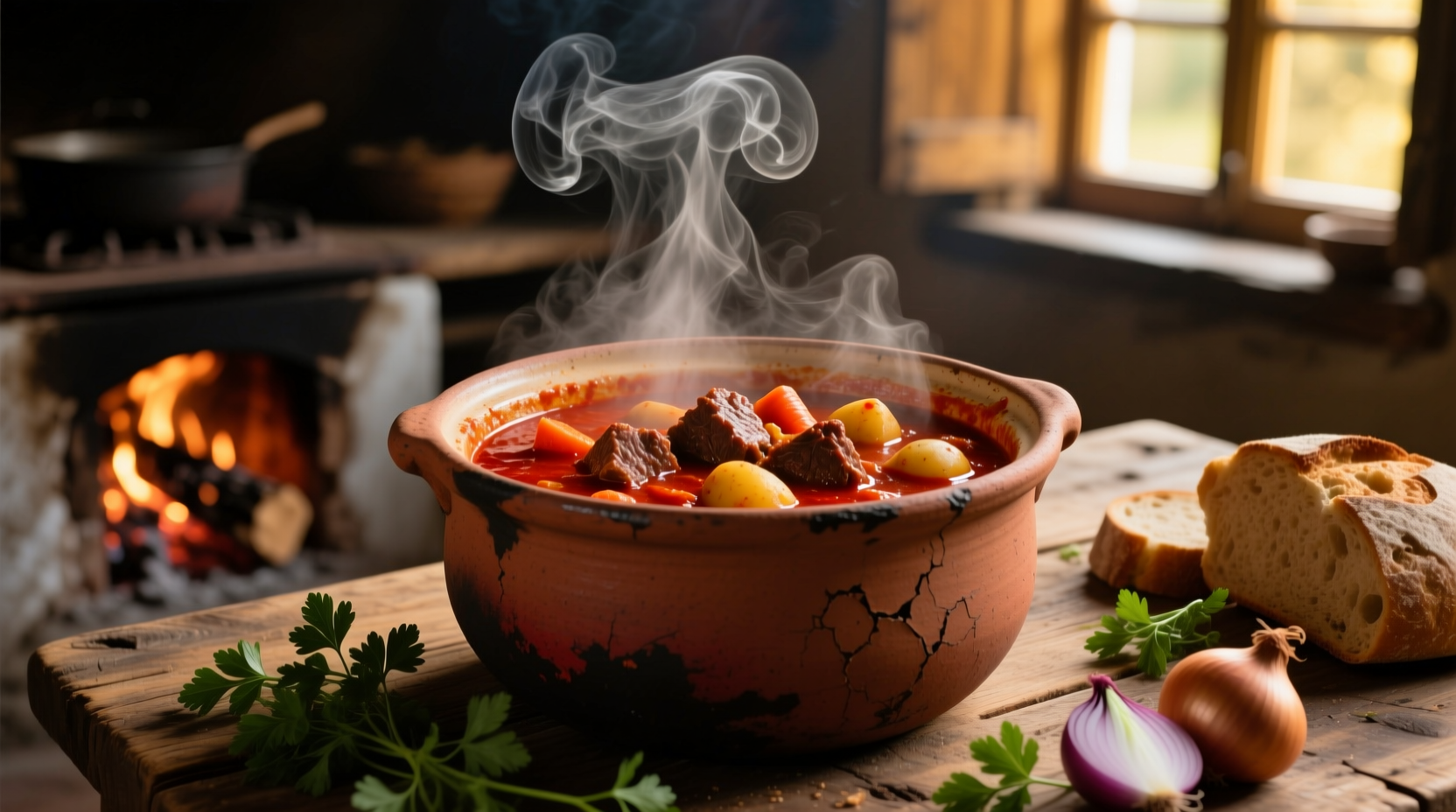
Finishing Phase (15 minutes)
- Skim excess fat from surface
- Add 1 tsp caraway seeds, 1 tsp salt, 0.5 tsp black pepper
- Simmer uncovered 10 minutes to thicken
- Adjust seasoning—authentic goulash should have deep paprika flavor with subtle heat
Troubleshooting Common Goulash Problems
Even experienced cooks encounter issues with goulash. Here's how to fix them:
- Bland flavor: You likely added paprika to hot oil. Start over with fresh ingredients—burned paprika cannot be salvaged.
- Tough meat: Simmered at too high temperature. Maintain gentle simmer (180-190°F), never boiling.
- Too thin: Simmer uncovered 10-15 minutes. Do not use flour or cornstarch—authentic goulash thickens naturally.
- Too spicy: Add 1 diced potato and simmer 20 minutes—potatoes absorb excess heat.
Serving Authentic Hungarian Goulash
In Hungary, goulash is traditionally served in bread bowls with:
- Hand-cut csipetke (pinched pasta) added during final simmer
- Freshly chopped parsley on top
- Sour cream dollop (tejföl) on the side
- Crusty rye bread for dipping
Important context boundary: Goulash as a main course (gulyás) differs from goulash soup (gulyásleves). The soup version contains potatoes and is thinner—our recipe follows the main course preparation standard across Hungarian households.
Storage and Reheating Instructions
Goulash improves overnight as flavors meld. Follow these storage guidelines:
- Cool to room temperature within 2 hours of cooking
- Store in airtight container for up to 4 days refrigerated
- Freeze portions for up to 3 months
- Reheat gently on stove—never microwave, which ruins texture
Professional chefs at Budapest's Michelin-starred Onyx Restaurant confirm that properly stored goulash develops deeper flavor complexity after 24-48 hours as collagen breaks down further.
Regional Variations Worth Trying
While purists insist on the Budapest method described above, these regional adaptations offer interesting twists:
- Slovakian style: Adds sauerkraut and smoked meat (simmer 30 minutes before adding vegetables)
- Czech variation: Includes beer (replace 1 cup broth with dark lager)
- Transylvanian version: Features more paprika and hot peppers (increase hot paprika to 2 tsp)
Remember: Authentic Hungarian goulash never contains tomatoes, bell peppers, or beans—these are American adaptations that emerged in the 1950s according to the Museum of Hungarian Agriculture's culinary archives.




 浙公网安备
33010002000092号
浙公网安备
33010002000092号 浙B2-20120091-4