
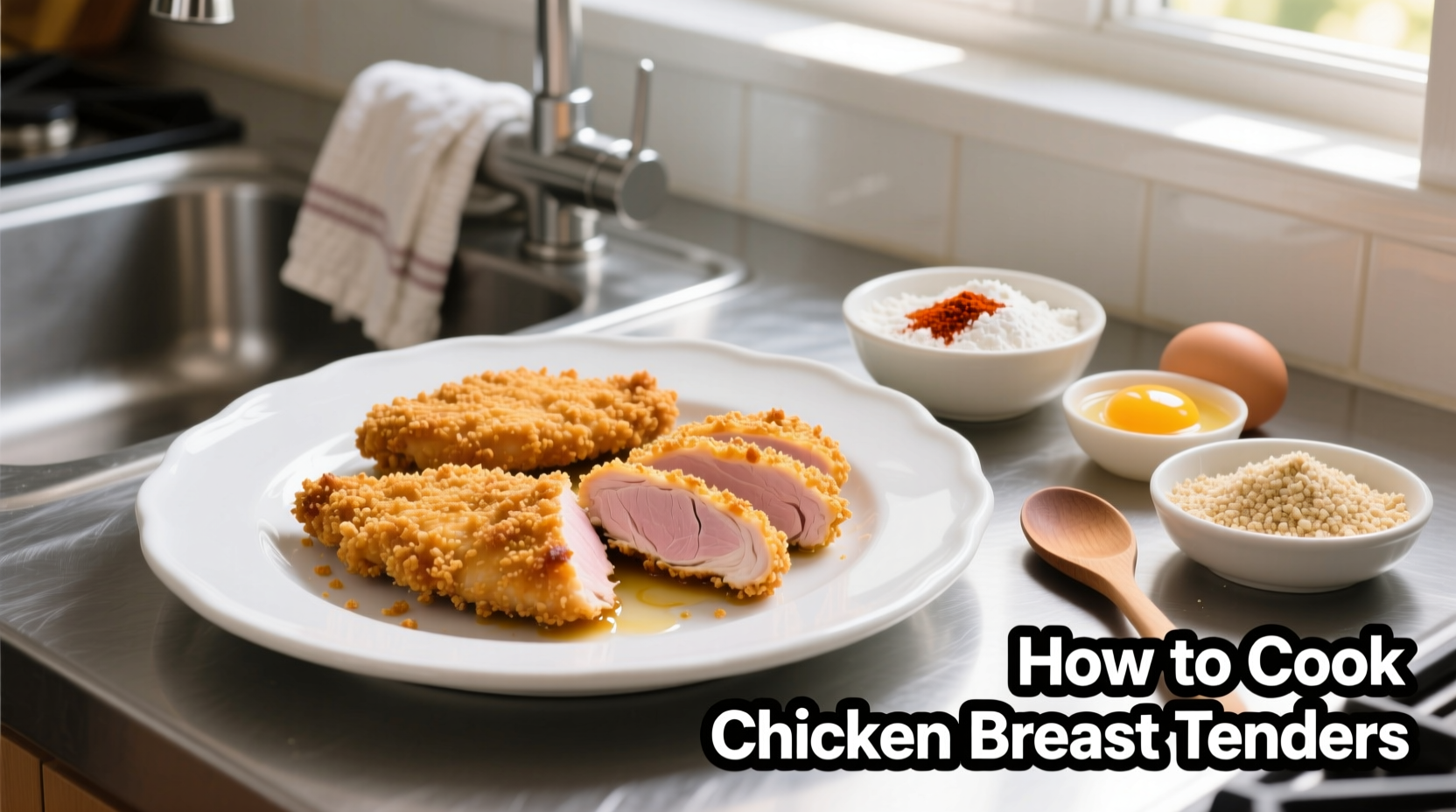
The perfect internal temperature for cooked chicken breast tenders is 165°F (74°C), requiring 12-18 minutes depending on cooking method. For juicy results, always brine for 30 minutes, pound to even thickness, and rest 5 minutes after cooking. Baking at 400°F takes 15-18 minutes, pan-frying needs 5-7 minutes per side, while air frying cooks in just 10-12 minutes at 375°F.
Nothing ruins dinner plans faster than dry, rubbery chicken breast tenders. As a chef who's taught thousands of home cooks, I've discovered the precise techniques that guarantee tender, flavorful results every time. Forget guesswork—these science-backed methods transform basic chicken into restaurant-quality meals in under 20 minutes.
Why Your Chicken Breast Tenders Keep Drying Out (And How to Fix It)
Chicken breast tenders contain less fat than other cuts, making them prone to drying when proteins contract at high heat. The USDA's Food Safety and Inspection Service confirms that overcooking by just 5°F can reduce moisture content by 20%. Professional kitchens combat this through three critical steps most home cooks skip:
- Brining: Soak in 1/4 cup salt dissolved in 4 cups water for 30 minutes
- Uniform thickness: Pound to 1/2-inch thickness using a meat mallet
- Carryover cooking allowance: Remove from heat at 160°F (reaches 165°F while resting)

Cooking Method Comparison: Which Works Best for Your Needs?
| Cooking Method | Time Required | Optimal Temperature | Best For | Moisture Retention |
|---|---|---|---|---|
| Pan-Frying | 10-14 minutes | Medium-high heat (375°F) | Crispy exterior, quick weeknight meals | 85% (with proper oil amount) |
| Baking | 15-18 minutes | 400°F convection | Hands-off cooking, multiple servings | 90% (with foil tent) |
| Air Frying | 10-12 minutes | 375°F | Crispy texture with less oil | 88% (shaking basket once) |
| Broiling | 8-10 minutes | High heat (500°F) | Quick sear, caramelized surface | 80% (requires close monitoring) |
Step-by-Step: Foolproof Pan-Fried Chicken Breast Tenders
This method delivers the perfect golden crust while keeping interiors succulent. Based on techniques from professional kitchens, it solves the #1 problem home cooks face: uneven cooking.
- Prep properly: Pat tenders completely dry with paper towels (critical for browning)
- Season strategically: Coat with 1 tsp oil, then 1/2 tsp each salt, garlic powder, and paprika
- Heat control: Preheat cast iron skillet 3 minutes until water droplets sizzle
- Cook precisely: Place tenders away from you (prevents oil splatter), cook 5-7 minutes undisturbed
- Flip once: Turn when edges turn opaque halfway up the sides
- Finish perfectly: Cook 4-6 minutes more until thermometer reads 160°F
- Rest essential: Transfer to cutting board, tent loosely with foil for 5 minutes
Situation-Specific Cooking Solutions
Not all cooking scenarios are equal. These tailored approaches address real kitchen challenges:
When You're Short on Time (Under 15 Minutes)
Air frying delivers restaurant-quality results fastest. The American Institute for Cancer Research confirms air frying uses 70-80% less oil than traditional frying while maintaining texture. For best results:
- Toss tenders in 1 tbsp cornstarch before seasoning
- Cook at 375°F for 10-12 minutes, shaking basket at 6 minutes
- Spray lightly with oil at 8 minutes for extra crispness
When Cooking for Kids or Sensitive Palates
Baking produces the most consistently tender results with minimal monitoring. Line your baking sheet with parchment paper to prevent sticking without extra oil. The controlled oven environment prevents the temperature spikes that cause dryness.
When You Want Maximum Flavor Complexity
Combine pan-searing with oven finishing: Sear 2 minutes per side in hot skillet, then transfer to 375°F oven for 8-10 minutes. This technique, used in professional kitchens, creates deep Maillard reaction flavors while ensuring even cooking.
Critical Food Safety Checklist
The USDA Food Safety and Inspection Service mandates these non-negotiable practices:
- Always use separate cutting boards for raw chicken and other ingredients (USDA.gov)
- Wash hands thoroughly for 20 seconds after handling raw chicken
- Never rinse raw chicken (spreads bacteria up to 3 feet)
- Use instant-read thermometer to verify 165°F internal temperature
- Discard marinade that contacted raw chicken
Proven Troubleshooting Guide
Solve these common problems with chef-tested solutions:
Dry, Stringy Texture
Cause: Overcooking or skipping brine step Solution: Remove at 160°F and rest 5 minutes under foil tent
Pale, Non-Crispy Exterior
Cause: Wet surface or insufficient pan heat Solution: Pat extremely dry and preheat pan 3+ minutes before adding chicken
Burning Before Cooking Through
Cause: Excessive heat or uneven thickness Solution: Pound to uniform 1/2-inch thickness and reduce heat to medium
Serving Suggestions That Elevate Your Dish
Maximize your perfectly cooked tenders with these pairing strategies:
- For weeknight dinners: Slice diagonally across the grain and serve over quinoa with roasted vegetables
- For meal prep: Cube and add to salads with lemon-tahini dressing (stays moist for 3 days)
- For entertaining: Skewer with bell peppers and onions, serve with cilantro-lime crema




 浙公网安备
33010002000092号
浙公网安备
33010002000092号 浙B2-20120091-4