
Discover how to transform humble canned tuna into restaurant-quality meals with minimal effort. Whether you're a college student on a budget, a busy professional needing quick lunches, or simply stocking pantry essentials, these professional techniques will elevate your canned tuna from bland to brilliant in minutes.
Why Canned Tuna Deserves Your Attention
Canned tuna provides an affordable, shelf-stable protein source that nutritionists consistently recommend. According to the FDA, a 3-ounce serving delivers 20 grams of high-quality protein with essential omega-3 fatty acids. The common misconception that canned tuna lacks flavor stems from improper preparation techniques rather than the ingredient itself.
Essential Preparation Steps
Before cooking, proper preparation makes all the difference:
| Preparation Step | Professional Technique | Common Mistake |
|---|---|---|
| Draining liquid | Press tuna against can sides, then transfer to paper towel-lined plate with gentle pressure | Skipping drainage (adds wateriness) |
| Flaking | Use fork to break into small, uniform pieces | Over-mixing (creates mush) |
| Temperature | Bring to room temperature before cooking | Cooking straight from fridge (uneven cooking) |
Three Proven Cooking Methods
Perfect Tuna Patties (Best Texture)
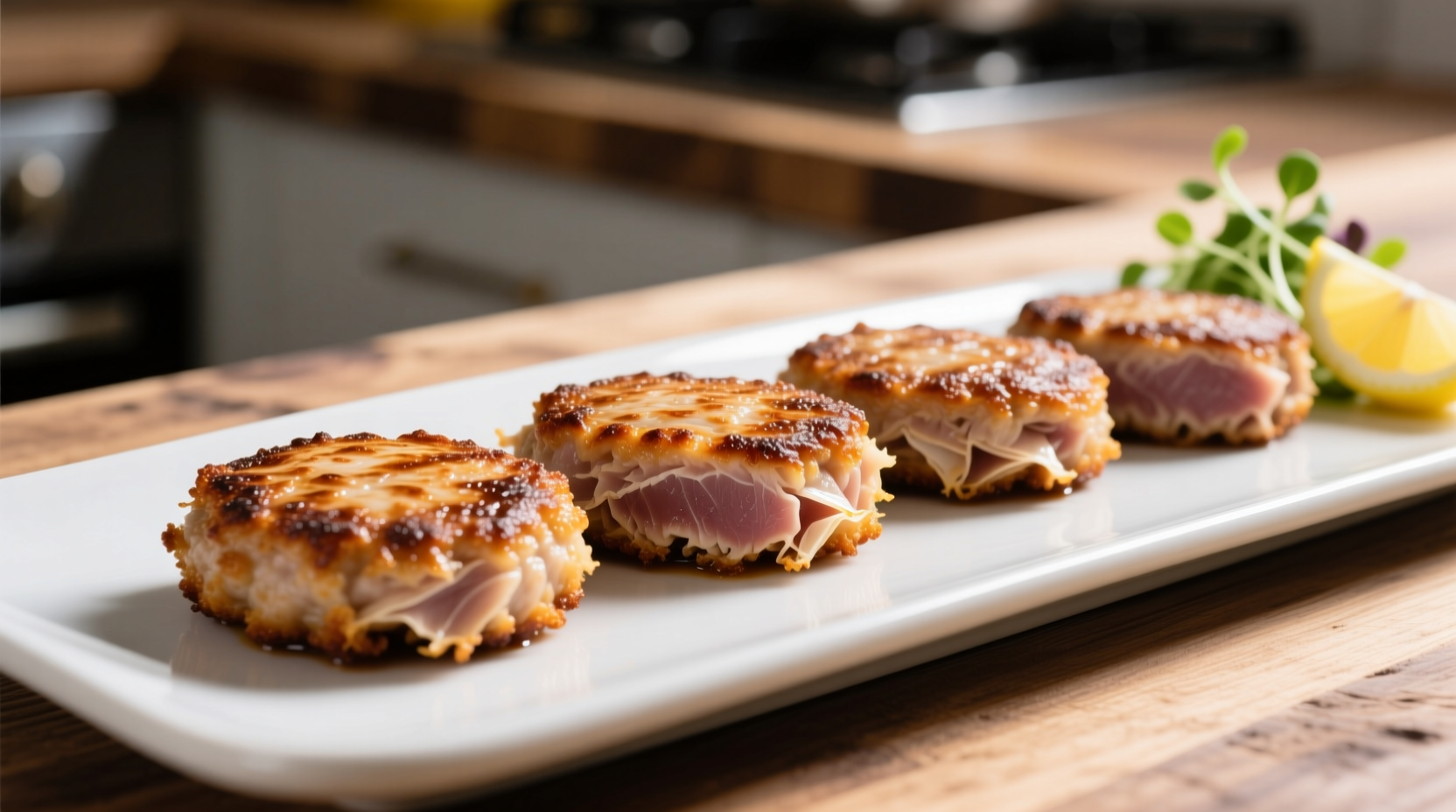
Tuna patties offer the most satisfying texture when prepared correctly. The ideal binding ratio follows food science principles: 1 large egg and 1/4 cup breadcrumbs per 2 cans of tuna creates optimal structure without overwhelming the delicate fish flavor. Add 1 tablespoon Dijon mustard and 2 tablespoons finely diced red onion for enhanced flavor complexity.
Heat 1 tablespoon olive oil in a non-stick skillet over medium heat (350°F). Form mixture into 1/2-inch thick patties. Cook 3-4 minutes per side until golden brown crust forms through the Maillard reaction, indicating proper protein coagulation. The USDA recommends cooking fish to an internal temperature of 145°F for safety.
10-Minute Tuna Stir-Fry (Quick Meal)
For the fastest meal, combine drained tuna with pre-cut vegetables in a hot wok. The key is adding tuna during the last 2-3 minutes of cooking to prevent overcooking. Create a sauce with 2 tablespoons soy sauce, 1 tablespoon rice vinegar, and 1 teaspoon honey. Toss with broccoli florets, bell peppers, and snap peas that have been stir-fried for 5-7 minutes. Finish with sesame seeds and green onions.
Gourmet Tuna Melt (Rich Flavor)
Elevate your tuna melt by layering ingredients strategically. Spread a thin layer of Dijon mustard on sourdough bread, add tuna mixture, then top with sharp cheddar and a slice of tomato. Bake at 375°F for 12-15 minutes until cheese bubbles and bread turns golden. The FDA notes that canned light tuna contains lower mercury levels than albacore, making it safer for regular consumption.
Flavor Enhancement Secrets
Professional chefs use these techniques to transform canned tuna:
- Acid balance: Add 1-2 teaspoons lemon juice or vinegar to brighten flavors without overpowering
- Umami boosters: Incorporate 1 teaspoon soy sauce or Worcestershire sauce for depth
- Texture contrast: Mix in diced celery or apple for crunch that complements the soft tuna
- Herb pairing: Fresh dill or parsley adds brightness better than dried alternatives
Avoid These Common Mistakes
Even simple recipes can go wrong. Steer clear of these pitfalls:
- Overmixing: Excessive stirring breaks down protein structure, creating mushy texture
- High heat cooking: Causes tuna to become dry and rubbery rather than tender
- Ignoring liquid content: Not properly draining leads to watery, flavorless results
- Underseasoning: Canned tuna needs more seasoning than fresh due to processing
Storage and Food Safety Guidelines
Follow these evidence-based practices for safe handling:
- Refrigerate cooked tuna within 2 hours (1 hour if room temperature exceeds 90°F)
- Store leftovers in airtight container for up to 3-4 days according to USDA guidelines
- Reheat to 165°F internal temperature using food thermometer
- Never leave cooked tuna at room temperature for more than 2 hours




 浙公网安备
33010002000092号
浙公网安备
33010002000092号 浙B2-20120091-4