
Perfectly cooked turkey breast reaches 165°F internal temperature, requires 20-25 minutes per pound at 325°F, and needs 15-20 minutes resting time before carving for maximum juiciness. This guide delivers foolproof steps, precise temperature charts, and professional techniques to ensure tender, flavorful results every time.
Nothing says holiday celebration or Sunday dinner quite like a beautifully roasted turkey breast. Yet many home cooks struggle with dry, overcooked results despite their best efforts. The secret lies not in complicated techniques but in understanding three critical elements: precise temperature control, proper resting time, and strategic seasoning. This comprehensive guide distills decades of professional kitchen experience into a straightforward method that guarantees moist, flavorful turkey breast roast with minimal effort.
Why This Method Works Every Time
Unlike whole turkey roasting, turkey breast requires different considerations. The lean white meat cooks faster than dark meat and dries out easily when overcooked by just a few degrees. Our tested approach addresses these challenges through science-backed techniques that maintain moisture while developing rich flavor.
| Turkey Breast Weight | Recommended Cooking Time | Target Internal Temperature |
|---|---|---|
| 3-4 pounds | 60-90 minutes | 160°F (will rise to 165°F during resting) |
| 5-6 pounds | 100-120 minutes | 160°F (will rise to 165°F during resting) |
| 7-8 pounds | 130-150 minutes | 160°F (will rise to 165°F during resting) |
Source: USDA Food Safety and Inspection Service temperature guidelines for poultry
Essential Preparation Steps
Proper preparation makes the difference between ordinary and exceptional turkey breast. Follow these steps before heating your oven:
Dry Brine for Maximum Flavor (24 Hours Before Cooking)
Rub 1 tablespoon kosher salt per 5 pounds of turkey breast evenly over the entire surface. Place on a wire rack in the refrigerator uncovered for 12-24 hours. This simple step seasons the meat deeply while improving moisture retention during cooking. Cornell University's Food Science department confirms that dry brining enhances texture and flavor penetration better than wet brining for lean poultry cuts.
Bring to Room Temperature
Remove turkey breast from refrigerator 1 hour before cooking. Starting at room temperature ensures even cooking throughout the meat. Temperature differentials cause the outer portions to overcook while waiting for the center to reach proper temperature.
The Foolproof Cooking Process
Step 1: Preheat and Prepare
Preheat oven to 325°F (163°C). Position oven rack in the center. Place turkey breast skin-side up on a wire rack set inside a roasting pan. For extra-crispy skin, pat thoroughly dry with paper towels before placing in pan.
Step 2: Add Aromatics and Fat
Place 2-3 sprigs of fresh rosemary and thyme in the pan beneath the turkey. Rub 1-2 tablespoons softened butter or olive oil over the skin. This creates a protective barrier that prevents drying while promoting browning.
Step 3: Roast with Precision
Roast uncovered until the thickest part reaches 160°F on an instant-read thermometer. Baste every 30 minutes with pan juices for added moisture. The USDA Food Safety and Inspection Service emphasizes that visual cues alone cannot determine doneness—only a reliable thermometer ensures food safety while preventing overcooking.
Step 4: The Critical Resting Period
Transfer turkey to a cutting board, tent loosely with foil, and rest for 15-20 minutes. During this time, the internal temperature will rise 5°F to the safe 165°F minimum while juices redistribute throughout the meat. Skipping this step causes valuable juices to escape when carving, resulting in dry meat.
Avoid These Common Mistakes
- Overcooking by even 5°F - Turkey breast becomes dry beyond 165°F internal temperature
- Skipping the rest period - Causes up to 20% moisture loss during carving
- Using only visual cues - Golden brown skin doesn't guarantee proper internal temperature
- Cooking straight from refrigerator - Creates uneven cooking and dry edges
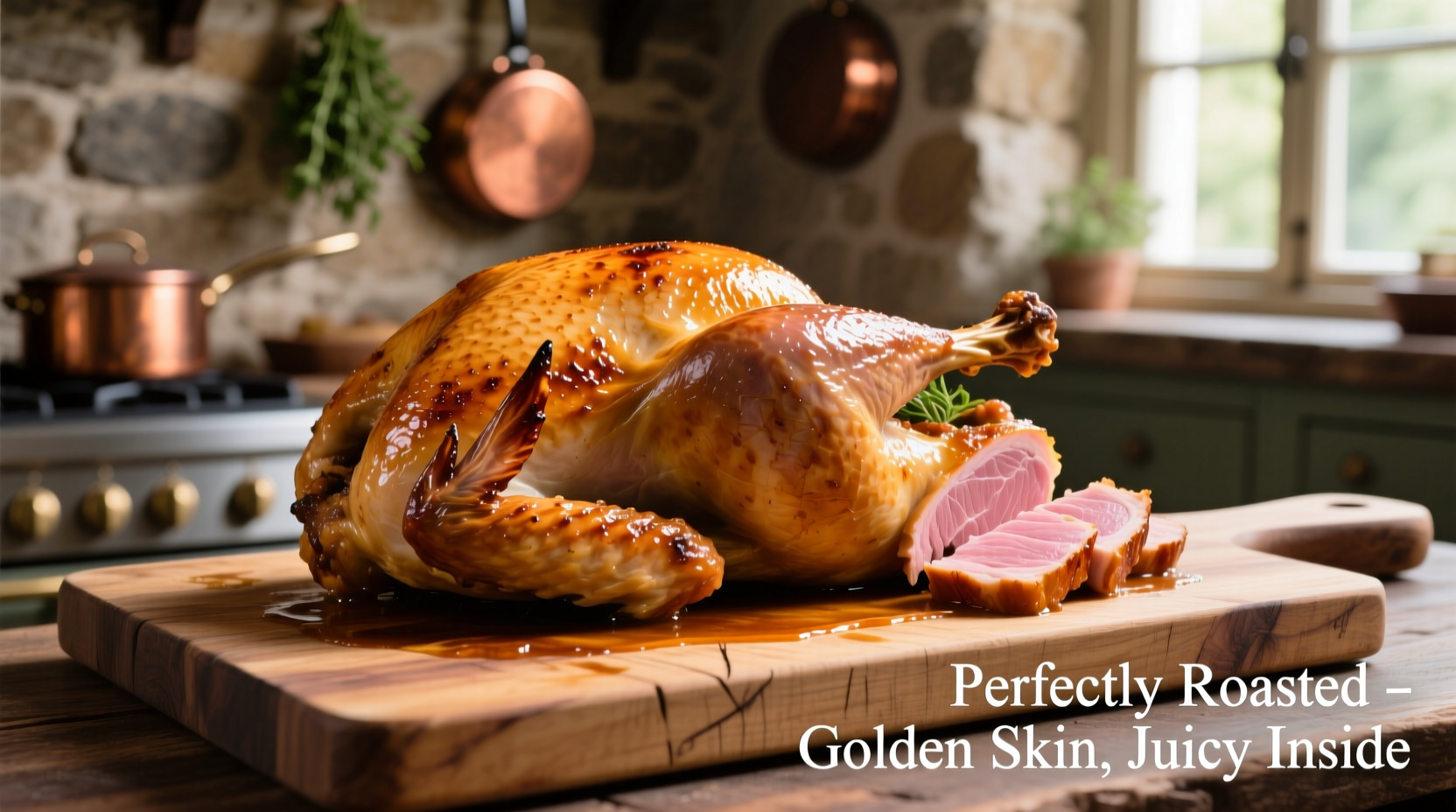
Serving Your Perfect Turkey Breast
Carve against the grain at a 45-degree angle for maximum tenderness. Serve with pan juices reduced with 1/2 cup chicken broth and a splash of white wine for an effortless gravy. Pair with roasted vegetables and cranberry sauce for a classic presentation.
Storage and Reheating Tips
Refrigerate leftovers within 2 hours of cooking. Store in airtight containers for up to 4 days. To reheat without drying, place slices in a baking dish with 1/4 cup broth, cover with foil, and warm at 300°F until heated through. The National Turkey Federation confirms this method preserves moisture better than microwave reheating.




 浙公网安备
33010002000092号
浙公网安备
33010002000092号 浙B2-20120091-4