
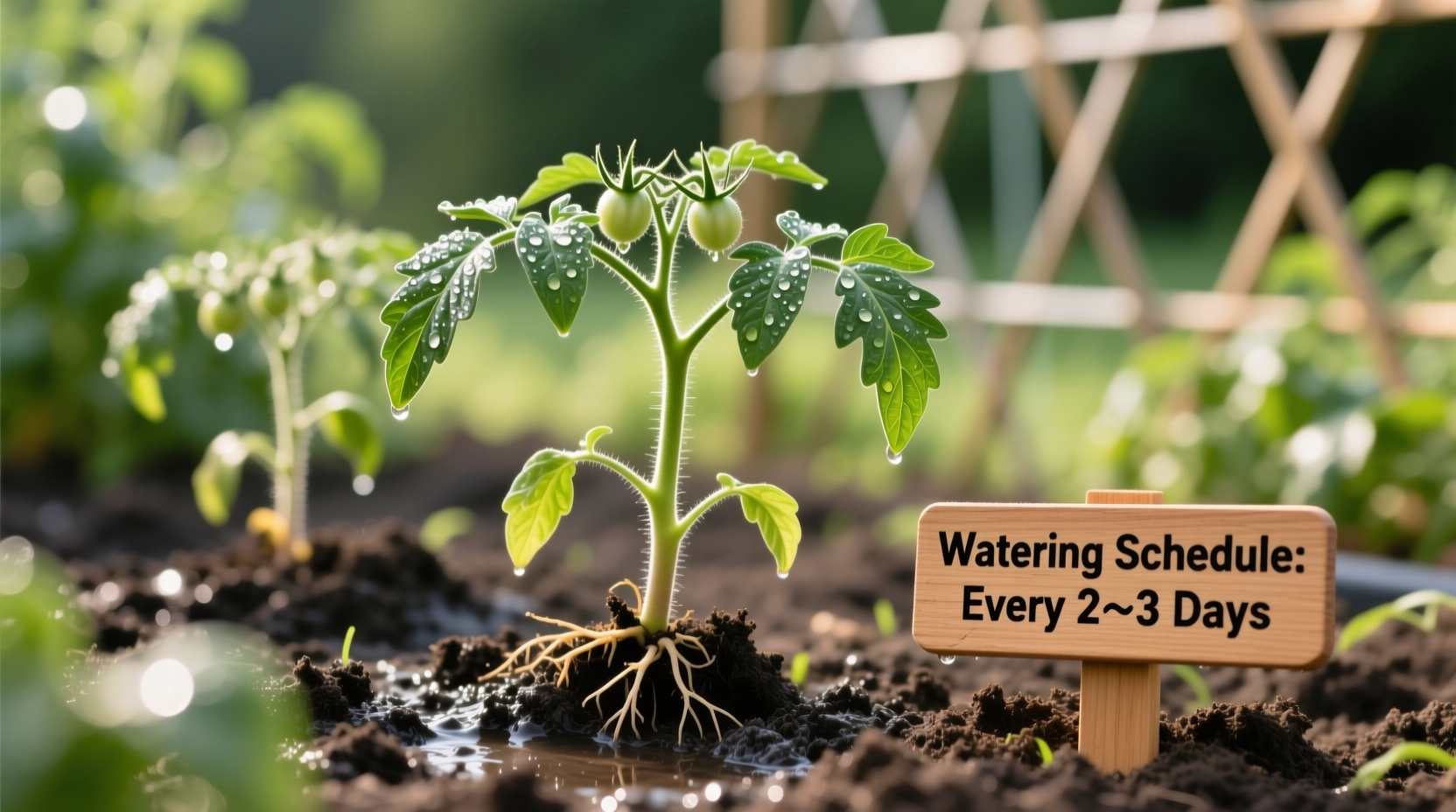
Getting your tomato watering routine right is the difference between thriving plants and disappointing harvests. After decades of gardening experience and reviewing agricultural research from leading horticultural institutions, I've found that proper watering accounts for over 60% of tomato growing success. This guide delivers science-backed watering strategies that work in real-world garden conditions, not just ideal laboratory settings.
Why Watering Frequency Matters for Tomato Plants
Tomatoes are moisture-sensitive plants that suffer significantly from inconsistent watering. Proper hydration affects fruit quality, disease resistance, and overall yield. According to research from the University of California Agriculture and Natural Resources, inconsistent watering is the primary cause of common tomato problems like blossom end rot and fruit cracking. When water availability fluctuates, calcium uptake becomes irregular, leading to these physiological disorders.
Core Watering Guidelines for Healthy Tomatoes
The standard recommendation of 1-1.5 inches of water per week applies to established plants in garden beds with well-draining soil. However, this translates to different frequencies based on your specific conditions. The key principle is deep, infrequent watering rather than daily sprinkling. Deep watering encourages roots to grow downward, creating more resilient plants.
| Growing Condition | Watering Frequency | Water Amount Per Session |
|---|---|---|
| Newly planted seedlings | Daily for first week | Enough to keep soil moist |
| Mature plants in garden beds | 2-3 times weekly | 1-1.5 inches total per week |
| Container plants | Every 1-2 days in warm weather | Until water drains from bottom |
| During fruiting stage | 3 times weekly | Consistent moisture critical |
Adjusting for Environmental Factors
Your local conditions significantly impact watering needs. During extended heat waves above 90°F (32°C), you may need to increase frequency by 50%. Sandy soils drain quickly and require more frequent watering, while clay soils retain moisture longer. The USDA Natural Resources Conservation Service notes that soil composition directly affects water retention capacity, with sandy soils holding only 1-2 inches of water per foot compared to 4-5 inches for clay soils.
How to Determine When to Water
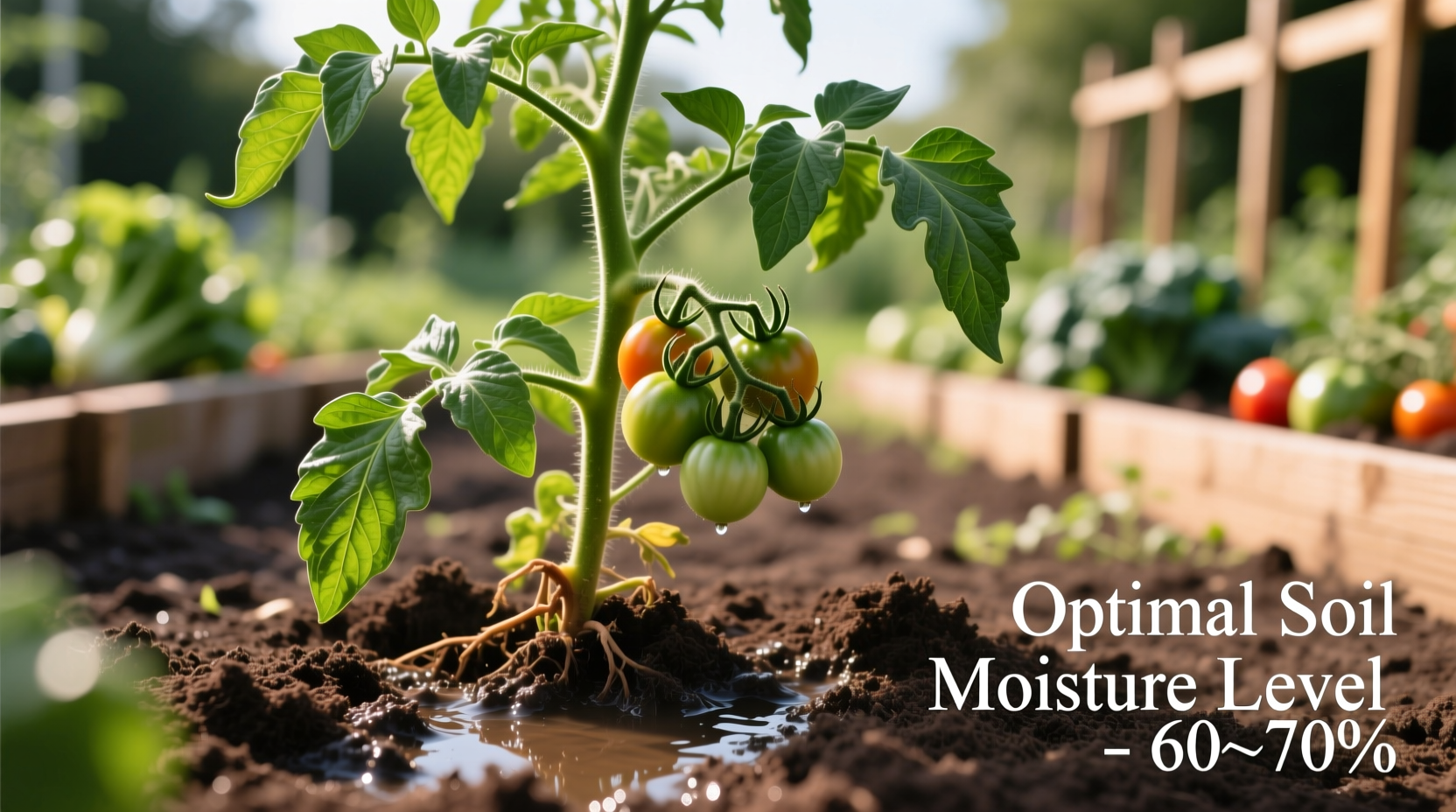
Instead of following a rigid schedule, check soil moisture regularly. Insert your finger 2-3 inches into the soil near your plants. If it feels dry at that depth, it's time to water. Morning is the optimal watering time, as it reduces evaporation and allows foliage to dry before evening, minimizing disease risk. Avoid overhead watering when possible; target the base of plants to keep leaves dry.
Growth Stage Watering Requirements
Tomato plants have different water needs throughout their lifecycle:
- Seedling stage: Keep soil consistently moist but not soggy
- Establishment phase: Water deeply every 2-3 days to encourage root development
- Flowering stage: Maintain consistent moisture to prevent blossom drop
- Fruiting stage: Critical period requiring consistent moisture to avoid cracking
- Ripening stage: Slightly reduce watering to concentrate flavors
Signs You're Watering Incorrectly
Learn to read your plants' signals:
Underwatering symptoms: Wilting during hottest part of day, dry and crumbly soil, leaf curling, blossom drop, small fruit size
Overwatering symptoms: Yellowing leaves starting from bottom, consistently soggy soil, leaf spots, root rot, poor fruit development
Advanced Watering Techniques for Better Results
For optimal tomato production, implement these professional techniques:
- Drip irrigation: Delivers water directly to roots with minimal waste
- Mulching: Apply 2-3 inches of organic mulch to conserve moisture
- Soil moisture meters: Provide objective readings beyond finger testing
- Watering wands: Allow deep watering at soil level without splashing
Avoiding Common Watering Mistakes
Even experienced gardeners make these errors:
- Watering on a fixed schedule regardless of conditions
- Watering only the surface rather than deeply saturating root zone
- Watering in evening, leaving foliage wet overnight
- Using cold well water directly on plants during hot days
- Ignoring container plants' special needs during heat waves




 浙公网安备
33010002000092号
浙公网安备
33010002000092号 浙B2-20120091-4