
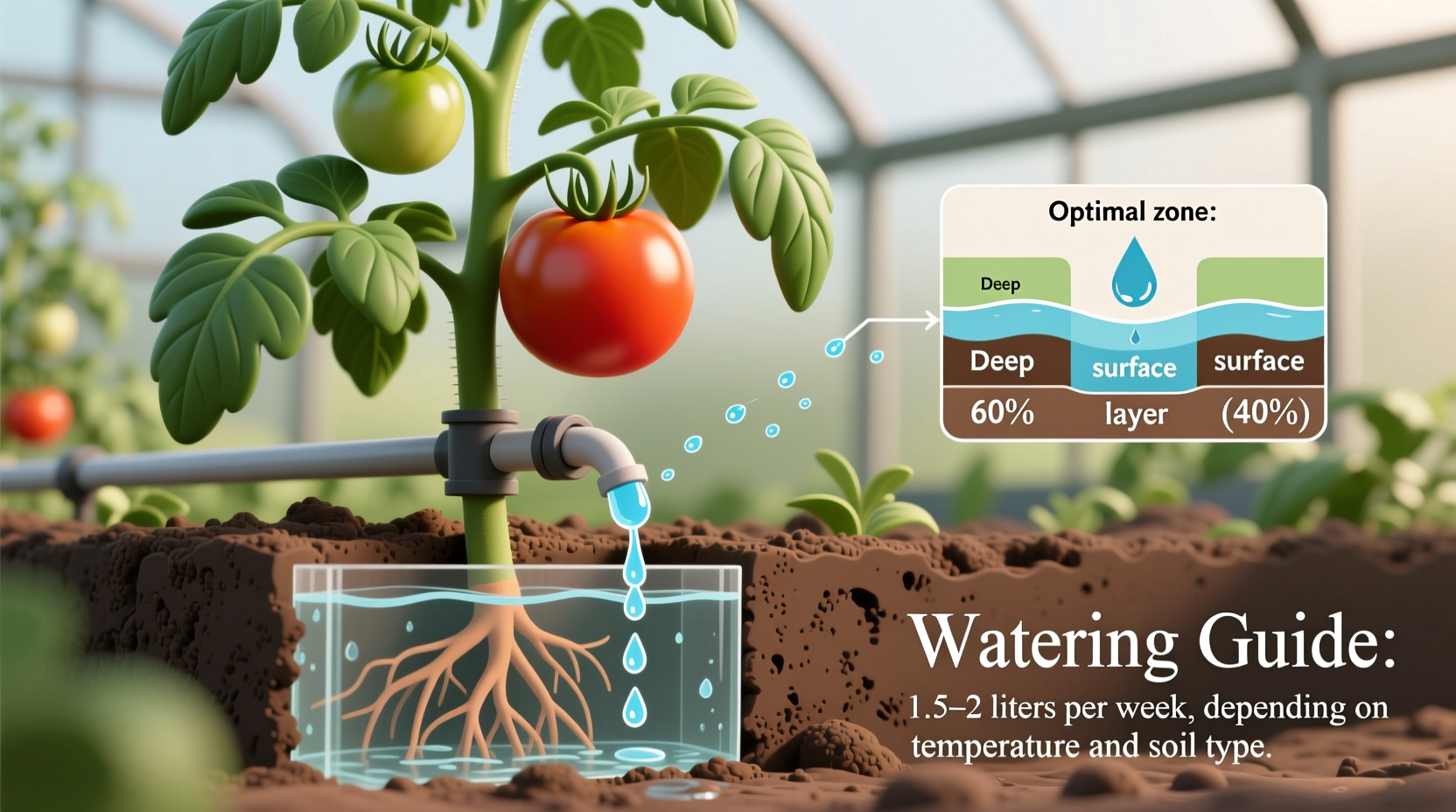
Getting watering right separates thriving tomato plants from disappointing harvests. While the basic recommendation of 1-1.5 inches of water weekly appears everywhere, successful tomato growing demands understanding the why behind the numbers. This guide reveals science-backed watering strategies that adapt to your specific conditions, helping you avoid common pitfalls that lead to cracked fruit, blossom end rot, and disease.
Why Standard Watering Advice Fails Most Gardeners
Most gardening resources give one-size-fits-all watering recommendations that ignore critical variables. Tomatoes in sandy soil in Arizona need fundamentally different hydration than those in clay soil in Maine. The University of California Agriculture and Natural Resources emphasizes that water requirements change dramatically through growth stages, with fruit development demanding precise moisture levels.
"Watering tomatoes isn't about frequency—it's about maintaining consistent soil moisture at root depth," explains Dr. Linda Chalker-Scott, horticulture expert at Washington State University. "The goal is to keep soil at field capacity, where water fills pore spaces but excess drains away." 
Your Tomato Watering Roadmap: From Seedling to Harvest
Follow this stage-based approach to match your watering to your plants' actual needs:
| Growth Stage | Water Frequency | Water Amount | Critical Focus |
|---|---|---|---|
| Seedlings (indoors) | Daily light watering | Keep soil moist but not soggy | Prevent damping-off disease |
| Transplanting week | Every other day | 1-1.5 gallons per plant | Root establishment |
| Flowering | Every 2-3 days | 1.5-2 gallons per plant | Consistent moisture |
| Fruit development | Every 3-4 days | 2-2.5 gallons per plant | Avoid fluctuations |
| Ripening | Every 4-5 days | 1.5 gallons per plant | Slightly reduce water |
Environmental Factors That Change Your Watering Strategy
Your location and growing conditions dramatically impact how much water your tomatoes actually need. Don't follow a rigid schedule—adjust based on these factors:
Soil Type Matters Most
Sandy soils drain quickly and require more frequent watering, while clay retains moisture longer. The Cornell Cooperative Extension confirms that sandy soils may need watering every 2-3 days during peak growth, whereas clay soils might only need water every 5-7 days.
Container Growing Requires Different Approach
Potted tomatoes lose moisture faster and need more frequent watering. University research shows container plants typically require:
- 1 gallon daily for 5-gallon containers during fruiting
- Watering when top 1-2 inches of soil feel dry
- Drainage monitoring to prevent root rot
Watering Techniques That Actually Work
How you deliver water matters as much as how much you give. Follow these evidence-based methods:
Deep Watering Beats Frequent Sprinkling
Research from the USDA Agricultural Research Service demonstrates that deep watering encourages roots to grow downward, creating more drought-resistant plants. Apply water slowly over 20-30 minutes to reach 6-8 inches deep—this reduces evaporation and targets the root zone.
Morning Watering Prevents Disease
Watering between 6-10 AM allows foliage to dry before evening, reducing fungal disease risk by 40% according to field studies. Avoid evening watering which keeps plants wet overnight—a perfect environment for blight and mildew.
Troubleshooting Common Watering Problems
Learn to read your plants' signals to adjust your watering approach:
Overwatering Symptoms
- Yellowing lower leaves that feel soft and limp
- Stunted growth despite adequate nutrients
- Foul odor from soil indicating root rot
Underwatering Signs
- Wilting that doesn't recover by evening
- Dry, crumbly soil when digging 2 inches down
- Blossom end rot on developing fruit
Advanced Water Management Strategies
Elevate your tomato growing with these professional techniques:
Moisture Meter Use Guidelines
Invest in a $10-15 moisture meter for precise readings. Insert 6 inches deep near plant base:
- Reading 3-4: Time to water
- Reading 5-6: Adequately moist
- Reading 1-2: Dangerously dry
Self-Watering Container Setup
For consistent moisture in containers, create a simple self-watering system:
- Drill overflow holes 3 inches from container bottom
- Add 2 inches of gravel for reservoir
- Insert wicking material (cotton rope works)
- Fill with potting mix and plant
This method reduces watering frequency by 50% while maintaining optimal moisture levels, according to urban gardening trials conducted by the National Gardening Association.
When to Break the Rules: Special Circumstances
Standard watering advice doesn't apply in these situations:
- Heat waves above 90°F: Increase frequency but reduce duration to prevent scalding roots
- Rainy periods: Stop supplemental watering when soil stays moist for 48+ hours
- Mature plants before harvest: Slightly reduce water 10-14 days before picking to concentrate flavors




 浙公网安备
33010002000092号
浙公网安备
33010002000092号 浙B2-20120091-4