
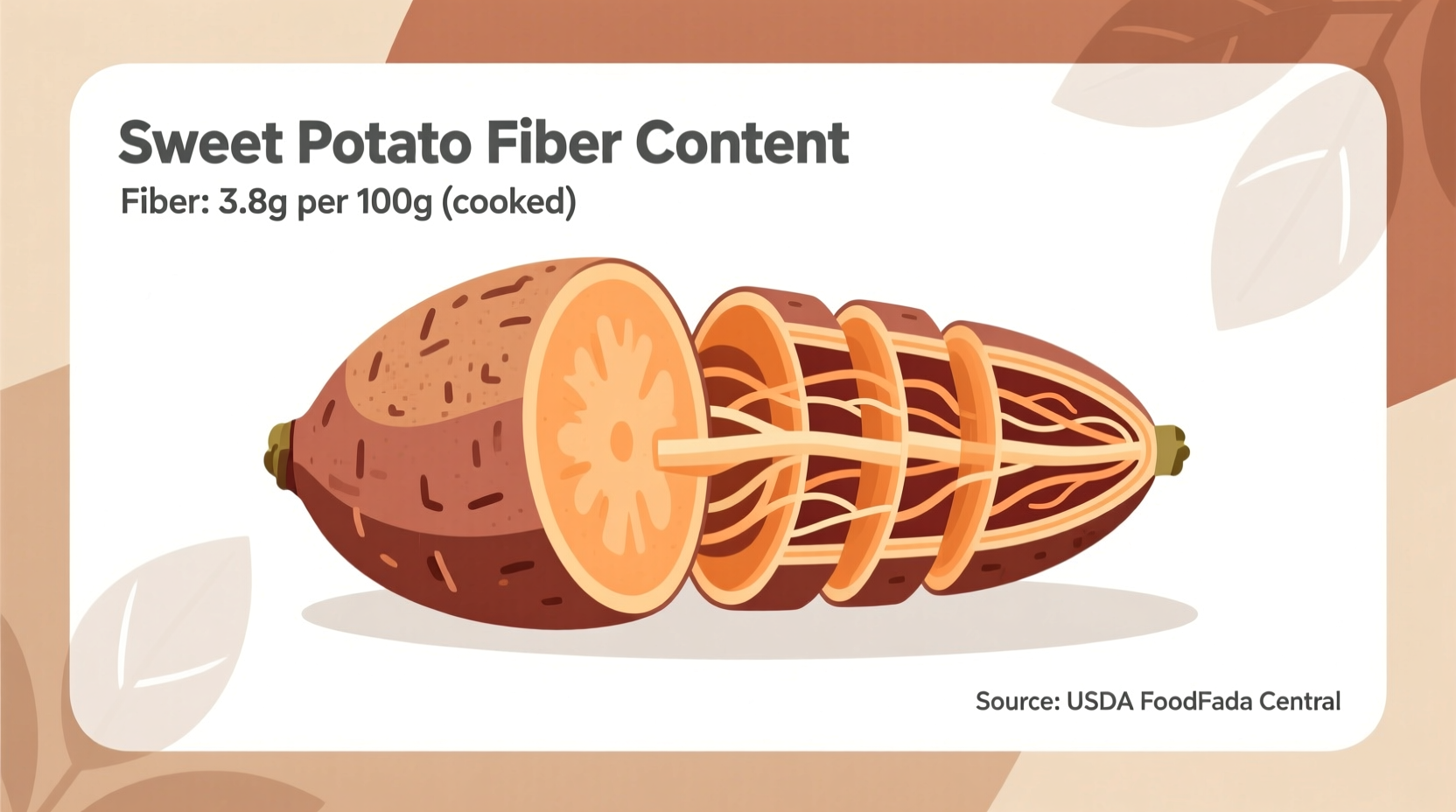
Why Sweet Potato Fiber Matters for Your Daily Nutrition
Getting enough fiber is essential for digestive health, blood sugar control, and heart disease prevention. Most adults need 25-38 grams daily, yet nearly 95% fall short. Sweet potatoes offer a delicious, versatile solution that fits seamlessly into your meals while delivering substantial fiber benefits.
Breaking Down Sweet Potato Fiber Content
Understanding exactly how much fiber you're getting requires examining preparation methods and serving sizes. The USDA's FoodData Central provides the most reliable measurements for different sweet potato preparations:
| Preparation Method | Weight | Total Fiber (g) | % Daily Value |
|---|---|---|---|
| Raw with skin | 130g (medium) | 3.6 | 13% |
| Baked with skin | 130g (medium) | 3.8 | 14% |
| Boiled with skin | 130g (medium) | 3.3 | 12% |
| Baked without skin | 130g (medium) | 3.0 | 11% |
| Canned | 130g | 2.9 | 10% |
Data source: USDA FoodData Central, Release 17 (2023)

How Preparation Affects Your Fiber Intake
Your cooking method significantly impacts the fiber you actually consume. When evaluating how much fiber does a sweet potato have after cooking, consider these key factors:
- Skin retention: The skin contains nearly 20% of the total fiber. Peeling reduces your intake from 3.8g to 3.0g in a medium potato
- Cooking technique: Baking concentrates nutrients as water evaporates, while boiling leaches some fiber into cooking water
- Variety differences: Orange-fleshed varieties (like Beauregard) contain slightly more fiber than white or purple varieties
- Serving temperature: Cooling cooked sweet potatoes increases resistant starch, a fiber-like compound with additional gut health benefits
Sweet Potato Fiber Compared to Other Common Foods
Understanding where sweet potatoes stand among other fiber sources helps you make informed dietary choices. One medium sweet potato delivers more fiber than:
- One medium banana (3.1g)
- One cup cooked broccoli (2.6g)
- One cup cooked brown rice (3.5g)
- One medium apple with skin (4.4g)
However, sweet potatoes offer additional nutritional advantages with their high vitamin A content and lower glycemic index compared to white potatoes. This combination makes them particularly valuable for people managing blood sugar levels while increasing fiber intake.
Practical Ways to Maximize Fiber Benefits
Simply knowing how much fiber does a sweet potato have isn't enough—you need actionable strategies to incorporate this knowledge:
- Keep the skin on whenever possible—scrub thoroughly instead of peeling
- Choose baking over boiling to preserve maximum fiber content
- Cool before eating to increase resistant starch formation
- Pair with protein sources like Greek yogurt or chicken to create balanced meals
- Track your intake using apps like MyFitnessPal to ensure you're meeting daily goals
Registered dietitians recommend consuming sweet potatoes as part of a varied fiber-rich diet rather than relying on them as your sole source. The Academy of Nutrition and Dietetics emphasizes that diverse fiber sources provide different types of fiber that benefit various aspects of gut health.
Health Benefits Beyond Fiber Content
The specific type of fiber in sweet potatoes—primarily soluble fiber—offers unique advantages. Unlike insoluble fiber that mainly aids digestion, soluble fiber forms a gel-like substance that:
- Slows glucose absorption, helping maintain steady blood sugar levels
- Binds to cholesterol particles, aiding their elimination from the body
- Feeds beneficial gut bacteria, supporting a healthy microbiome
- Increases satiety, helping with weight management efforts
Research published in the American Journal of Clinical Nutrition shows that diets rich in soluble fiber from whole foods like sweet potatoes correlate with reduced risk of cardiovascular disease and type 2 diabetes.
Addressing Common Misconceptions
Many people avoid sweet potatoes fearing their carbohydrate content, but this overlooks their nutritional complexity. The fiber in sweet potatoes significantly reduces their glycemic impact compared to white potatoes. A medium sweet potato has a glycemic index of 44 (low), while a white potato scores 78 (high).
Nutrition science has evolved to recognize that whole food carbohydrates with substantial fiber content provide sustained energy without the blood sugar spikes associated with refined carbs. The Dietary Guidelines for Americans 2020-2025 specifically recommends increasing intake of fiber-rich vegetables like sweet potatoes as part of a healthy eating pattern.




 浙公网安备
33010002000092号
浙公网安备
33010002000092号 浙B2-20120091-4