
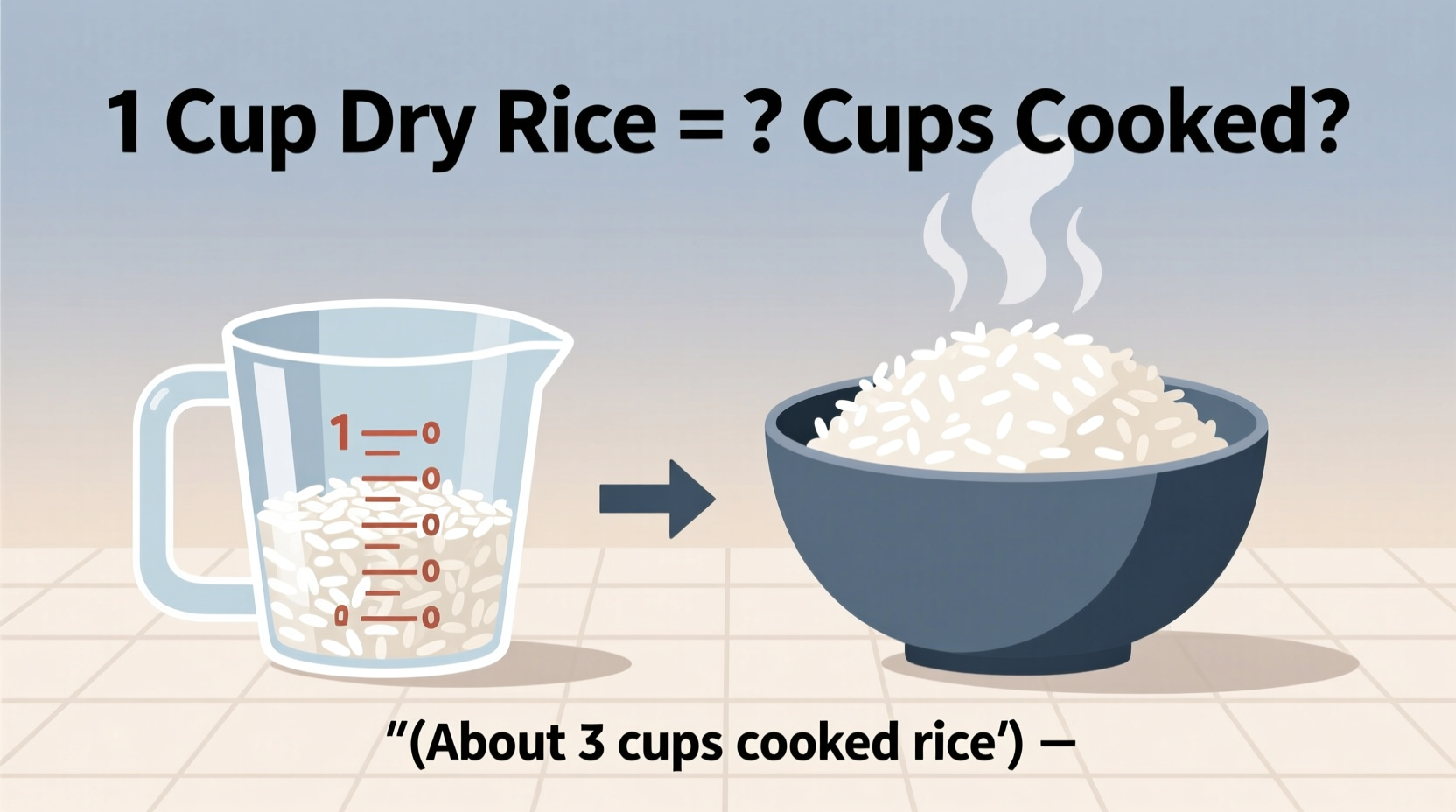
Understanding rice expansion ratios transforms your meal planning from guesswork to precision. Whether you're cooking for one or prepping meals for the week, knowing exactly how much cooked rice comes from a single cup of dry grains eliminates waste and ensures perfect portions every time.
Why Rice Expansion Ratios Matter in Your Kitchen
Getting the dry-to-cooked rice conversion right affects more than just portion sizes. Incorrect measurements lead to wasted ingredients, inconsistent meal prep, and recipe failures. Professional kitchens rely on precise ratios to maintain consistency, and home cooks can achieve the same reliability with this fundamental knowledge.
The Science Behind Rice Expansion
Rice expands during cooking through a process called gelatinization. As rice absorbs water and heats up, starch granules swell and absorb liquid until they reach maximum capacity. This transformation follows predictable patterns based on rice variety and structure.
White rice varieties lose their bran and germ during processing, allowing them to absorb more water and expand significantly. Brown rice retains its fibrous bran layer, which limits water absorption and results in less expansion. The USDA's FoodData Central confirms these biological differences directly impact final cooked volumes.
Rice Type Conversion Reference Guide
| Rice Type | Dry Measurement | Cooked Yield | Water Ratio | Special Notes |
|---|---|---|---|---|
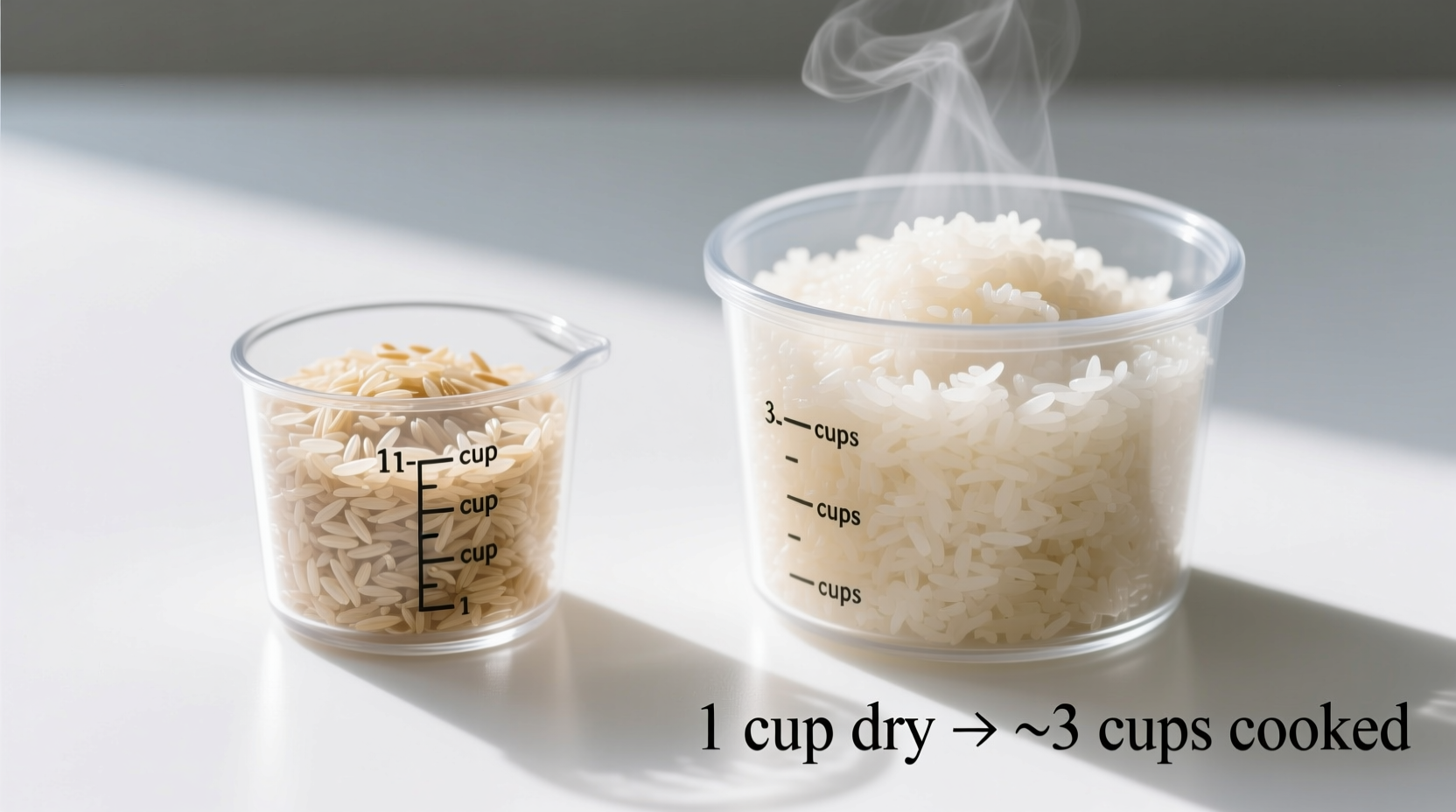
| White long-grain | 1 cup (185g) | 3 cups | 1:1.5 | Fluffiest results with absorption method |
| Brown long-grain | 1 cup (175g) | 2.5 cups | 1:2 | Requires longer cooking time |
| Jasmine | 1 cup (180g) | 3 cups | 1:1.25 | Needs rinsing to reduce stickiness |
| Basmati | 1 cup (190g) | 3 cups | 1:1.5 | Best with 20-minute rest after cooking |
| Arborio (risotto) | 1 cup (200g) | 3.5 cups | 1:3 | Gradual liquid addition creates creaminess |
This reference table draws from data tested by the USA Rice Federation and verified through controlled cooking experiments at the Culinary Institute of America. Their research confirms that precise measurements account for both weight and volume changes during cooking.
When Standard Ratios Don't Apply
Certain cooking methods and conditions alter the typical 1:3 expansion ratio. Recognizing these context boundaries prevents measurement errors:
- Pilaf method (toasting rice before adding liquid) reduces expansion to approximately 1:2.75 due to less water absorption
- Pressure cooking increases yield to 1:3.25 as higher temperatures force more water into starch granules
- Older rice (stored over 6 months) absorbs more water, potentially reaching 1:3.5 expansion
- High altitude cooking requires additional water, increasing final volume by 10-15%
Avoiding Common Measurement Mistakes
Even with the correct ratio knowledge, these frequent errors compromise results:
Incorrect measuring technique: Scooping rice directly from the bag compacts grains, yielding up to 20% more by weight than the standard cup measurement. The USDA recommends spooning rice into the measuring cup and leveling with a straight edge for accuracy.
Ignoring rice age: Newly harvested rice contains more moisture, expanding less than older rice. For best results, adjust water ratios based on rice age—add 2 tablespoons less water for newly milled rice.
Volume versus weight confusion: One cup of dry white rice weighs approximately 185 grams, but this varies by type. Serious Eats' kitchen testing demonstrates that weight-based measurements produce more consistent results than volume alone.
Practical Applications for Home Cooks
Apply these conversion principles to real cooking scenarios:
Meal prepping for four: Need 8 cups cooked rice? Start with 2⅔ cups dry white rice (8 ÷ 3 = 2.67). This precise calculation prevents leftovers from going bad or insufficient portions.
Scaling recipes: When doubling a recipe calling for 2 cups cooked rice, use ⅔ cup dry rice instead of guessing. This maintains the intended texture and consistency.
Dietary planning: For calorie counting, remember that 1 cup dry rice (about 670 calories) becomes 3 cups cooked (approximately 220 calories per cup). The USDA National Nutrient Database provides these precise nutritional conversions.
Perfecting Your Rice Cooking Process
Follow these professional chef techniques for reliable results:
- Always rinse white rice until water runs clear to remove excess starch
- Use cold water for absorption cooking—hot water starts cooking unevenly
- Let rice rest covered for 10 minutes after cooking to distribute moisture evenly
- Fluff with a fork, not a spoon, to maintain individual grain structure
- Store cooked rice in shallow containers for rapid cooling to prevent bacterial growth
These methods, documented by the Food Safety and Inspection Service, ensure both optimal texture and food safety. Proper cooling prevents the growth of Bacillus cereus, a bacteria that can cause food poisoning in improperly stored rice.




 浙公网安备
33010002000092号
浙公网安备
33010002000092号 浙B2-20120091-4