
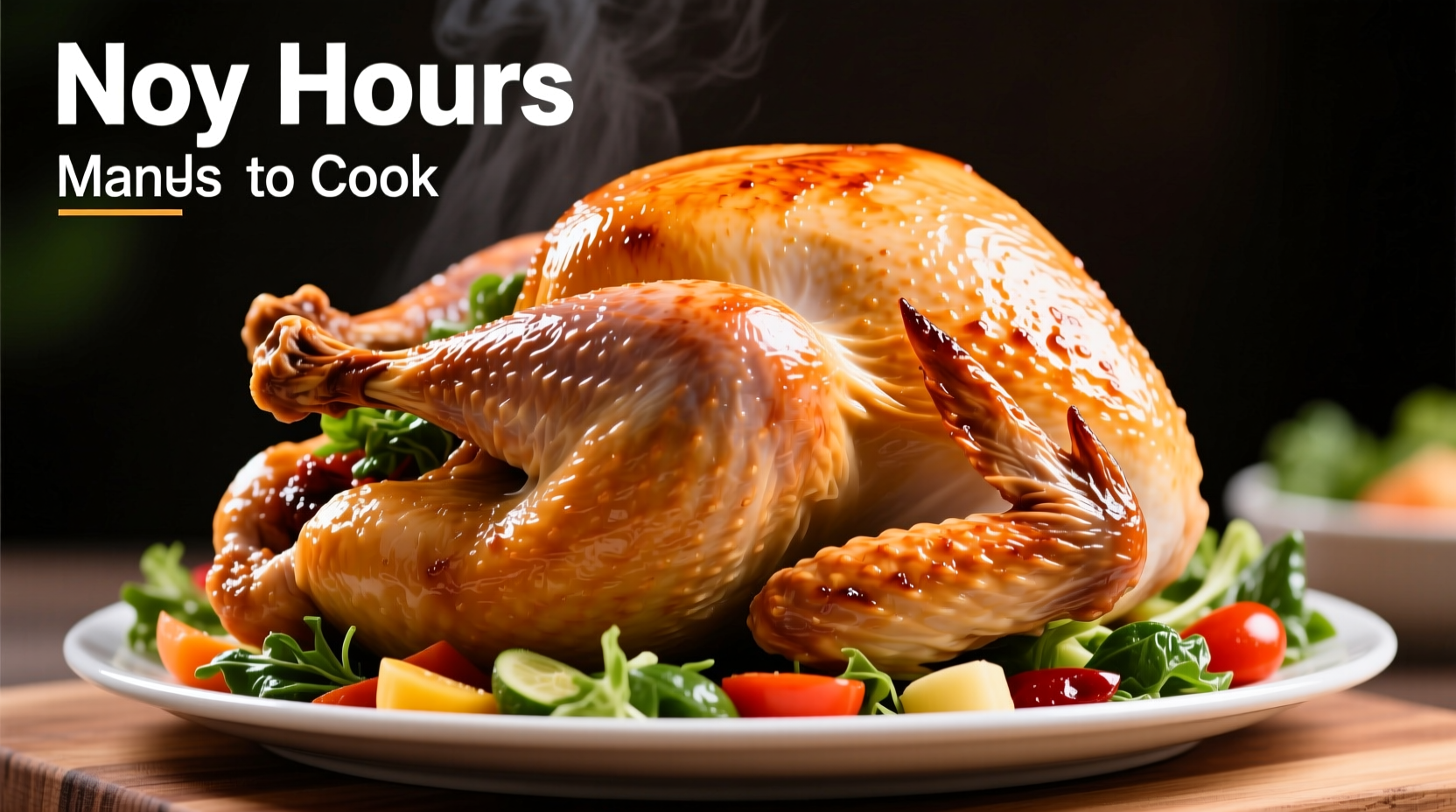
Getting your turkey cooking time right isn't just about following a simple formula—it's the difference between a dry, overcooked bird and a perfectly moist centerpiece for your holiday meal. As someone who's spent years mastering traditional European roasting techniques, I've seen how small timing adjustments transform results. This guide cuts through confusing online advice with science-backed timing you can trust.
The Essential Turkey Cooking Time Formula
While many websites offer conflicting advice, the USDA Food Safety and Inspection Service provides clear, tested guidelines that prioritize both safety and quality. The foundation of perfect turkey timing rests on three critical elements: weight, oven temperature, and stuffing status.
Here's the professional formula used by experienced chefs:
| Turkey Weight | Unstuffed Cooking Time | Stuffed Cooking Time |
|---|---|---|
| 8-10 lbs | 2.25-3 hours | 3-3.75 hours |
| 10-14 lbs | 3-3.75 hours | 3.75-4.5 hours |
| 14-18 lbs | 3.75-4.25 hours | 4.25-5 hours |
| 18-20 lbs | 4.25-4.5 hours | 4.5-5.25 hours |
| 20-24 lbs | 4.5-5 hours | 5-5.75 hours |
This chart reflects data from the USDA Food Safety and Inspection Service, the authoritative source for safe poultry preparation in the United States. Note that these times assume an oven temperature of 325°F (163°C), which the USDA specifies as the minimum safe temperature for cooking poultry.
Key Variables That Change Your Cooking Timeline
Stuffed vs. Unstuffed: The 15% Time Difference
Many home cooks don't realize that stuffing adds significant cooking time. When you place stuffing inside the turkey cavity, it creates an insulating effect that slows heat penetration. The USDA recommends adding approximately 15 minutes per pound when cooking a stuffed turkey compared to an unstuffed one.
Important safety note: If you choose to stuff your turkey, the stuffing must reach 165°F (74°C) at the center. Many food safety experts, including those at the FDA, actually recommend cooking stuffing separately to eliminate this risk and ensure even cooking.
Fresh vs. Frozen: The Thawing Factor
Your starting point dramatically impacts cooking time. A turkey that hasn't fully thawed will cook unevenly and take significantly longer. Allow approximately 24 hours of refrigerator thawing time for every 4-5 pounds of turkey. A partially frozen turkey might require up to 50% more cooking time than the standard formula.
Oven Type Matters: Convection vs. Conventional
Convection ovens circulate hot air, typically reducing cooking time by about 25%. If using a convection oven, you'll need to adjust both time and temperature:
- Reduce oven temperature by 25°F (14°C)
- Expect cooking time to be 20-30% shorter
- Monitor temperature more frequently during the final hour
The Critical Temperature Checkpoint
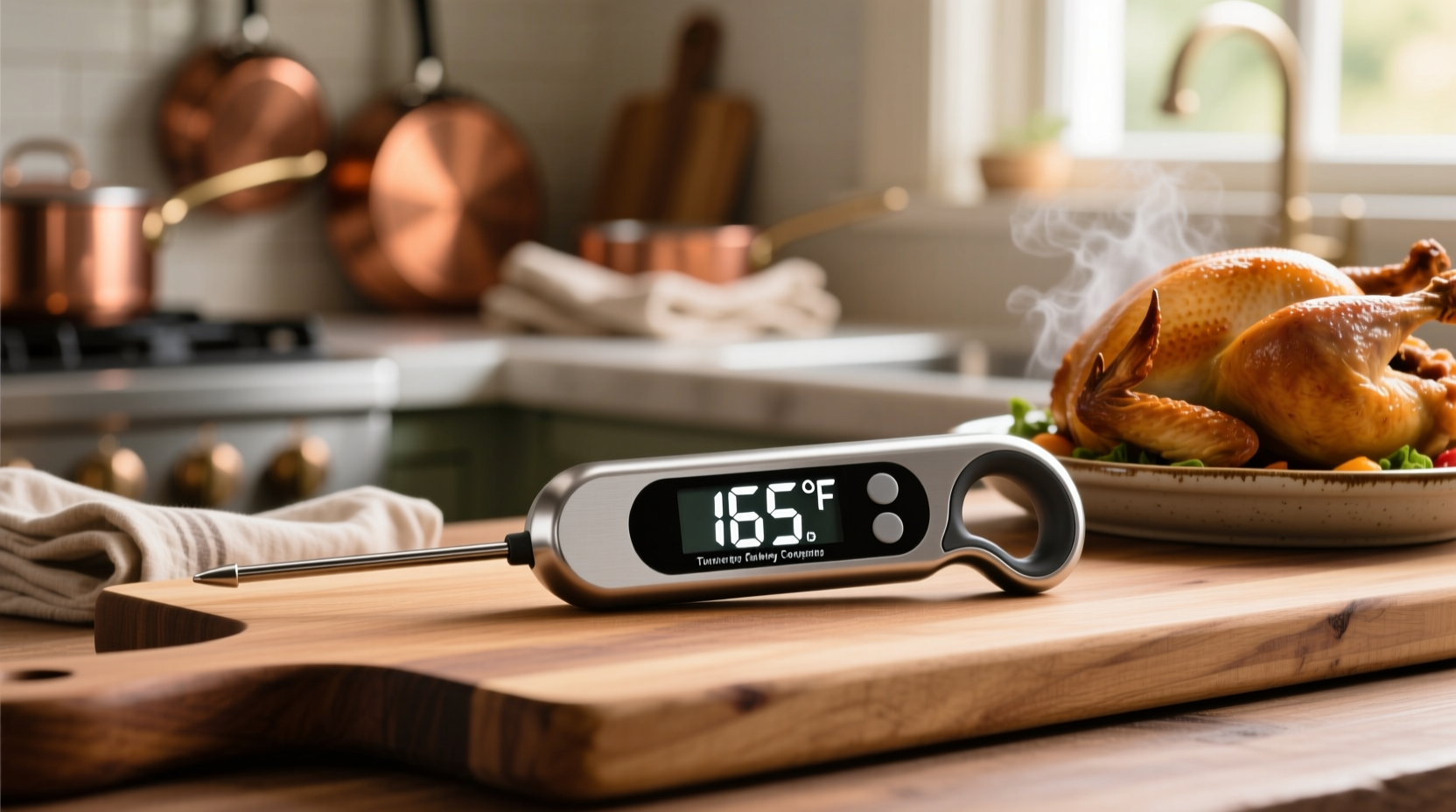
No matter what cooking time formula you follow, the only reliable indicator of doneness is internal temperature. Relying solely on time estimates risks either undercooked poultry (a serious food safety hazard) or dry, overcooked meat.
Insert an instant-read thermometer into these critical areas:
- Chest/breast: 165°F (74°C) minimum
- Thigh: 175°F (79°C) for optimal tenderness
- Wing joint: 170°F (77°C)
- Stuffing (if used): 165°F (74°C)
The Centers for Disease Control and Prevention emphasizes that visual cues like clear juices or skin color aren't reliable indicators of safety. Only a properly calibrated thermometer provides certainty.
Your Step-by-Step Cooking Timeline
Follow this hour-by-hour guide for stress-free turkey preparation:
4 Hours Before Cooking
Remove turkey from refrigerator to take the chill off—this promotes more even cooking. Pat dry thoroughly with paper towels (moisture on the skin prevents proper browning).
30 Minutes Before Roasting
Season and prepare your turkey. If using butter or oil under the skin, now's the time. Insert thermometer probe into thickest part of breast if using an oven-safe model.
During Cooking
For a 14-pound unstuffed turkey at 325°F:
- First 90 minutes: No need to check—let the oven work
- After 2 hours: Check internal temperature for the first time
- Every 30 minutes thereafter: Monitor temperature progression
- When breast reaches 150°F (66°C): Tent loosely with foil if browning too quickly
Final Stages
When the thermometer reads 160°F (71°C) in the breast, remove the turkey from the oven. Carryover cooking will raise the temperature to the safe 165°F (74°C) mark during resting. This critical resting period (minimum 20-30 minutes) allows juices to redistribute throughout the meat.
Troubleshooting Common Timing Issues
Turkey Cooking Too Slowly
If your turkey isn't progressing toward target temperatures:
- Verify your oven temperature with an independent oven thermometer
- Check if the turkey was fully thawed
- Ensure the oven door isn't being opened frequently
- Consider rotating the pan for more even heat exposure
Turkey Cooking Too Quickly
If temperatures are rising faster than expected:
- Reduce oven temperature by 25°F (14°C)
- Tent loosely with foil to slow browning
- Move turkey to a lower oven rack position
- Check if your thermometer is properly calibrated
Why Traditional Timing Rules Need Updating
Many family recipes cite outdated cooking times based on higher oven temperatures (350°F+) that were common decades ago. Modern food safety research shows that lower, slower cooking at 325°F produces juicier results while still meeting safety requirements. The National Center for Home Food Preservation at Kansas State University has documented how precise temperature control prevents the moisture loss that plagues traditional high-heat methods.
Expert Tips for Perfect Results Every Time
- Dry brine overnight: Salt the turkey 24-48 hours before cooking for deeper flavor and moisture retention
- Use a remote thermometer: Avoid constant oven opening with a wireless probe thermometer
- Start dark meat first: Position turkey with legs facing toward the heat source for more even cooking
- Butter under skin: Creates a protective layer that prevents breast meat from drying out




 浙公网安备
33010002000092号
浙公网安备
33010002000092号 浙B2-20120091-4