
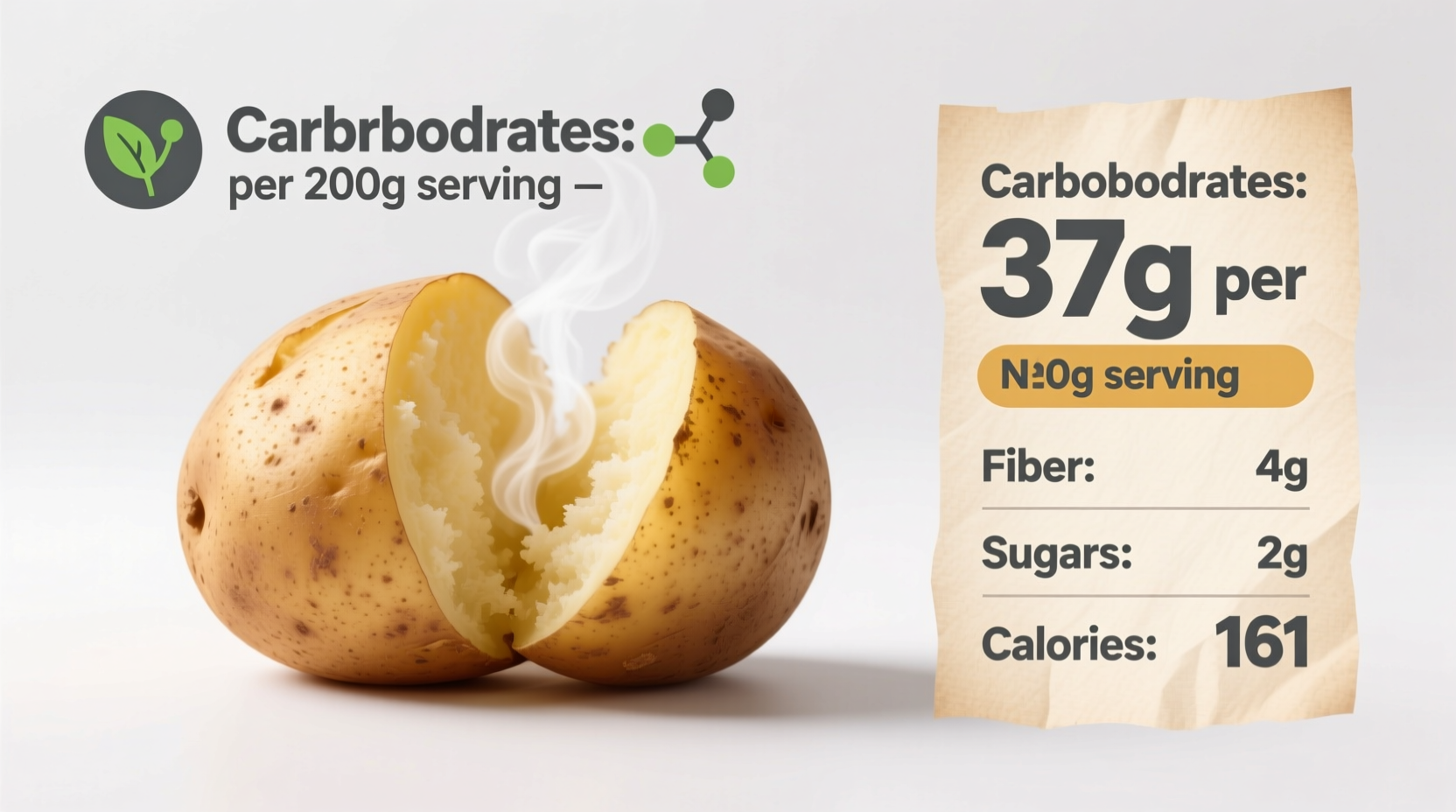
A medium-sized (173g) baked Russet potato with skin contains approximately 37 grams of total carbohydrates, including 3.6g of dietary fiber and 2.8g of natural sugars. This represents about 12-15% of the recommended daily carbohydrate intake for most adults following a 2,000-calorie diet.
Understanding the exact carbohydrate content in baked potatoes is essential for anyone managing their diet, whether for weight control, diabetes management, or athletic performance. This comprehensive guide provides accurate, science-backed information about potato carbohydrates, how different factors affect their nutritional profile, and how to incorporate them wisely into various eating plans.
Breaking Down Baked Potato Carbohydrates
When examining how many carbohydrates in a baked potato, it's important to understand that not all carbs are created equal. A baked potato's carbohydrate composition includes:
- Starch (approximately 30.5g in a medium potato) - the primary carbohydrate that provides energy
- Dietary fiber (3.6g) - crucial for digestive health and blood sugar regulation
- Natural sugars (2.8g) - primarily glucose and fructose
The fiber content is particularly valuable, contributing nearly 15% of the recommended daily fiber intake. Most of this fiber comes from the skin, which is why leaving the skin on significantly improves the nutritional profile.
How Potato Size Affects Carb Count
One of the most critical factors in determining how many carbohydrates in a baked potato is its size. The USDA FoodData Central provides these standard measurements:
| Portion Size | Weight (grams) | Total Carbohydrates | Dietary Fiber |
|---|---|---|---|
| Small baked potato | 138g | 29g | 2.9g |
| Medium baked potato (standard) | 173g | 37g | 3.6g |
| Large baked potato | 299g | 63g | 6.3g |
| Per 100g serving | 100g | 21g | 2.1g |
This USDA data shows why portion control matters significantly when tracking carbohydrate intake. Many people unknowingly consume double or triple the standard serving size, dramatically increasing their carb consumption.

Factors That Change Carbohydrate Content
Several variables affect the final carbohydrate content in baked potatoes, making it essential to understand these context boundaries when planning meals:
Potato Variety Differences
Not all potatoes are nutritionally identical. While Russet potatoes are most commonly baked:
- Russet (Idaho): Highest starch content (37g carbs per medium)
- Yukon Gold: Slightly lower starch (34g carbs per medium)
- Red potatoes: Lower glycemic impact (32g carbs per medium)
- Sweet potatoes: Higher sugar content but more fiber (41g carbs per medium)
According to research published in the American Journal of Clinical Nutrition, different potato varieties can vary by up to 15% in their carbohydrate composition, which significantly impacts blood sugar responses.
Cooking Method Impact
The way you prepare your potato affects its carbohydrate profile:
- Baking: Concentrates carbohydrates as water evaporates
- Boiling: Leaches some starch into water (reduces net carbs slightly)
- Cooling after cooking: Increases resistant starch by up to 30%, reducing net digestible carbs
A study from the Food Chemistry journal demonstrated that cooling cooked potatoes for 24 hours increases resistant starch content, effectively lowering the glycemic impact by approximately 25%.
Nutritional Context: Where Baked Potatoes Fit
Understanding how many carbs in a medium baked potato becomes more meaningful when placed in nutritional context:
- Represents 12-15% of daily carb needs on a 2,000-calorie diet
- Contains more potassium than a banana (1,600mg vs. 422mg)
- Provides 30% of daily vitamin C needs
- Has a glycemic index of approximately 111 (high) when served hot
For those following specific dietary patterns:
- Keto diets: Generally too high in carbs (typically limited to 20-50g daily)
- Mediterranean diets: Excellent fit when consumed in moderation
- Diabetic meal planning: Can be included with careful portion control and pairing with protein/fat
Practical Tips for Managing Potato Carbohydrates
Whether you're counting carbs for health reasons or simply eating mindfully, these evidence-based strategies help you enjoy potatoes while managing carbohydrate intake:
Portion Control Techniques
Use visual cues to estimate proper portions:
- Medium potato = size of a computer mouse
- Small potato = size of a tennis ball
- Track using food scales until you develop accurate visual estimation
Smart Pairing Strategies
Combine potatoes with these to reduce blood sugar impact:
- Fat sources (olive oil, avocado) slow carbohydrate digestion
- Protein (chicken, fish, beans) balances the meal
- Vinegar-based dressings can lower glycemic response by up to 35%
Preparation Hacks
Maximize nutritional benefits while managing carbs:
- Always leave the skin on for extra fiber
- Cool potatoes before eating to increase resistant starch
- Avoid adding high-carb toppings like butter or sour cream in excess
- Try half-potato portions paired with non-starchy vegetables
Common Misconceptions About Potato Carbs
Several myths persist about baked potato carb count that deserve clarification:
- Myth: Potatoes are "empty calories" with no nutritional value
Fact: They provide significant potassium, vitamin C, and fiber - Myth: All carbohydrates in potatoes immediately spike blood sugar
Fact: Fiber content and preparation method significantly affect glycemic response - Myth: Sweet potatoes are always a lower-carb alternative
Fact: They contain slightly more total carbs but have a lower glycemic index
Research from the National Institutes of Health shows that when consumed as part of a balanced meal, potatoes can fit within healthy eating patterns for most people, contrary to popular low-carb diet narratives.
When Baked Potatoes Fit Your Dietary Goals
Despite carb concerns, baked potatoes offer valuable nutrition when incorporated thoughtfully:
- For active individuals: Excellent source of sustained energy before workouts
- For digestive health: Resistant starch acts as a prebiotic when cooled
- For budget-conscious eaters: One of the most affordable nutrient-dense foods
- For family meals: Naturally gluten-free and versatile for various dietary needs
The key is understanding your personal carbohydrate needs and adjusting portions accordingly. For most active adults without metabolic concerns, a medium baked potato 2-3 times weekly can be part of a balanced diet.




 浙公网安备
33010002000092号
浙公网安备
33010002000092号 浙B2-20120091-4