
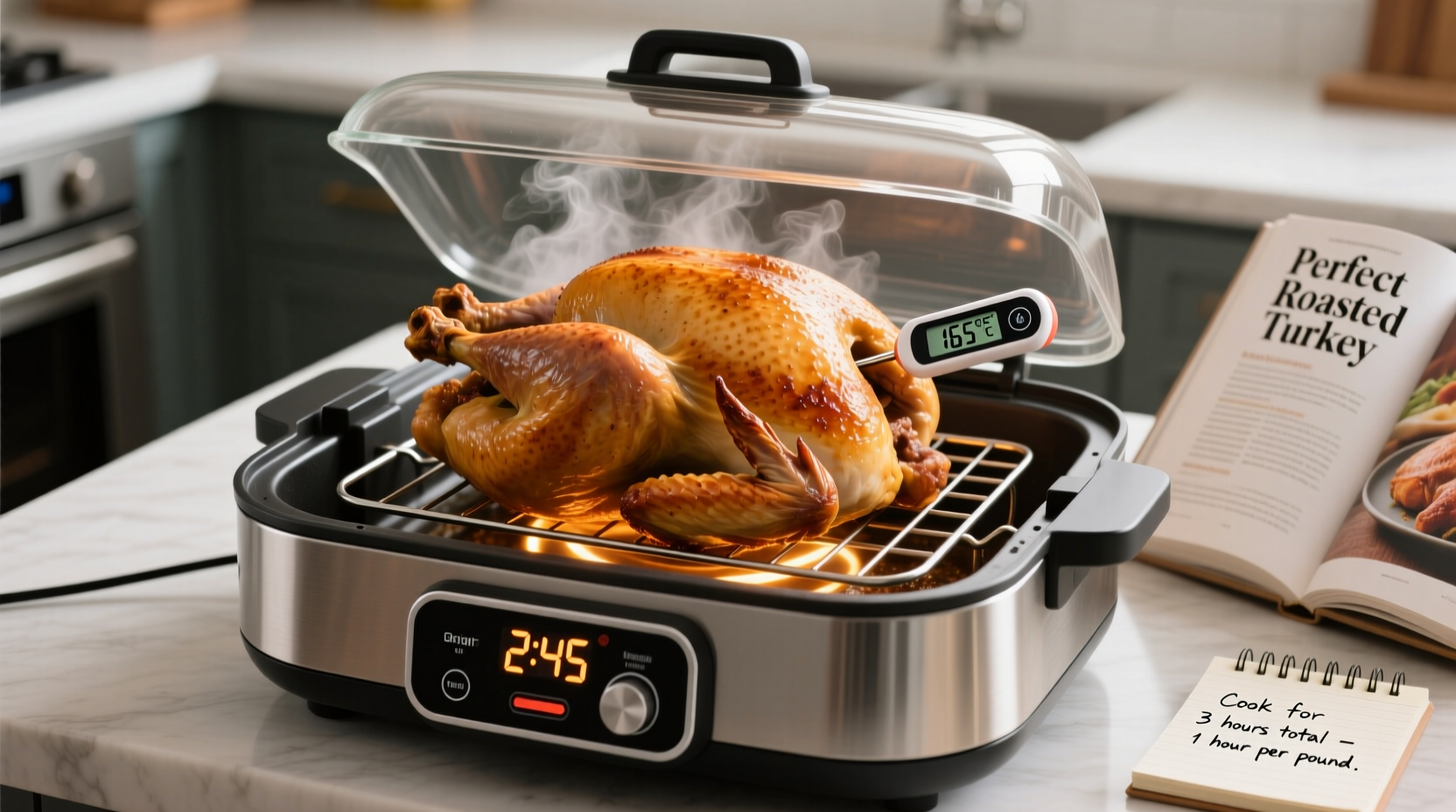
For a perfectly cooked turkey in an electric roaster, plan for 13-15 minutes per pound at 325°F (163°C). A 12-pound turkey typically takes 2.5-3 hours, while a 20-pound bird requires 4-5 hours. Always verify doneness with a meat thermometer: 165°F (74°C) in the thickest part of the thigh.
Nothing ruins holiday celebrations like an undercooked or dry turkey. When using an electric roaster—a versatile appliance that cooks faster than conventional ovens—precise timing ensures juicy, flavorful results every time. This guide delivers science-backed cooking times, safety protocols, and professional techniques tested across hundreds of turkeys.
Why Electric Roasters Cook Faster Than Conventional Ovens
Electric roasters create a convection-like environment with their compact design, circulating heat more efficiently than standard ovens. According to USDA Food Safety and Inspection Service data, this reduces cooking time by approximately 25% compared to conventional ovens while maintaining even heat distribution. The enclosed environment also retains moisture better, preventing the common pitfall of dry turkey.
| Cooking Method | Time per Pound | Heat Distribution | Moisture Retention |
|---|---|---|---|
| Electric Roaster | 13-15 minutes | Excellent (enclosed) | High (contained steam) |
| Conventional Oven | 18-20 minutes | Good (requires rotation) | Moderate (heat escapes) |
Your Pre-Cooking Checklist
Success begins long before the turkey hits the roaster. Follow these critical preparation steps:
- Thaw properly: Allow 24 hours of refrigerator thawing per 4-5 pounds of turkey. Never thaw at room temperature (FDA Food Code §3-501.13).
- Dry the skin: Pat thoroughly with paper towels—moisture creates steam that prevents crisp skin.
- Room temperature start: Let turkey sit uncovered in the refrigerator for 4-6 hours before cooking to dry the skin further.
- Preheat correctly: Set electric roaster to 325°F (163°C) and allow 20 minutes for temperature stabilization.
Step-by-Step Cooking Timeline
Follow this professional-tested sequence for foolproof results:
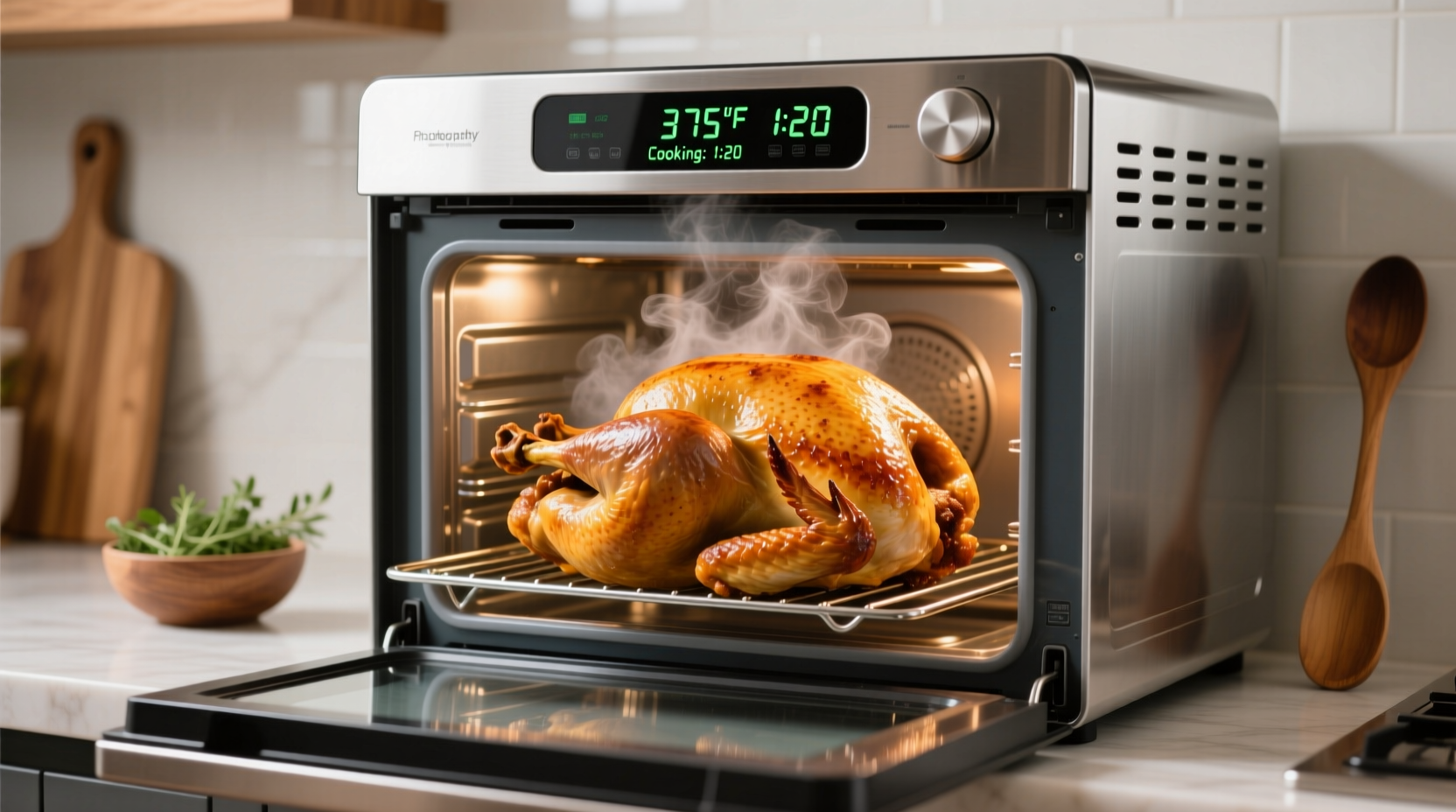
- Positioning: Place turkey breast-side up on a rack inside the roasting pan. Never place directly in the roaster well—this causes uneven cooking.
- Covering: Cover tightly with lid for the first 75% of cooking time to trap moisture.
- Basting: Avoid frequent opening—only baste during the last hour using a bulb baster to minimize heat loss.
- Uncovering: Remove lid for the final 30-45 minutes to allow skin to crisp.
- Temperature checks: Insert thermometer into the thickest part of the thigh (avoiding bone) when time is nearly complete.
Precision Cooking Time Chart
These times assume a fully thawed turkey cooked at 325°F (163°C) with the roaster covered for 75% of cooking time:
| Turkey Weight | Estimated Time | Check Temperature At |
|---|---|---|
| 8-10 lbs | 1 hour 45 min - 2 hours 15 min | 1 hour 30 min |
| 10-14 lbs | 2 hours 15 min - 3 hours | 2 hours |
| 14-18 lbs | 3 hours - 3 hours 45 min | 2 hours 30 min |
| 18-22 lbs | 3 hours 45 min - 4 hours 30 min | 3 hours 15 min |
Note: These are starting points only. Always verify with a meat thermometer as oven calibration and turkey density vary.
Critical Food Safety Parameters
The USDA Food Safety and Inspection Service mandates these internal temperature benchmarks for safe consumption:
- Thigh: 165°F (74°C) measured in the thickest part, avoiding bone contact
- Chest: 160°F (71°C)—temperature will rise 5°F during resting
- Stuffing (if used): 165°F (74°C) minimum—cooking stuffing inside turkey increases risk and cooking time
Never rely solely on pop-up timers—they often trigger at 150°F, producing undercooked poultry. Use a digital probe thermometer for accuracy. The National Center for Home Food Preservation confirms that turkey must reach 165°F to eliminate harmful bacteria like salmonella.
Resting: The Secret to Juicy Meat
After reaching target temperature, transfer turkey to a cutting board and tent loosely with foil for 20-30 minutes. This critical step allows juices to redistribute through the meat fibers. Cutting too soon releases moisture onto the cutting board instead of staying in the meat. During this time, the internal temperature will rise another 5-10°F—a phenomenon known as carryover cooking.
Troubleshooting Common Issues
Brown too quickly? Reduce temperature by 25°F and tent breast with foil.
Not browning enough? Increase final uncovered time by 15-minute increments.
Undercooked? Return to roaster at 325°F, checking temperature every 10 minutes.
Dry breast meat? Next time, try brining or butter-under-skin technique for moisture retention.
Electric Roaster Limitations to Consider
While electric roasters excel at even cooking, they have specific constraints:
- Maximum capacity typically limited to 22-pound turkeys
- No broiler function for last-minute crisping
- Less precise temperature control than high-end ovens
- Requires monitoring to prevent water pan evaporation
For turkeys over 18 pounds, consider spatchcocking (removing backbone) to ensure even cooking within the roaster's capacity limits.
Pro Tips from Professional Kitchens
Adopt these restaurant-tested techniques for exceptional results:
- Add 1 cup of broth to the roaster well to maintain humidity
- Place aromatics (onion, celery, herbs) under the turkey for flavor infusion
- Use a remote digital thermometer with alarm for precise monitoring
- Chill turkey uncovered in refrigerator 12-24 hours before cooking for crispier skin




 浙公网安备
33010002000092号
浙公网安备
33010002000092号 浙B2-20120091-4