
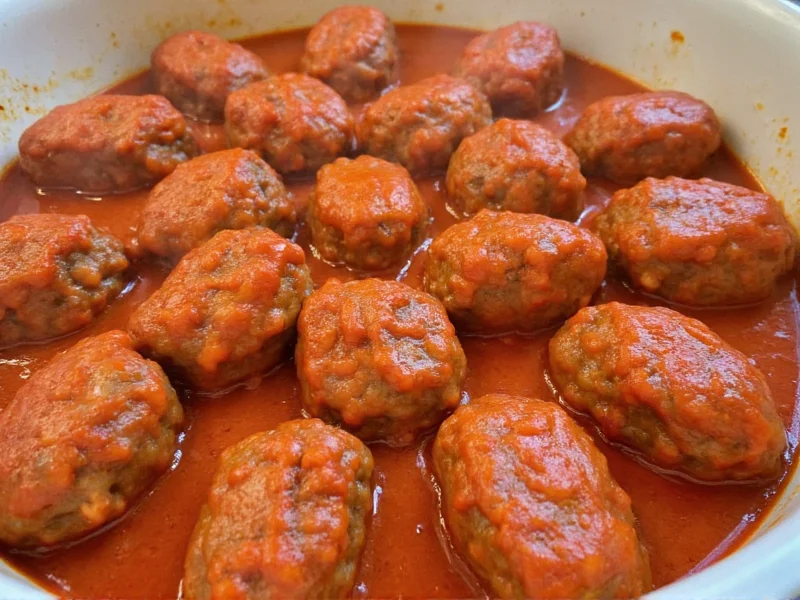
Getting sausage balls perfectly cooked requires understanding both timing and visual indicators. While the standard 20-25 minute guideline works for most traditional recipes, several factors influence the exact cooking duration. This comprehensive guide provides precise instructions to achieve consistently delicious results every time you make this popular appetizer.
Factors That Affect Sausage Ball Cooking Time
The seemingly simple question of how long to cook sausage balls has multiple variables that impact the final timing. Understanding these elements helps you adjust cooking duration for perfect results:
- Oven temperature accuracy - Many home ovens run hotter or cooler than displayed. An oven thermometer ensures precise temperature.
- Sausage ball size - Standard 1-inch balls need 20-25 minutes, while mini (0.5-inch) versions require 15-18 minutes.
- Recipe composition - Higher cheese content may require slightly longer baking to set properly.
- Baking surface - Dark metal pans conduct heat faster than light-colored or glass dishes.
- Oven rack position - Middle rack provides most even heat distribution for consistent sausage balls baking time.
Step-by-Step Baking Instructions
Follow these detailed steps for foolproof sausage balls every time:
- Preheat your oven to 350°F (175°C) for at least 15 minutes before baking
- Line a baking sheet with parchment paper or lightly grease it
- Roll sausage mixture into uniform 1-inch balls (use a cookie scoop for consistency)
- Place balls 1 inch apart on prepared baking sheet
- Bake on center oven rack for 20-25 minutes
- Check for doneness at 20 minutes using visual and temperature indicators
- Remove when golden brown and internal temperature reaches 160°F (71°C)
- Cool for 5 minutes before serving
How to Determine When Sausage Balls Are Fully Cooked
While timing provides a good starting point, these indicators confirm perfect doneness for your how long to bake sausage balls at 350 degrees question:
- Visual cues: Golden brown color on top and slightly firm to the touch
- Internal temperature: 160°F (71°C) measured with an instant-read thermometer
- Texture: Slightly springy when gently pressed, not soft or doughy
- Cooking surface: Bottoms should be lightly browned, not pale
Never rely solely on appearance or timing. The only foolproof method to ensure food safety is checking the internal temperature, especially important for sausage balls internal temperature verification.
| Cooking Method | Temperature | Time Required | Special Notes |
|---|---|---|---|
| Conventional Oven | 350°F (175°C) | 20-25 minutes | Standard method; rotate pan halfway for even browning |
| Air Fryer | 325°F (163°C) | 10-12 minutes | Shake basket halfway; don't overcrowd |
| Muffin Tin | 350°F (175°C) | 25-30 minutes | Creates uniform shape; easier portion control |
| Reheating | 325°F (163°C) | 8-10 minutes | Best method for maintaining texture |
Troubleshooting Common Cooking Issues
Even with precise timing, problems can occur. Here's how to address them:
Undercooked Sausage Balls
If your sausage balls haven't reached 160°F internally:
- Return to oven for 3-5 minute increments until safe temperature is reached
- Check oven temperature with a separate thermometer
- Consider making smaller balls next time for more consistent cooking time for homemade sausage balls
Overcooked or Dry Sausage Balls
If sausage balls are too dry or browned:
- Reduce oven temperature by 25°F next time
- Shorten baking time by 3-5 minutes
- Ensure accurate measurement of dry ingredients (too much biscuit mix causes dryness)
- Try placing oven rack in a lower position for gentler top heat
Advanced Tips for Perfect Sausage Balls
Elevate your sausage ball game with these professional techniques:
- Chill before baking: Refrigerate rolled balls for 15-20 minutes to help them maintain shape
- Uniform sizing: Use a #60 cookie scoop (1.5 tablespoons) for consistent how long do sausage balls take in the oven
- Temperature testing: Insert thermometer into side of ball for most accurate reading
- Resting time: Allow 5 minutes after baking for flavors to settle and texture to firm up
- Ingredient temperature: Use cold ingredients to prevent premature melting of cheese
Variations and Their Impact on Cooking Time
Different recipe variations require timing adjustments:
- Cheese-heavy recipes: May need 2-3 extra minutes to set properly
- Gluten-free versions: Often require slightly lower temperature (325°F) and same time
- Mini sausage balls: Reduce time to 15-18 minutes for proper mini sausage balls baking instructions
- Air fryer method: Cut time nearly in half but monitor closely for even browning
Always check for doneness 3-5 minutes before the minimum recommended time, as oven variations significantly impact the actual perfect sausage ball cooking time.
Food Safety Considerations
Proper cooking time isn't just about texture—it's critical for food safety. Raw sausage contains bacteria that require thorough cooking to eliminate. The USDA recommends cooking pork sausage to a minimum internal temperature of 160°F (71°C). This temperature kills harmful pathogens while preserving moisture.
Using an instant-read thermometer is the only reliable way to verify your sausage balls have reached a safe temperature. Visual cues alone cannot guarantee food safety, making temperature verification essential for any how to know when sausage balls are done determination.
Storage and Reheating Guidelines
Proper storage maintains quality and safety:
- Room temperature: Consume within 2 hours
- Refrigeration: Store in airtight container for 3-4 days
- Freezing: Keep in freezer bags for up to 3 months
- Reheating: 325°F oven for 8-10 minutes or until internal temperature reaches 140°F
When reheating, avoid microwaving as it creates uneven heating and rubbery texture. The oven or air fryer preserves the original texture better, maintaining the quality of your sausage ball recipe cooking time investment.
How long should sausage balls cook at 375°F?
At 375°F, sausage balls typically require 18-22 minutes. Higher temperatures cook faster but increase risk of uneven browning. Check at 18 minutes and continue baking in 2-minute increments until they reach 160°F internally. The increased heat may cause cheese to brown more quickly on top while the interior finishes cooking.
Can I tell if sausage balls are done without a thermometer?
While a thermometer is most reliable, you can check without one by pressing gently on a ball. Properly cooked sausage balls should feel firm but slightly springy. The tops will be golden brown, and the bottoms should have light browning when lifted carefully. However, visual cues alone cannot guarantee food safety, so an instant-read thermometer remains the best method for determining how to know when sausage balls are done.
Why are my sausage balls taking longer than 25 minutes to cook?
Several factors could extend cooking time: an oven running cooler than set temperature, larger than standard ball size, high moisture content in ingredients, or baking on a dark-colored pan. Verify your oven temperature with a separate thermometer and ensure balls are no larger than 1.5 inches in diameter. If using a convection oven, reduce temperature by 25°F rather than extending time.
Do sausage balls need to rest after baking?
Yes, allowing sausage balls to rest for 5 minutes after baking improves texture and flavor. This brief resting period lets the internal structure set, making them easier to handle without falling apart. It also allows flavors to meld and the cheese to slightly reabsorb into the mixture, creating a more cohesive texture for optimal eating experience.
How can I prevent sausage balls from spreading while baking?
Chill the rolled sausage balls in the refrigerator for 15-20 minutes before baking. This firms up the fat in the sausage, preventing excessive spreading. Ensure your recipe has the proper ratio of dry to wet ingredients (typically 2 cups biscuit mix to 1 pound sausage), and avoid overmixing which can melt the cheese prematurely. Using a slightly cooler oven (325°F) can also help maintain shape during the initial heating phase.




 浙公网安备
33010002000092号
浙公网安备
33010002000092号 浙B2-20120091-4