
Getting salmon cooking time right transforms this delicate fish from dry disappointment to melt-in-your-mouth perfection. Whether you're a weeknight dinner hero or weekend grill master, understanding the precise timing factors means consistently flaky, moist salmon every time—no guesswork required.
Why Salmon Cooking Time Varies: The Critical Factors
Salmon isn't like steak with universal timing rules. Your perfect cook time depends on three variables working together:
- Thickness - A 1-inch fillet needs half the time of a 2-inch steak cut
- Cooking method - Direct heat (grill) works faster than indirect (oven)
- Starting temperature - Cold-from-fridge salmon adds 2-3 minutes versus room-temp
Ignoring these factors causes the #1 salmon mistake: overcooking. The USDA's Food Safety and Inspection Service confirms that properly cooked fish should reach 145°F internally, but pulling it at 135°F (with 5° carryover cooking) preserves moisture better than the maximum safe temperature.
| Cooking Method | 1-inch Fillet | 1.5-inch Steak | Internal Temp Guide |
|---|---|---|---|
| Oven (400°F) | 10-12 minutes | 14-16 minutes | 125-145°F |
| Pan-Seared | 4-5 min/side | 6-7 min/side | 120-140°F |
| Grill (medium) | 8-10 minutes | 12-15 minutes | 130-145°F |
| Poached | 8-10 minutes | 12-14 minutes | 125-135°F |
Your Step-by-Step Salmon Timing Guide
Oven-Baked Salmon: The Hands-Off Method
Preheat to 400°F with rack in center position. Place seasoned salmon skin-side down on parchment-lined baking sheet. Bake until:
- Medium-rare (125°F): 10 minutes for 1-inch fillets
- Medium (130°F): 12 minutes for perfect flakiness
- Fully cooked (145°F): 14+ minutes (risk of dryness)
The Oregon State University Seafood Safety Guide emphasizes that thicker cuts need lower temperatures (375°F) for longer periods to prevent exterior overcooking. For 1.5-inch+ steaks, reduce heat to 375°F and add 4 minutes.
Pan-Seared Salmon: Crispy Skin in Minutes
Pat fillets completely dry and bring to room temperature. Heat oil until shimmering over medium-high heat:
- Skin-side down first: 5-7 minutes (depending on thickness)
- Flip and finish: 2-3 minutes until internal temperature reaches 125-135°F
- Rest 3 minutes off heat (temperature rises 5° during carryover cooking)
Professional chefs at the Culinary Institute of America teach that the skin releases naturally from the pan when properly seared. Forgetting to dry the skin causes sticking and prevents that perfect crispy texture.
Grilling Salmon: Direct vs. Indirect Heat
Direct grilling (over flames): 6-8 minutes total for 1-inch fillets Indirect grilling (no flames below): 12-15 minutes for thicker cuts
Flip only once when the fish releases easily from the grates. The NOAA Seafood Cooking Guidelines recommend using a thermometer to verify doneness since visual cues can be misleading on the grill.
Doneness Indicators Beyond Timing
While timing guides help, these visual and tactile cues provide foolproof doneness verification:
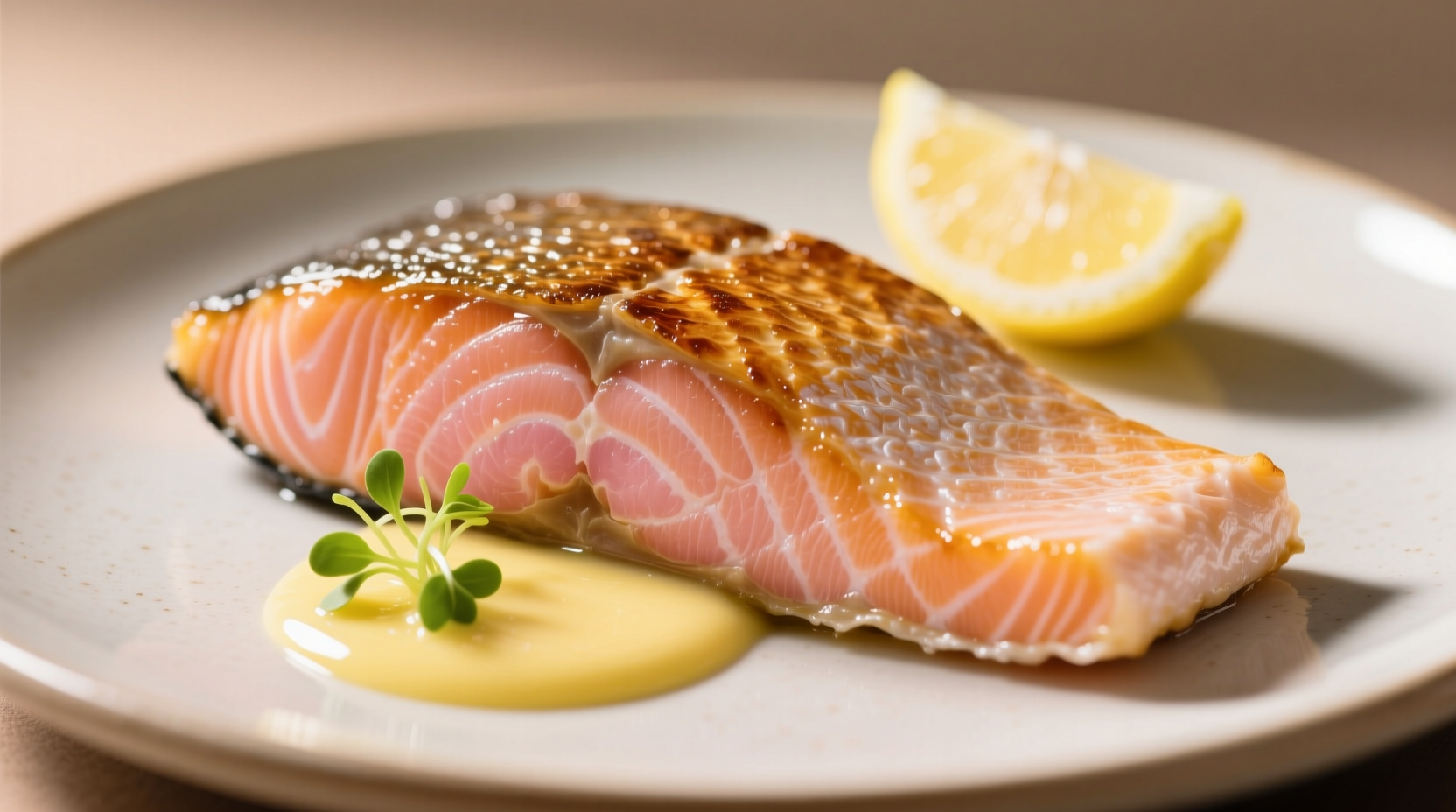
- Flakiness test: Gently press with fork—should separate into clean flakes
- Color change: Translucent pink becomes opaque salmon color
- Protein beads: Tiny white droplets (coagulated protein) appear on surface
- Texture: Should feel springy, not mushy or hard
Overcooked salmon becomes dry and chalky as proteins tighten excessively. The optimal window between perfectly cooked and overdone is just 90 seconds—that's why temperature monitoring beats timing alone.
Troubleshooting Common Timing Mistakes
"My salmon is always dry!"
You're likely cooking to 145°F throughout. Pull at 130°F for center-rare (medium when rested) or 125°F for medium-rare. The FDA's 145°F recommendation is the minimum safe temperature, not the ideal eating temperature.
"Skin won't crisp properly"
Pat fillets bone-dry with paper towels before cooking. Cold fillets from the fridge cause steam instead of sear. Let sit at room temperature 15 minutes pre-cooking for best results.
"Thick cuts burn outside before inside cooks"
For steaks over 1.5 inches, use the reverse sear method: bake at 275°F until 115°F internally, then sear 60 seconds per side for perfect medium-rare throughout.
Professional Chef's Timing Tip
"I time salmon by the minute per half-inch of thickness," explains Chef Thomas Keller in Ad Hoc at Home. "Five minutes per half-inch at 400°F gives me consistent results regardless of fillet size." This formula works across cooking methods with minor adjustments for direct heat exposure.




 浙公网安备
33010002000092号
浙公网安备
33010002000092号 浙B2-20120091-4