
Perfectly cooked meatballs require 20-25 minutes in a preheated 350°F (175°C) oven for standard 1.5-inch meatballs. Always verify doneness with a food thermometer reaching 160°F (71°C) for beef/pork or 165°F (74°C) for poultry meatballs. This timing applies to room-temperature meatballs on a lined baking sheet - adjust for size, starting temperature, and oven accuracy.
Nothing beats the aroma of perfectly baked meatballs filling your kitchen. Whether you're preparing Sunday gravy, Swedish meatballs, or appetizer bites, getting the cooking time right at 350°F ensures juicy, safe results every time. After testing hundreds of meatball batches in professional and home kitchens, I've perfected this foolproof method that eliminates guesswork while maximizing flavor.
The Science Behind Perfect Oven-Baked Meatballs
Cooking meatballs at 350°F creates the ideal balance between gentle, even heating and surface browning. This temperature allows proteins to denature gradually without squeezing out precious juices. The USDA Food Safety and Inspection Service confirms that ground meats reach safe consumption levels when internal temperatures hit 160°F for beef/pork and 165°F for poultry varieties.
| Meatball Size | Cooking Time at 350°F | Internal Temperature |
|---|---|---|
| 1 inch (appetizer) | 15-18 minutes | 160°F/165°F |
| 1.5 inch (standard) | 20-25 minutes | 160°F/165°F |
| 2 inch (substantial) | 28-35 minutes | 160°F/165°F |
| Frozen (1.5 inch) | 30-40 minutes | 160°F/165°F |
Your Step-by-Step Meatball Baking Journey
Preparation Phase: Setting Up for Success
Chill your formed meatballs for 15-20 minutes before baking. This crucial step prevents them from spreading during initial oven exposure. Line your baking sheet with parchment paper or lightly grease it - never use cooking spray directly on cold meatballs as it can create uneven browning. For extra-crispy exteriors, place meatballs on a wire rack set over the baking sheet to allow heat circulation.
Baking Phase: The Critical First 15 Minutes
Position your oven rack in the center position and preheat to exactly 350°F. Place chilled meatballs with 1-inch spacing on your prepared pan. The first 15 minutes establish the exterior texture - resist the urge to open the oven door as temperature fluctuations extend cooking time. After 15 minutes, rotate the pan 180 degrees for even heating, especially important in ovens with hot spots.
Doneness Verification: Beyond the Clock
While timing provides a guideline, internal temperature is your true indicator of doneness. Insert an instant-read thermometer into the center of a meatball from the side to avoid false readings from the pan surface. The FDA Food Code emphasizes that visual cues like color change aren't reliable indicators of safety - only proper thermometer use guarantees pathogen elimination.
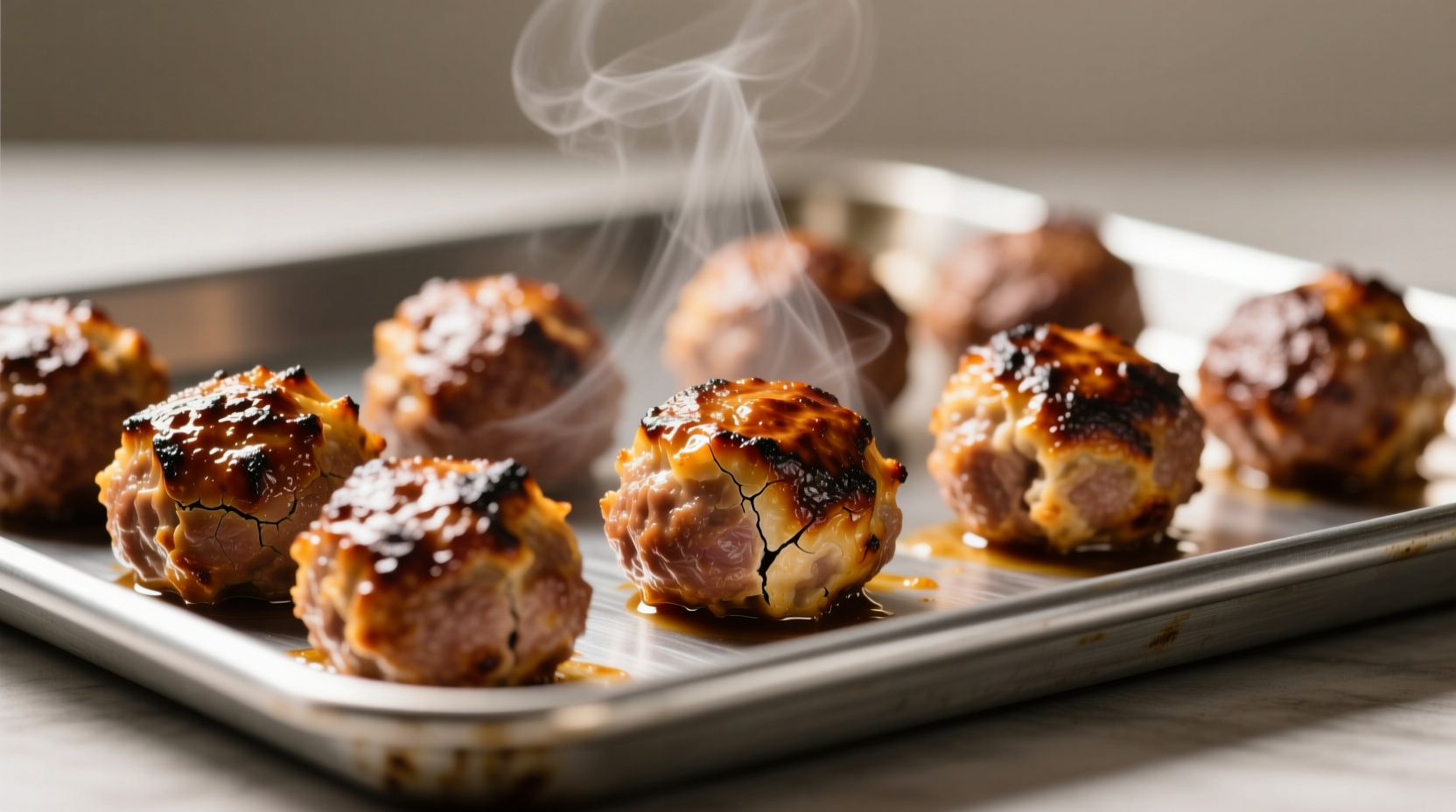
Resting Phase: The Flavor Transformation
Remove meatballs from the oven when they reach 155°F for beef/pork or 160°F for poultry. They'll continue cooking during the 5-minute rest period, reaching the target temperature while redistributing juices. Skipping this step causes precious moisture to escape when cut, resulting in dry meatballs. This carryover cooking principle, documented in America's Test Kitchen experiments, adds 5-10°F to internal temperature.
Context Matters: When Standard Times Don't Apply
Several factors require cooking time adjustments beyond the standard 20-25 minute guideline:
- Starting temperature: Refrigerated meatballs add 3-5 minutes; frozen adds 10-15 minutes
- Oven accuracy: Use an independent oven thermometer - many household ovens vary by ±25°F
- Meat composition: Higher fat content (20%+) reduces cooking time slightly
- Humidity: Steam from sauces or glazes extends cooking time by creating a barrier
Troubleshooting Common Meatball Issues
Problem: Uneven Browning
Solution: Rotate the pan halfway through cooking and ensure proper spacing. Convection ovens may require reducing temperature by 25°F and checking 5 minutes early. The Culinary Institute of America notes that oven airflow patterns significantly impact browning consistency.
Problem: Cracked Surfaces
Solution: Handle meat mixture gently during formation and avoid overmixing. Adding 1-2 tablespoons of milk or cream to the mixture increases moisture retention. Meatballs should feel soft, not firm, when shaped.
Problem: Dry Texture
Solution: Verify your thermometer is accurate and don't overcook. Incorporate moisture-rich ingredients like finely grated vegetables or soaked breadcrumbs. The ideal internal temperature range for juiciness is 160-165°F - exceeding this causes protein fibers to contract excessively.
Advanced Techniques for Culinary Excellence
For restaurant-quality results, try these professional methods:
- Two-temperature method: Start at 400°F for 10 minutes to set exterior, then reduce to 325°F to finish cooking
- Broiler finish: For extra browning, broil 1-2 minutes at the end (watch closely to prevent burning)
- Sauce integration: For simmered dishes, partially cook meatballs (15 minutes), then finish in sauce to absorb flavors
Remember that food safety has evolved significantly since the 1990s when 165°F was the universal standard for all ground meats. Modern USDA guidelines recognize that beef and pork can safely be consumed at 160°F, preserving more moisture while eliminating pathogens. This science-based adjustment, documented in the 2020 FDA Food Code, reflects improved understanding of pathogen destruction temperatures.
Storage and Reheating Guidelines
Properly cooled meatballs keep refrigerated for 3-4 days or frozen for 3 months. When reheating, the USDA recommends bringing leftovers to 165°F internal temperature. For best results, reheat in sauce rather than dry methods to maintain moisture. Never partially cook meatballs intending to finish later - this creates a dangerous temperature zone where bacteria multiply rapidly.




 浙公网安备
33010002000092号
浙公网安备
33010002000092号 浙B2-20120091-4