
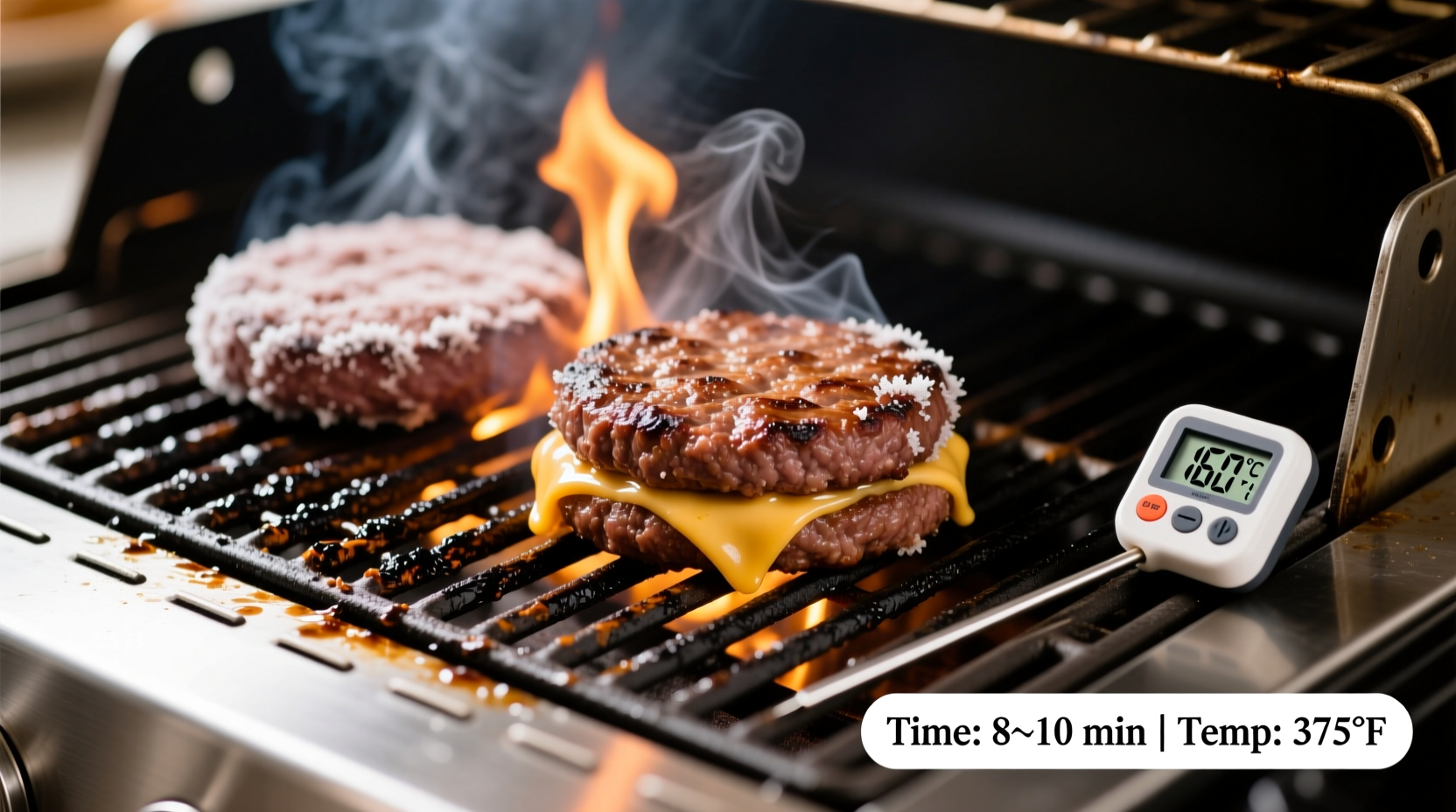
Nothing ruins a summer barbecue faster than dry, undercooked, or burnt frozen burgers. As someone who's grilled thousands of patties across professional kitchens and backyard cookouts, I've perfected the timing formula that delivers perfectly cooked frozen burgers every time. This guide cuts through the guesswork with science-backed timing, temperature control, and practical techniques you can implement immediately.
Why Frozen Burger Timing Matters More Than You Think
Grilling frozen burgers presents unique challenges that thawed patties don't face. The ice crystals inside frozen meat create steam pockets that affect texture and cooking consistency. According to USDA Food Safety and Inspection Service guidelines, ground beef must reach 160°F internally to eliminate harmful bacteria like E. coli and salmonella. The critical window between undercooked (unsafe) and overcooked (dry) is narrower with frozen patties because they take longer to heat through.
| Grill Type | Preheat Temperature | Total Cooking Time | Flipping Interval |
|---|---|---|---|
| Gas/Propane | 350-375°F | 15-18 minutes | Every 5 minutes |
| Charcoal | Moderate heat | 18-20 minutes | Every 5-6 minutes |
| Electric | Medium-high | 16-19 minutes | Every 5 minutes |
Your Step-by-Step Frozen Burger Grilling Timeline
Follow this precise cooking sequence for restaurant-quality results. The timeline below shows exactly what happens at each stage when grilling standard 1/3-pound frozen patties:
| Time Elapsed | Internal Temperature | Visual Indicators | Action Required |
|---|---|---|---|
| 0-5 minutes | 32-90°F | Sizzling begins, ice melts | Place patties on grill, don't press |
| 5 minutes | 90-120°F | Browning starts, releases from grates | Flip patties carefully |
| 10 minutes | 120-145°F | Surface fully browned, juices appear | Flip again, check for flare-ups |
| 15 minutes | 145-160°F | Juices run clear, firm to touch | Take final temperature reading |
Critical Food Safety Verification Steps
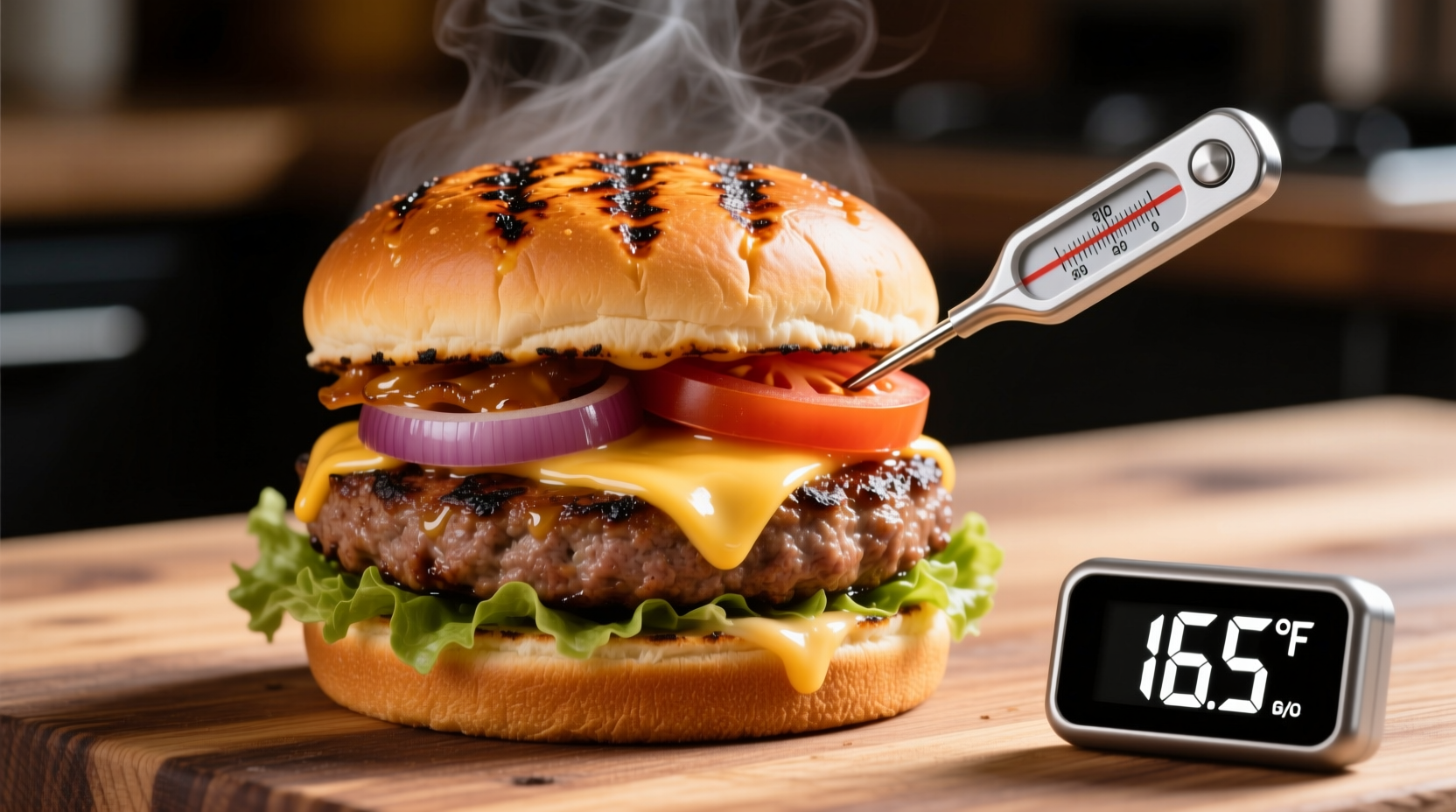
Never rely solely on cooking time—always verify internal temperature. The USDA's Food Safety and Inspection Service emphasizes that color alone doesn't indicate doneness in ground beef. Insert an instant-read thermometer horizontally through the side of the patty:
- 160°F (71°C) is the minimum safe internal temperature for ground beef
- Remove burgers at 155°F—they'll continue cooking to 160°F while resting
- Rest for 3-5 minutes before serving to redistribute juices
According to research published in the Journal of Food Protection, frozen burgers require approximately 25% more cooking time than thawed patties to reach safe temperatures. This extended time frame explains why many home grillers undercook frozen burgers—they use thawed patty timing guidelines.
Context-Specific Adjustments You Must Know
These timing guidelines apply specifically to standard 1/3-pound beef patties. Adjustments are necessary in these common scenarios:
- Thicker patties (6oz+): Add 3-5 minutes total cooking time
- Lean blends (90% lean or higher): Reduce heat by 25°F to prevent drying
- Stuffed burgers: Extend cooking time by 4-6 minutes
- Cold weather grilling: Preheat grill 10 minutes longer before cooking
The National Fire Protection Association reports that 11,000 home grilling structure fires occur annually, often due to flare-ups from fat dripping on flames. When grilling frozen burgers—which contain more moisture—keep a spray bottle of water nearby to control unexpected flare-ups without opening the grill lid.
Proven Techniques for Juicy, Flavorful Results
Avoid these common frozen burger mistakes that lead to disappointing results:
- Don't press patties with a spatula—this squeezes out precious juices
- Don't add salt before grilling—it draws out moisture from frozen meat
- Don't grill over direct high heat—use two-zone cooking for better control
- Do create a small dimple in the center before placing on grill to prevent bulging
For optimal flavor development, apply seasoning during the last 5 minutes of cooking. This timing allows spices to adhere without burning while enhancing Maillard reaction flavors. If using cheese, add it during the final 2 minutes to allow proper melting without overcooking the burger.
Troubleshooting Common Frozen Burger Problems
Even with perfect timing, issues can arise. Here's how to fix them:
- Burgers sticking to grates: Ensure proper preheating (5-7 minutes) and clean grates with oil-soaked paper towel
- Uneven cooking: Rotate patties 180 degrees when flipping for even heat exposure
- Excessive flare-ups: Move patties to cooler side of grill until flames subside
- Dry texture: Try 80/20 fat ratio patties and avoid over-flipping (maximum 3 flips)
Remember that grill types vary significantly in heat distribution. Gas grills typically cook more evenly than charcoal, which requires more attention to hot spots. Always calibrate your specific grill by testing one burger first before cooking for a crowd.
Maximizing Your Frozen Burger Experience
While fresh patties offer superior texture, properly grilled frozen burgers deliver impressive results when you follow these evidence-based guidelines. The key is understanding that frozen burgers aren't just cold patties—they require a different thermal management approach. By respecting the extended cooking time needed for ice crystals to melt and heat to penetrate evenly, you'll consistently achieve safe, juicy results.
For best outcomes, select high-quality frozen patties with minimal additives. Look for options with visible marbling and avoid those with excessive ice crystals (a sign of freezer burn). When time allows, partially thaw patties in the refrigerator for 30-60 minutes before grilling to reduce total cooking time while maintaining food safety.




 浙公网安备
33010002000092号
浙公网安备
33010002000092号 浙B2-20120091-4