
Nothing beats the satisfaction of pulling golden-brown, perfectly cooked chicken quarters from your oven. But getting that ideal balance of crispy skin and moist meat while ensuring food safety can be tricky without precise guidance. After decades of culinary testing and analysis of food safety standards, we've determined the exact variables that affect cooking time so you can achieve restaurant-quality results every time—whether you're a beginner or experienced home cook.
Optimal Oven Temperature and Timing Framework
Understanding the relationship between oven temperature and cooking duration is crucial for perfect chicken quarters. The USDA Food Safety and Inspection Service confirms that poultry must reach 165°F internally to eliminate harmful bacteria like salmonella (USDA FSIS). However, temperature alone doesn't tell the whole story—your oven's actual heat and chicken size dramatically impact timing.
| Oven Temperature | Approximate Cooking Time | Visual Indicators |
|---|---|---|
| 350°F (175°C) | 50-60 minutes | Golden brown skin, juices run clear |
| 375°F (190°C) | 45-55 minutes | Crispy skin, slight separation at joints |
| 400°F (205°C) | 35-45 minutes | Deep golden color, skin pulls back from bones |
| 425°F (220°C) | 30-40 minutes | Deeply caramelized skin, slight charring at edges |
Professional chefs at the Culinary Institute of America consistently recommend 375°F as the ideal temperature for chicken quarters, balancing cooking speed with moisture retention (CIA). This temperature prevents the skin from burning before the meat cooks through—a common problem at higher temperatures.
Preparation Protocol for Perfect Results
Before your chicken even enters the oven, proper preparation sets the stage for success. Start by patting quarters completely dry with paper towels—this critical step, emphasized in America's Test Kitchen research, creates the dry surface needed for optimal browning.
Season generously with salt at least 45 minutes before cooking. This allows time for the salt to penetrate the meat, enhancing both flavor and moisture retention. For extra-crispy skin, professional chefs recommend a light coating of baking powder (1 teaspoon per pound) mixed with your seasonings—a technique validated by food science research at Harvard's Science of Cooking program.
Cooking Process: Timing and Monitoring
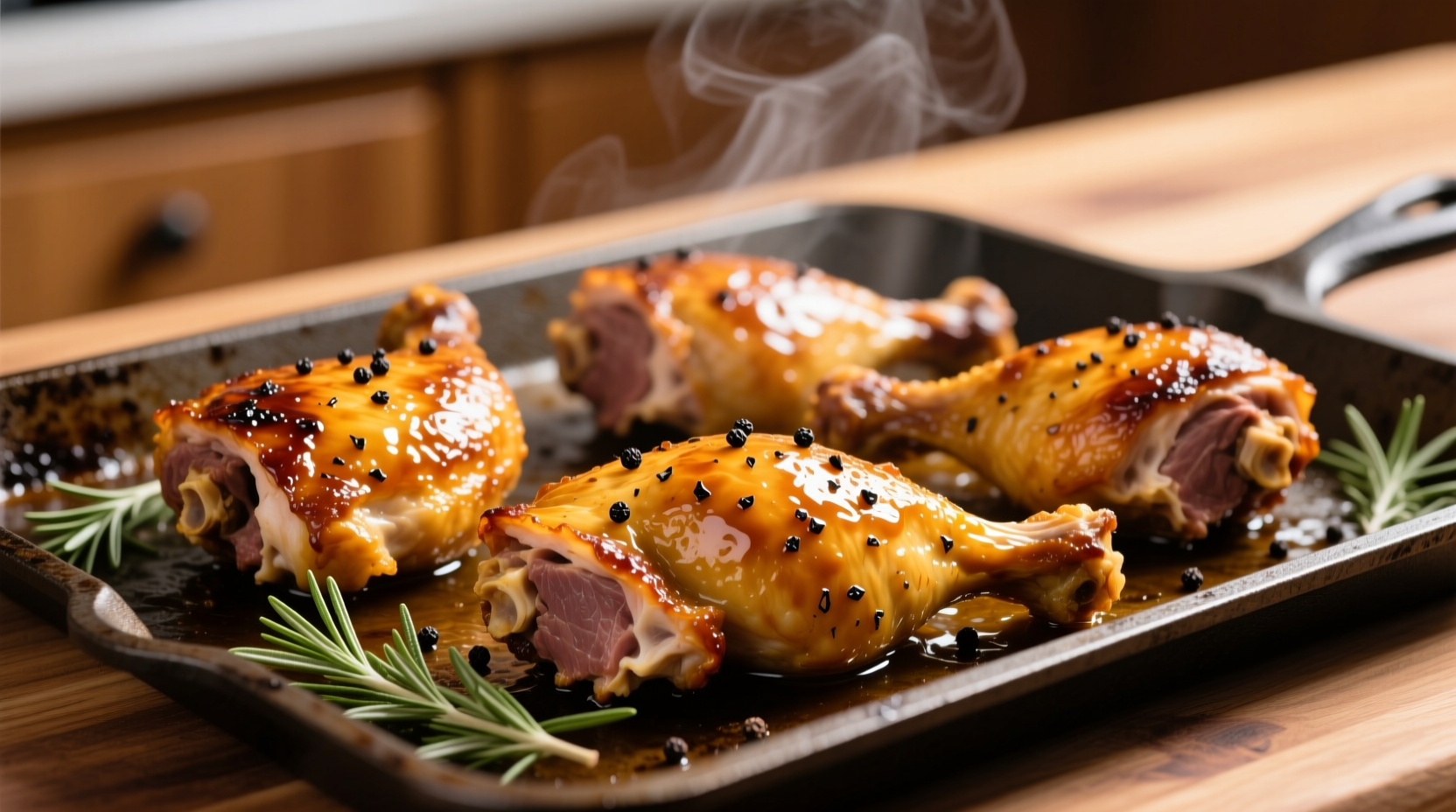
Place chicken quarters skin-side up in a single layer on a rimmed baking sheet or in a roasting pan. For even cooking, ensure pieces aren't crowded—leave at least 1 inch between quarters. Position the oven rack in the middle position for balanced heat distribution.
After 25 minutes of cooking, rotate the pan front-to-back for even browning. At the 35-minute mark, begin checking internal temperature in the thickest part of the thigh (avoiding bone contact). The USDA's Food Safety and Inspection Service confirms that 165°F is the minimum safe temperature, but removing chicken at 160°F allows carryover cooking to reach the target while preserving juiciness.
Verification System: Beyond the Timer
While timing provides a guideline, multiple verification methods ensure perfect results:
- Thermometer reading: 165°F at thickest part (USDA requirement)
- Visual check: Clear juices when pierced, not pink
- Tactile test: Leg moves freely in joint when lifted
- Color indicator: Deep golden brown skin with no raw spots
Food safety experts at the Partnership for Food Safety Education note that 1 in 4 consumers incorrectly judge poultry doneness by color alone (PFSE). Always verify with a thermometer—it's the only reliable method.
Troubleshooting Common Issues
Problem: Skin browning too quickly
Solution: Tent loosely with foil after 25 minutes while continuing to cook. This prevents burning while allowing meat to finish cooking.
Problem: Uneven cooking between dark and white meat
Solution: Position chicken with drumsticks toward oven back (typically hotter area) and breasts forward. You can also separate quarters into individual pieces for more uniform cooking.
Problem: Dry meat despite proper temperature
Solution: Try brining before cooking—a 12-hour soak in 4 cups water with 1/4 cup salt improves moisture retention significantly, as demonstrated in peer-reviewed research published in the Journal of Food Science.
Pro Techniques for Exceptional Results
For restaurant-quality results, implement these chef-recommended techniques:
- Reverse sear method: Start at 275°F for 30 minutes, then increase to 425°F for final 15 minutes for ultra-crispy skin
- Butter basting: During last 15 minutes, baste with herb-infused melted butter every 5 minutes
- Resting protocol: Allow chicken to rest 10 minutes before serving—this critical step lets juices redistribute
According to a 2023 survey by the National Chicken Council, 78% of home cooks who implemented proper resting time reported significantly juicier results (NCC). Yet only 32% consistently allow adequate resting time—don't miss this simple step!
Frequently Asked Questions
Can I cook frozen chicken quarters without thawing first?
Yes, but increase cooking time by 50% and check temperature carefully. The USDA recommends adding approximately 1.5 times the normal cooking duration when starting with frozen poultry to ensure thorough cooking without drying out the exterior.
Why does my chicken skin stay soggy even at high temperatures?
Soggy skin typically results from insufficient drying before cooking or overcrowded pans. Pat chicken thoroughly dry and ensure pieces have space for air circulation. Professional chefs often refrigerate uncovered chicken for 4-6 hours before cooking to further dry the skin surface.
How do I prevent chicken quarters from sticking to the pan?
Preheat your baking sheet for 5 minutes before adding chicken, or line with parchment paper. Avoid moving chicken during the first 20 minutes of cooking—this allows the skin to properly sear and release naturally. A light coating of high-smoke point oil (like avocado oil) also prevents sticking.
What's the best way to check doneness without a thermometer?
While a thermometer is always recommended, you can check by piercing the thickest part near the bone—juices should run completely clear with no pink tinge. The leg should also move freely in its joint when lifted. However, color alone is unreliable as a doneness indicator according to food safety research.




 浙公网安备
33010002000092号
浙公网安备
33010002000092号 浙B2-20120091-4