
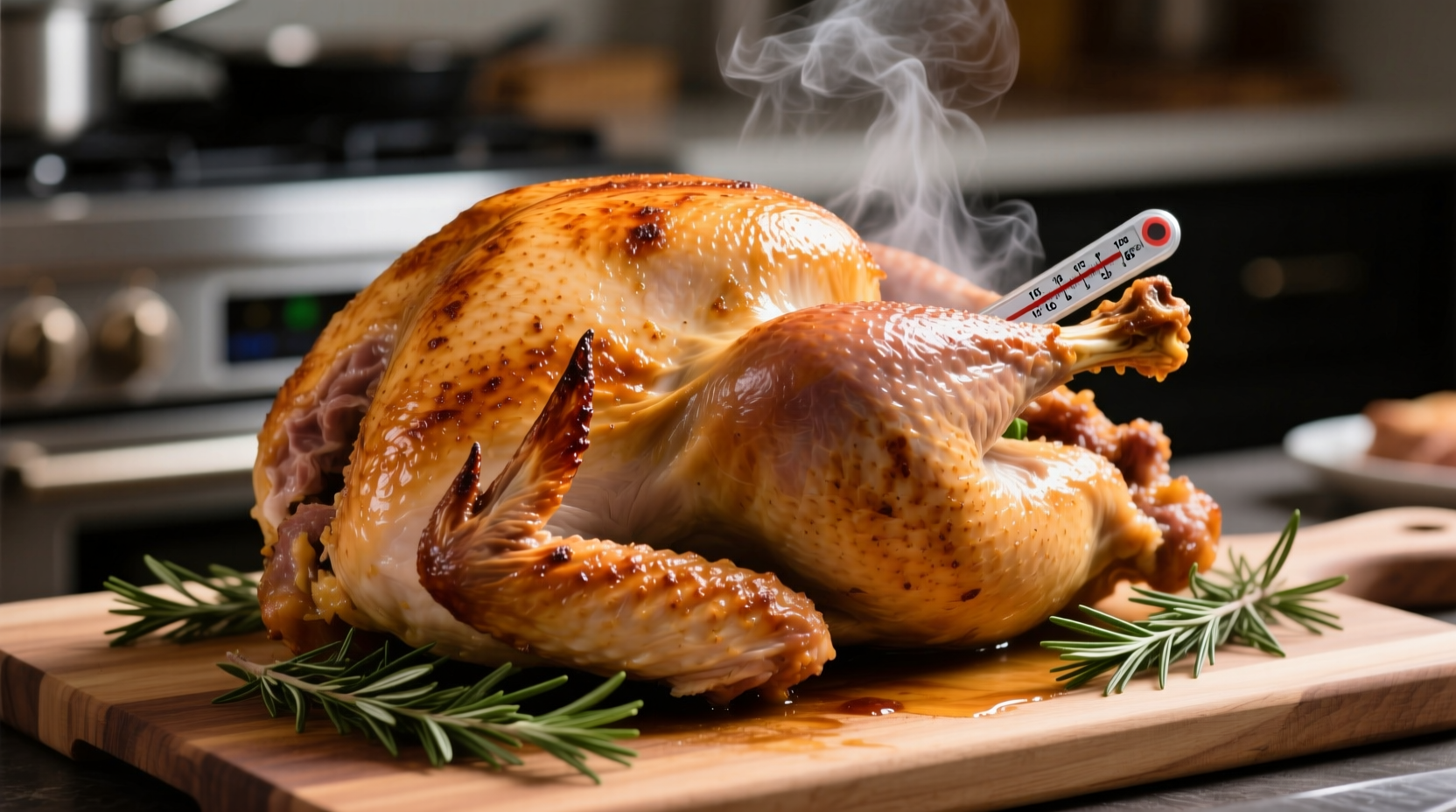
The Complete Guide to Perfectly Roasting an 8 lb Turkey Breast
Nothing ruins a special meal like an undercooked or dry turkey breast. Getting the timing right for an 8-pound turkey breast requires understanding both the science of poultry cooking and practical kitchen techniques. This guide provides precise timing information backed by food safety standards, plus professional tips to ensure moist, flavorful results every time.
Why Timing and Temperature Are Critical for Turkey Safety
Undercooked poultry poses serious food safety risks. According to the USDA Food Safety and Inspection Service, turkey must reach 165°F internally to eliminate harmful bacteria like salmonella and campylobacter. Relying only on cooking time without checking temperature is dangerous—oven variations, starting temperature, and equipment differences significantly impact actual cooking time.
Your Step-by-Step Cooking Process
Preparation Essentials
- Thaw completely: Allow 24 hours per 4-5 pounds in the refrigerator
- Bring to room temperature: Remove from fridge 1 hour before cooking for even heating
- Dry the skin: Pat thoroughly with paper towels for crispier results
- Season properly: Apply oil or butter under and over the skin for moisture retention
Perfect Roasting Technique
- Preheat oven to 325°F (the ideal temperature for even cooking without drying)
- Place turkey breast skin-side up on a rack in a roasting pan
- Insert meat thermometer into the thickest part, avoiding bone
- Roast uncovered for approximately 13-15 minutes per pound
- Check temperature starting at 2 hours 15 minutes
- Remove when thermometer reads 160-162°F (temperature will rise during resting)
- Rest 20-30 minutes before carving (critical for juicy results)
Factors That Change Your Cooking Time
Several variables affect how long to cook an 8 lb turkey breast. Understanding these helps prevent common mistakes:
- Oven accuracy: Most home ovens vary by 15-25°F—use an oven thermometer
- Convection vs conventional: Convection ovens cook 25% faster—reduce time accordingly
- Starting temperature: Cold turkey from the fridge adds 15-20 minutes vs room temperature
- Pan type: Dark pans cook faster than shiny aluminum
- Basting frequency: Opening the oven door frequently extends cooking time
Visual Timing Reference
| Weight | Approximate Time at 325°F | Minimum Internal Temp |
|---|---|---|
| 4-6 lb | 1 hr 45 min - 2 hr 15 min | 165°F |
| 6-8 lb | 2 hr 15 min - 2 hr 45 min | 165°F |
| 8-10 lb | 2 hr 40 min - 3 hr 20 min | 165°F |
| 10-12 lb | 3 hr 15 min - 3 hr 45 min | 165°F |
Pro Tips for Foolproof Results
Professional chefs use these techniques to guarantee perfect turkey every time:
- Use a leave-in thermometer: Eliminates guesswork and oven door opening
- Shield the breast: Tent with foil if browning too quickly before reaching temperature
- Check multiple spots: Verify temperature in several locations of the thickest section
- Rest properly: Cover loosely with foil and let rest 20-30 minutes—this allows juices to redistribute
- Save the juices: Use drippings for gravy while the turkey rests
Troubleshooting Common Issues
Turkey Cooking Too Slowly
If your turkey isn't approaching target temperature at the expected rate:
- Verify oven temperature with a separate thermometer
- Ensure turkey isn't too cold from refrigerator
- Check that oven isn't overloaded with other dishes
- Consider increasing temperature by 25°F if significantly behind schedule
Turkey Cooking Too Quickly
If temperature is rising faster than expected:
- Reduce oven temperature by 25°F
- Tent loosely with foil to slow browning
- Move to a higher rack position in the oven
Preventing Dryness
Dry turkey usually results from overcooking. Follow these steps:
- Remove at 160-162°F (carryover cooking will reach 165°F)
- Never skip the resting period
- Consider brining for 12-24 hours before cooking
- Use a cooking bag for more consistent moisture retention
When to Trust Time vs. Temperature
While the USDA provides time guidelines, CDC food safety guidelines emphasize that time alone is insufficient for determining doneness. Temperature monitoring remains the only reliable method. The FDA Food Code specifically requires poultry to reach 165°F for safety, regardless of cooking time.




 浙公网安备
33010002000092号
浙公网安备
33010002000092号 浙B2-20120091-4